

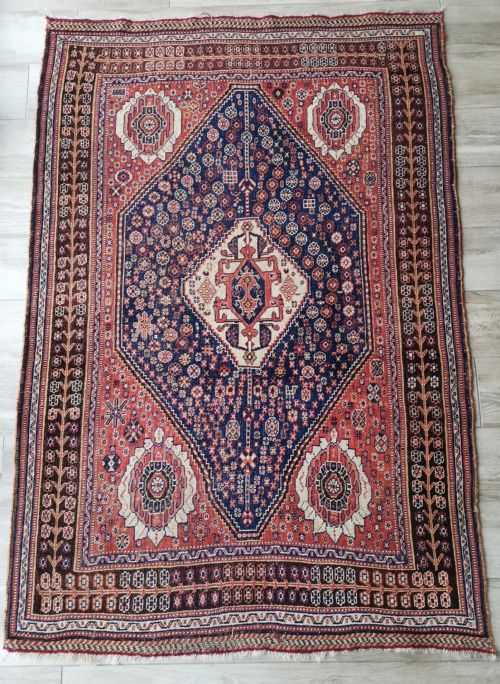


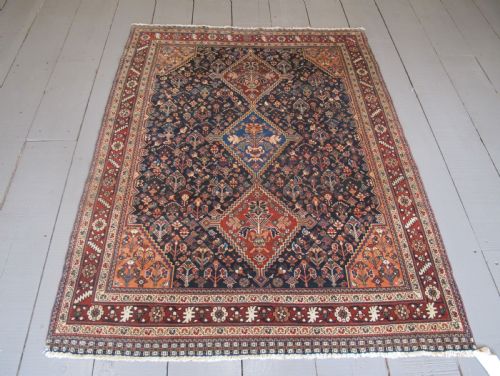


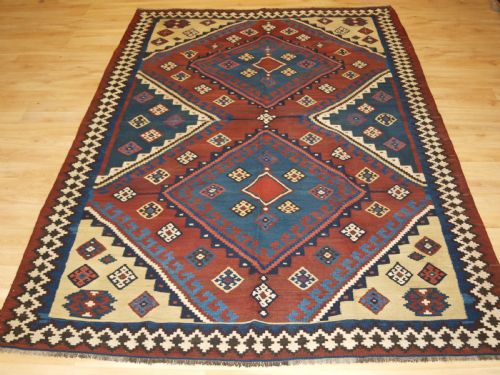


Qashqai Diamond Medallion Rug
A qashqai diamond medallion rug brings hand-knotted Persian tribal character and geometric artistry directly into a room.
Qashqai Diamond Medallion Rug
A qashqai diamond medallion rug sits firmly within traditional Persian tribal weaving traditions, featuring characteristic geometric centerpieces flanked by motifs like peacocks and pomegranates. Pieces span from the late nineteenth century into the early decades of the twentieth century, encompassing both small area formats and larger main carpets.
Buyers encounter regional variations including Khamseh designs alongside classic Qashqai tribal kilims and pile carpets. These floor coverings reflect nomadic heritage through spontaneous design choices made by weavers working across Persia.
Materials and construction methods
Weavers constructed these rugs using wool for the pile and foundation, often combined with cotton structure depending on the specific tribal workshop or nomadic camp. Natural dyes provide the rich colour palette observed across these antique carpets.
Manual hand-knotting techniques created durable pile surfaces alongside flatweave kilim structures. Traditional loom methods allowed for intricate border details like the Shekarlu pattern alongside central diamond medallions.
Qashqai Diamond Medallion Rug Retail Price Guide 2026
Typical asking prices for qashqai diamond medallion rug among the pieces listed under this phrase on Sellingantiques today, from the lower quarter to the upper quarter. They describe what is for sale here now, not the wider market.
Keep an eye out for hidden peacocks wandering through the geometric fields of these nomadic carpets.
Distinctions in quality and execution
Finer examples display greater knot density and more precise execution of intricate tribal motifs, resulting in sharper definition within the central diamond medallions. Superior handling of natural dyes creates depth and longevity in the overall colour palette.
Proportion and scale separate standard scatter formats from grand main carpets, with larger pieces requiring sustained coordination across extended weaving periods. The integrity of the wool and the preservation of original borders significantly influence the overall standard of each piece.
The Qashqai Diamond Medallion Rug Glossary
- Medallion
- A central decorative motif dominating the field of the rug. In these pieces, it typically takes a geometric diamond shape.
- Kilim
- A flatweave textile produced without a pile. These items offer a lighter structure compared to traditional knotted carpets.
- Natural Dyes
- Colourants derived from plant and mineral sources rather than synthetic chemical processes. They yield the characteristic aged tones found in antique Persian weaving.
- Pile
- The upright yarn surface forming the soft body of the rug. It is created by individual knots tied around the warp threads.
- Shekarlu
- A specific border or design attribution associated with tribal weaving traditions. It frequently incorporates distinctive geometric filler motifs.
Qashqai Diamond Medallion Rug: Frequently Asked Questions
How do I date a qashqai diamond medallion rug?
Dating relies on examining the natural dye palette, structural materials like wool and cotton, and stylistic markers consistent with nineteenth and early twentieth-century Persian weaving.
Comparison with documented examples from periods such as nineteen hundred or eighteen eighty helps establish a reliable timeframe for each specific carpet.
Where were these rugs made?
These textiles originate from southwest Persia, produced by nomadic and settled tribal groups belonging to the Qashqai confederation and related regional weavers.
Their designs incorporate local iconography, including tribal motifs, animals, and geometric symbols reflecting their cultural environment.
Are these rugs suitable for high-traffic areas?
Hand-knotted wool construction provides natural resilience and durability, making many of these antique pieces suitable for everyday placement in living spaces.
Using a quality underlay protects the wool pile and foundation from excessive friction while keeping the rug stable on the floor.
How should I clean my antique rug?
Routine maintenance involves gentle vacuuming without a rotating brush to prevent pulling the wool fibres and knots.
Professional specialist cleaning is necessary for deeper care to protect natural dyes and maintain the structural integrity of antique foundations.