
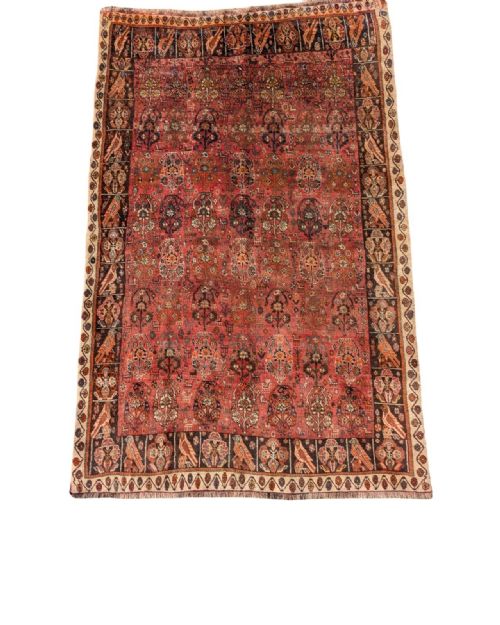


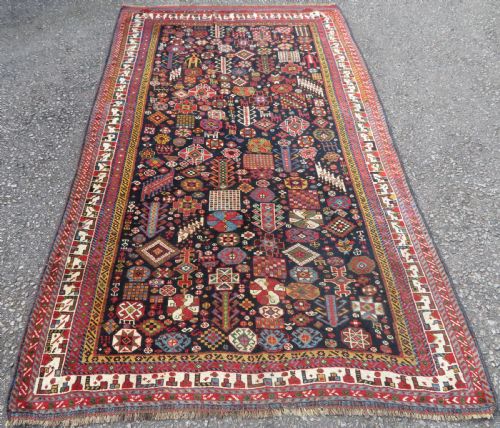


Qashqai Carpet Runner
A qashqai carpet runner brings nomad-woven Persian artistry into a corridor, offering rich wool and tribal motifs.
Qashqai Carpet Runner
A qashqai carpet runner represents the tribal weaving traditions of south-west Persia, particularly the Fars province and associated nomadic groups. These elongated floor coverings serve corridors and narrow spaces, often displaying distinct geometric formats.
The selections available here span from the mid nineteenth century through the early twentieth century, including pieces linked to related tribal groups such as Khamseh, Luri, and Shiraz. Buyers frequently encounter formats featuring diamond lattices, triple medallions, or compartment designs.
Beyond standard pile carpets, the inventory encompasses flat-woven kilims and gabbeh pieces. These variations provide different textures while maintaining the characteristic south Persian tribal aesthetic.
How they were made
These textiles rely on wool and hand-spun wool foundations paired with cotton, utilising natural dyes to achieve deep and enduring colour palettes. Artisans knot the pile tightly by hand onto the warp and weft threads.
The weaving process incorporates traditional flat-weaving techniques for kilims alongside knotted pile construction for rugs and runners. Natural dyeing methods produce the varied hues recorded across the periods.
Current listings span from the mid nineteenth century to the 1930s, featuring wool, hand-spun wool, cotton, and natural dyes.
What varies in quality
Quality rests in the fineness of the knotting and the complexity of the tribal design. Tighter structures and precise geometry distinguish superior examples from simpler village work.
The condition of the wool pile and the depth of natural colour retention dictate the visual presence of each runner. Pieces retaining crisp drawing and vibrant or harmoniously softened dyes command greater attention.
The Qashqai Carpet Runner Glossary
- Gabbeh
- A thick, coarsely knotted rug woven by tribal groups with minimalist geometric designs and open fields of colour. These pieces often emphasise subtle shifts in natural dye tones.
- Kilim
- A flat-woven carpet or runner produced without a pile by tightly interweaving warp and weft strands. This technique creates lightweight textiles with sharp geometric patterns.
- Khamseh
- A confederation of pastoral tribes in south-west Persia sharing artistic traditions with neighbouring groups. Their weavings frequently display intricate small-scale motifs and rich coloration.
- Medallion
- A central ornamental motif placed within the field of a carpet or runner. These central designs structure the geometry of tribal compositions.
Qashqai Carpet Runner: Frequently Asked Questions
Where should I place a runner?
Runners suit narrow spaces such as hallways, corridors, and staircases where elongated formats function best.
Their dimensions guide foot traffic while adding warmth and character to otherwise plain architectural areas.
How do I care for antique wool rugs?
Regular gentle vacuuming without a beater bar prevents dust accumulation within the wool pile.
Professional cleaning suited to natural dyes ensures the longevity of antique fibres and colours.
Are natural dyes used in these pieces?
Traditional south Persian weavers utilised organic materials to colour their hand-spun wool.
These dyes age gracefully, developing soft patinas over decades of light and use.
How do I distinguish tribal styles?
Tribal distinction relies on examining the specific geometry, medallion structures, and border motifs present in the weaving.
Qashqai and related regional pieces display characteristic diamond lattices and zoomorphic elements unique to their makers.