




Putto Bronze Clock
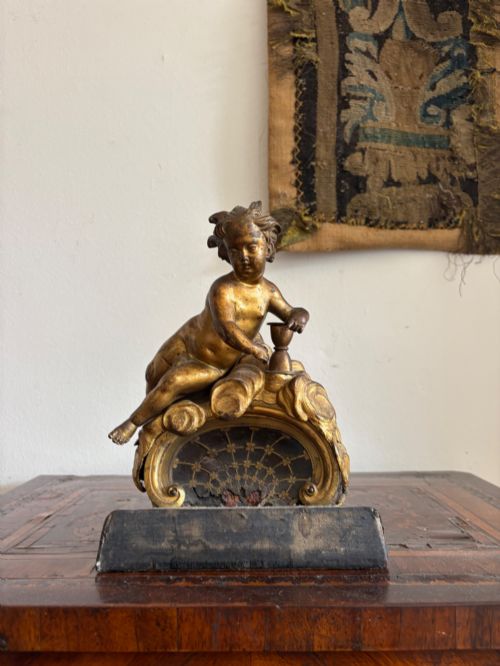
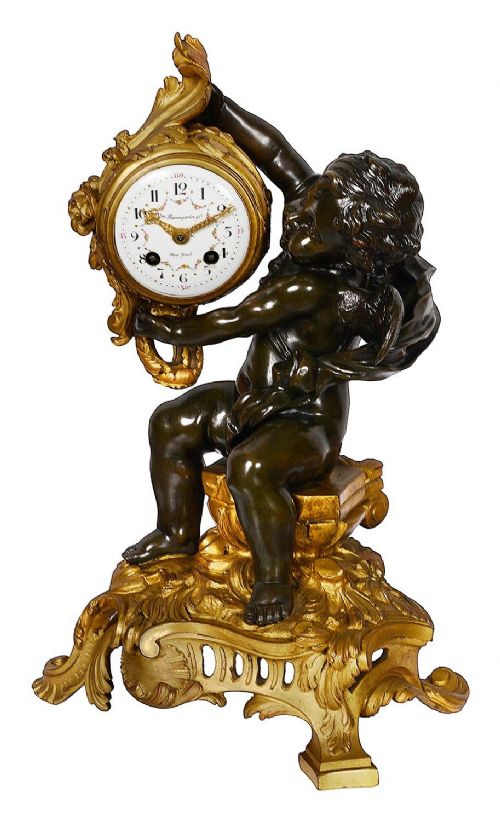
A putto bronze clock brings sculptural presence to a room, cast in gleaming ormolu and patinated bronze with celestial cherubs.
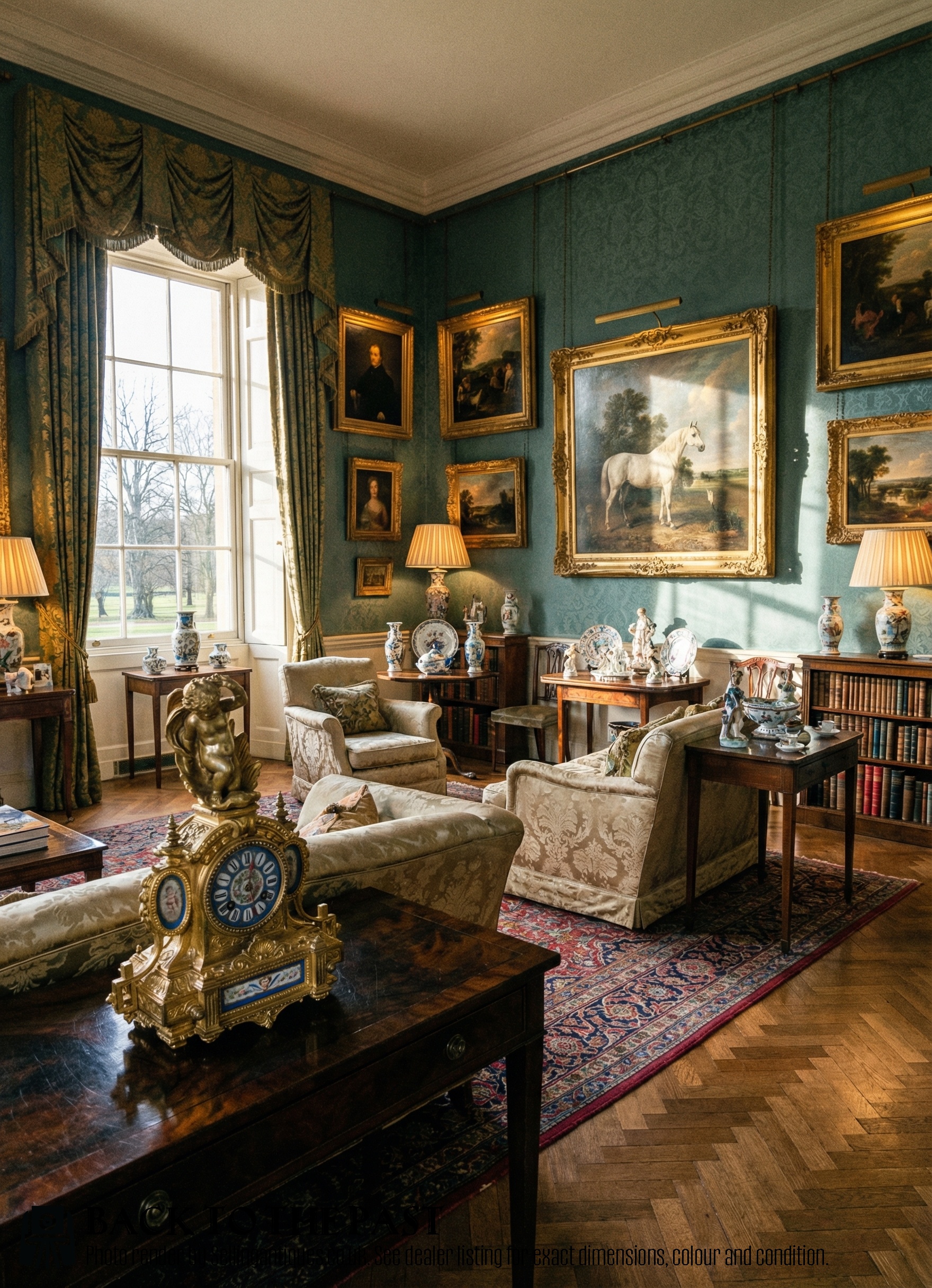
Putto Bronze Clock
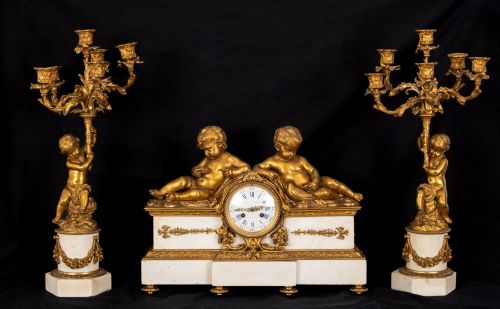
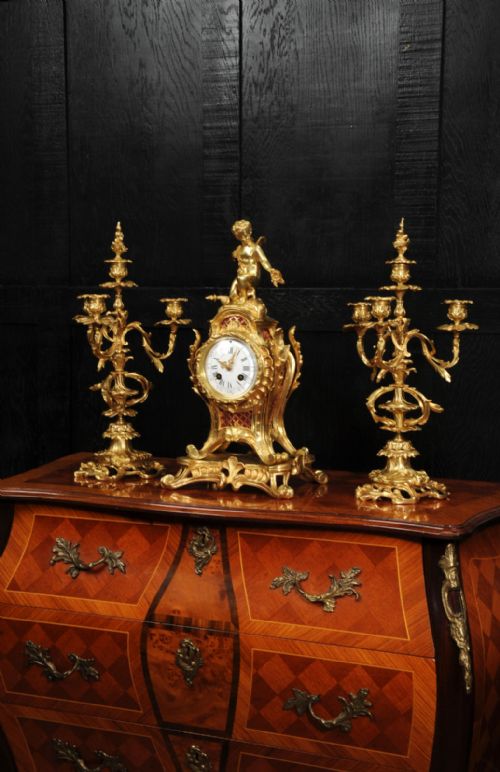
A putto bronze clock combines functional timekeeping with sculptural figures of cherubs, cupids, or putti cast in bronze and ormolu. These decorative timepieces range from elaborate mantel garnitures with matching candelabras to smaller wall-hung cartel clocks and table timepieces.
Most examples originate from nineteenth-century France, drawing heavily on classical French styles such as Rococo revival, Louis XVI, and Neoclassical designs. Alongside French works, English makers in London also produced gilt and bronze mantel clocks featuring cherub motifs during the Victorian era.
How they were made
These clocks rely on heavy brass and bronze castings shaped through traditional foundry methods, then finished with mercury gilding or electroplated ormolu to achieve a bright, durable golden surface. Sculptural figures of putti were cast separately and mounted onto plinths alongside cases fashioned from contrasting white and red marble.
Dial faces often combine hand-painted enamel numerals on porcelain or metal grounds, protected behind convex glass bezels. Movements are typically mechanical, driven by spring or fusee mechanisms designed to be housed neatly within the bronze and marble housings.
Listings span the nineteenth century, uniting French Rococo revival and Louis XVI styles with Victorian English mantel clocks.
What varies in quality
The distinction between ordinary and exceptional pieces lies in the crispness of the bronze chasing and the depth of the ormolu gilding. Master founders invested significant labour into hand-chiselling cast bronze details, resulting in sharp facial expressions on the putti and deeply defined acanthus scrollwork.
Substantial weight in the marble bases, the inclusion of signed movement maker plaques, and the presence of matching original candelabras elevate a piece considerably. Quality is further demonstrated by the harmonious integration of the sculptural cherubs into the overall architectural form of the clock case rather than appearing as simple afterthoughts.
Le Roy Paris·Leon Message·Jollet et Cie·Phillipe H. Mourey·Bellenot Paris·John Bennett Cheapside London·Henry Berkeley Square London
The Putto Bronze Clock Glossary
- Putto
- A plump, naked male child figure found frequently in classical art, often depicted with wings as a cherub or cupid. These figures form the sculptural centrepiece of the clock cases.
- Ormolu
- Finely ground high-carat gold applied to a bronze base, historically via mercury amalgamation or later electroplating. It provides the characteristic rich golden lustre seen on the clock mounts.
- Garniture
- A set of matching decorative objects designed to be displayed together on a mantelpiece, typically consisting of a central clock flanked by two matching candelabras or urns.
- Cartel clock
- A wall-mounted clock enclosed in an ornate frame made of wood, metal, or ormolu. These pieces often feature elaborate asymmetrical Rococo scrollwork.
- Fusee
- A conical pulley used in spring-driven clocks to maintain equal driving force as the mainspring unwinds. This mechanism improves timekeeping accuracy across the power reserve.
- Casting
- The process of pouring molten metal into a mould to form the rough shape of a clock case or decorative mount. Subsequent hand-chiselling refines the raw metal surface.
Putto Bronze Clock: Frequently Asked Questions
How do I wind a mechanical putto bronze clock?
Most nineteenth-century mechanical clocks utilise a key inserted into winding holes on the dial face to tension the internal springs.
Care should be taken not to over-wind the movement, and consulting a professional horologist for initial setup ensures the pendulum is set precisely in beat.
Were these clocks made in England or France?
The vast majority of decorative ormolu and bronze clocks featuring putti originated in France, particularly around Paris during the nineteenth century.
However, prominent London watchmakers and retailers also imported movements or commissioned local gilt bronze cases featuring cherub motifs.
What is a clock garniture set?
A clock garniture is a matched decorative ensemble designed for display on a mantelpiece or sideboard.
The central timepiece is accompanied by subsidiary matching pieces such as candelabras, urns, or vases cast in corresponding ormolu and marble.
How should I clean ormolu and marble cases?
Ormolu surfaces require gentle dusting with a soft dry cloth to prevent accumulation in recessed crevices.
Harsh chemical polishes must be avoided entirely because they strip away the historic fire gilding, while marble can be wiped gently with a barely damp cloth.