

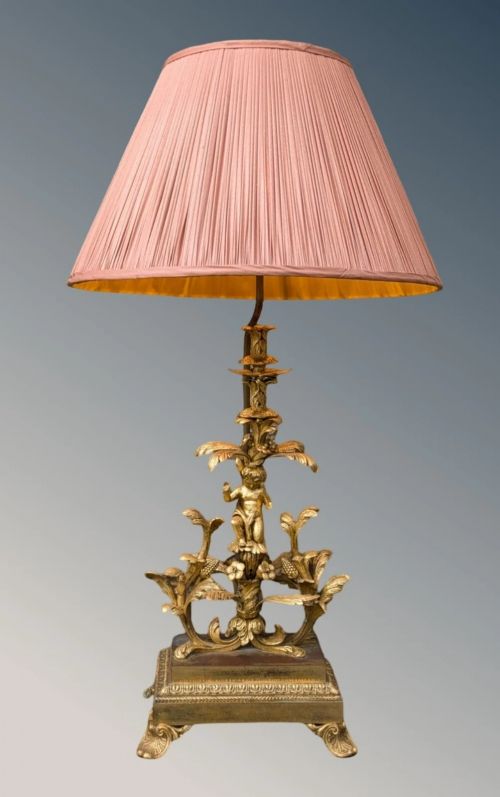


Putti Figure Candlesticks
Putti figure candlesticks bring spirited classical charm to a room, combining sculptural cherubs with functional lighting from the eighteenth and nineteenth centuries.
Putti Figure Candlesticks
Putti figure candlesticks depict winged cherubic figures cast in bronze, porcelain, or marble, often holding aloft candle holders or integrated into multi-arm candelabra. These decorative objects merge sculptural art with utility, drawing heavily upon classical motifs and mythological themes.
The versions most frequently encountered on this page originate from nineteenth-century France and Britain, spanning periods such as the Georgian era, French Empire, and Napoleon III. Makers utilised styles like Rococo Revival and Neoclassical Grand Tour designs to appeal to domestic interiors of the time.
Forms vary from single candlesticks and go-to-bed taper holders to larger two-arm candelabra and converted table lamps. They appear mounted on solid marble bases or enriched with gilding, patinated bronze, and enamel details.
How they were made
Makers formed these pieces primarily through metal casting in bronze and brass, subsequently applying fire gilding, ormolu, and gold leaf to highlight details. Patination techniques were used to darken bronze surfaces, creating contrast against gleaming gilt highlights.
Porcelain examples required skilled ceramic modeling, glazing, and hand-painting with enamel colours before firing. Many metal pieces combined several materials, mounting bronze putti onto carved marble plinths.
Putti Figure Candlesticks Retail Price Guide 2026
Typical asking prices for putti figure candlesticks among the pieces listed under this phrase on Sellingantiques today, from the lower quarter to the upper quarter. They describe what is for sale here now, not the wider market.
Object forms span single candlesticks, multi-arm candelabra, go-to-bed tapers, and table lamps.
What varies in quality
The refinement of the casting defines the upper tier of these pieces, where facial expressions and musculature on the putti remain crisp and detailed rather than soft. High-quality examples show careful chasing of the bronze after casting, which sharpens lines and textures.
Material combination and finish dictate overall distinction, with genuine fire gilding or ormolu displaying a deep, warm lustre compared to flat modern paints. The integration between the sculptural figure and the structural candle holder reveals the maker's architectural skill.
Chelsea·Minton·Triebner ENS and Eckert Volkstedt
The Putti Figure Candlesticks Glossary
- Putti
- Winged infant figures, often male, derived from classical art and frequently confused with cherubs. They add a playful or theatrical element to decorative objects.
- Ormolu
- Finely ground high-carat gold applied to a bronze base using a mercury amalgamation technique, common in French metalwork. This process produces a rich, lasting metallic sheen.
- Grand Tour
- A cultural journey undertaken by nineteenth-century Europeans to collect classical antiquities and souvenirs. Pieces from this context often incorporate Italian marble and bronze.
- Go-to-Bed
- A small, compact candlestick designed for carrying to a bedroom before electric lighting became common. These often feature specialised loops or handles for safe transport.
- Patinated Bronze
- Metal treated with chemical solutions to darken the surface and create tonal variation. This finish accentuates the sculptural contours of the figure.
Putti Figure Candlesticks: Frequently Asked Questions
What is a putti figure candlestick?
A putti figure candlestick is a lighting device featuring sculpted infant cherubs supporting a socket for a candle. They combine decorative bronze, porcelain, or marble sculpture with practical use.
Most examples date from the eighteenth and nineteenth centuries, reflecting historical revivals like the Rococo and Neoclassical styles.
How do I tell an old one from a reproduction?
Examine the casting quality, surface wear, and the materials used in the base, such as period marble or hand-mixed porcelain enamels. Older pieces show natural ageing and hand-chased details rather than uniform modern machine marks.
Constructive elements like old peg joints, hand-cut screws, and traditional patination methods also indicate genuine nineteenth-century or earlier manufacture.
Can these candlesticks be used for lighting?
Many of these pieces can still hold standard taper candles securely for dining or decorative illumination. Care should be taken to catch melting wax to protect antique metal or porcelain surfaces.
Some items have been adapted into table lamps over time, integrating electrical wiring while preserving the original sculptural base.
Where were these pieces made?
The majority of metal pieces originate from French workshops in Paris, following Empire and Napoleon III aesthetic traditions. Other notable origins include British ceramic factories and German porcelain works.
Grand Tour pieces often reflect Italian craftsmanship, utilising local marble combined with bronze casting.