





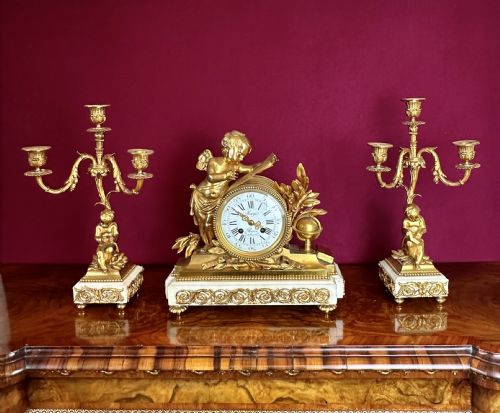

Putti Candelabra Set
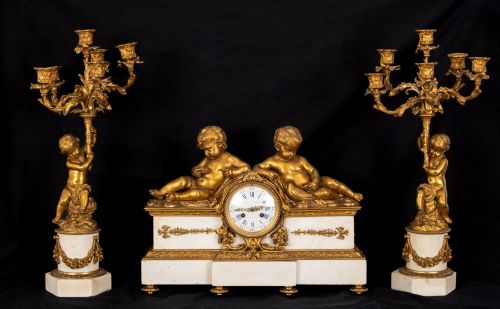
These putti candelabra set pieces bring nineteenth-century figural elegance and classical design directly to a mantelpiece or side table.
Putti Candelabra Set
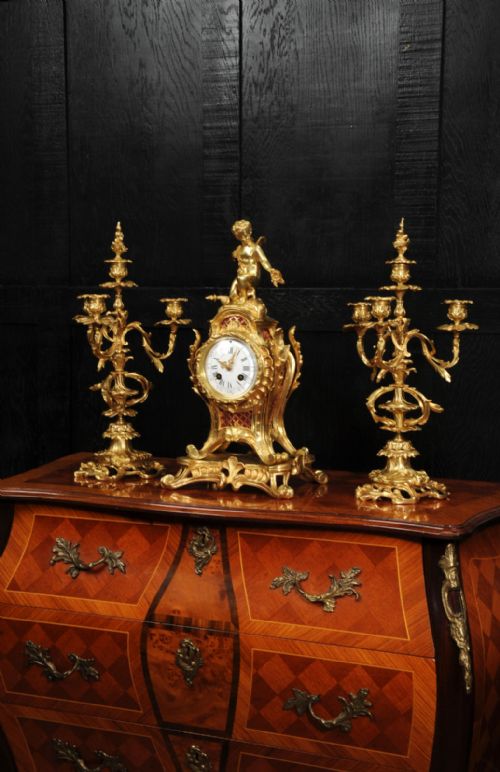
A putti candelabra set unites figural charm with functional lighting, frequently appearing as part of larger clock garnitures or paired candelabra. These nineteenth-century creations draw heavily upon French Louis XVI, Louis XV, and Rococo revival styles to create an ornate decorative scheme.
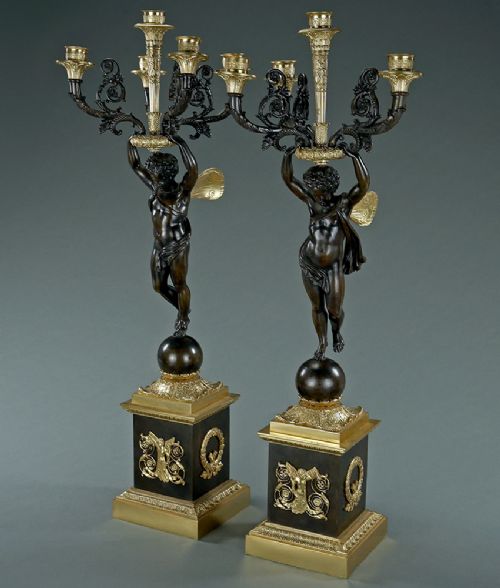
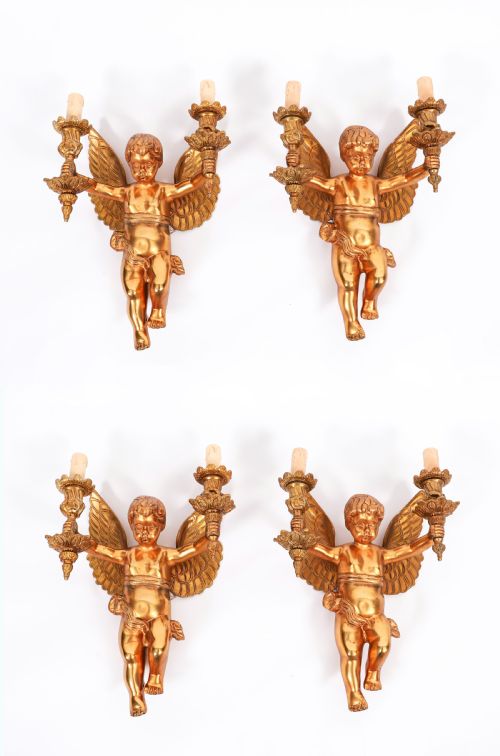
The objects combine sculpted cherub or cupid figures with branch candelabra, wall lights, and mantel clocks. White, green, and red marble often serve as a substantial base for ormolu and gilt bronze mounts.
Most examples originate from French workshops of the eighteen-seventies and eighteen-eighties, reflecting Victorian tastes for elaborate mantel decoration. Buyers encounter complete clock sets alongside matched pairs of candelabra and multi-branch wall sconces.
What varies in quality
The crispness of the chasing on the gilt bronze and ormolu mounts determines the visual sharpness of the putti figures and scrollwork. Softer definition indicates a less meticulous casting process.
The selection and turning of the marble base contribute significantly to the weight and presence of the set. Richer variations in marble colour and more substantial mineral blocks elevate the overall composition.
Putti Candelabra Set Retail Price Guide 2026
Typical asking prices for putti candelabra set among the pieces listed under this phrase on Sellingantiques today, from the lower quarter to the upper quarter. They describe what is for sale here now, not the wider market.
Materials recorded across current items include white, green, and red marble alongside gilt bronze, ormolu, and patinated bronze.
Meissen
The Putti Candelabra Set Glossary
- Ormolu
- Finely ground high-carat gold mercury-gilded onto a bronze base. This technique creates a durable, bright golden surface characteristic of nineteenth-century French luxury objects.
- Garniture
- A set of matching decorative ornaments designed to sit together on a mantelpiece. These typically comprise a central clock flanked by two candelabra or vases.
- Putto
- A plump, naked male child figure often winged, resembling a cupid. They populate classical and revivalist decorative arts as sculptural supports.
- Patinated bronze
- Bronze treated with chemical solutions to produce a specific surface colour or dark tone. This finish contrasts with the bright reflection of adjacent ormolu mounts.
- Louis XVI Revival
- A nineteenth-century design movement resurrecting neoclassical restraint, symmetry, and straight lines. It incorporated classical urns, ribbons, and symmetrical acanthus foliage.
Putti Candelabra Set: Frequently Asked Questions
What is a putti candelabra set?
A putti candelabra set comprises matched lighting fixtures featuring sculpted cherub or cupid figures. They are often part of a wider garniture scheme alongside a mantel clock.
These pieces were designed to be displayed together on a fireplace mantel or sideboard to create a balanced decorative arrangement.
How were these clock sets used?
In nineteenth-century interiors, these sets served both a practical purpose for telling time and lighting rooms, and a decorative role as status symbols.
Placed centrally on mantelpieces, the clock and flanking candelabra reflected candlelight during evening gatherings and demonstrated refined taste.
How do I identify a Louis XVI style set?
Louis XVI style sets are distinguished by neoclassical motifs such as symmetrical leaf scrolls, urns, and architectural lines. The putti figures tend to display classical proportions.
By contrast, Rococo revival pieces feature asymmetrical curves, shell motifs, and flowing naturalistic plant forms without rigid symmetry.
What materials make up these antiques?
The primary materials are cast ormolu, gilt bronze, and patinated bronze, frequently combined with white, green, or red marble sections. Enamel elements also appear on clock faces.
These durable substances allowed makers to combine heavy stone bases with detailed metallic sculptural work.