


Purple Gemstone Brooch
These purple gemstone brooch designs combine deep amethyst stones with gold and silver settings, offering a striking piece of antique jewellery for everyday wear.
Purple Gemstone Brooch
A purple gemstone brooch brings together rich amethyst stones and precious metalwork, serving as a wearable adornment with centuries of history. When searching for a purple gemstone brooch, buyers encounter various historical expressions ranging from early nineteenth-century French designs to mid-century Mexican silver pieces.
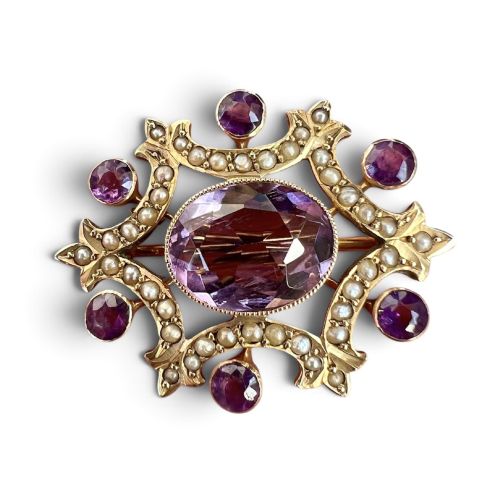
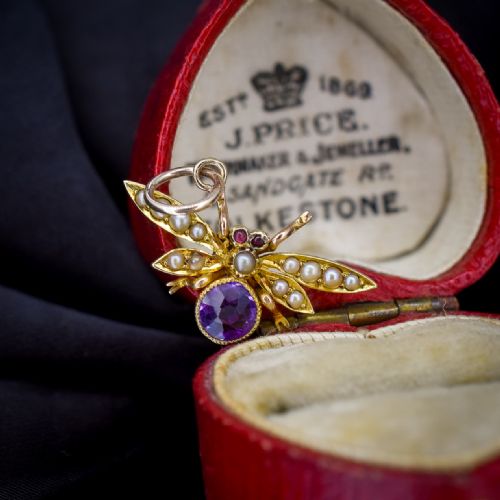
The most common examples on this page date from the Victorian and Edwardian periods, frequently combining amethysts with seed pearls or natural pearls. These pieces often take the form of cluster designs, heart shapes, target motifs, or insect charms.
Makers ranged from European workshops to international silversmiths, utilising distinct regional styles that span the nineteenth and twentieth centuries. The selection encompasses both simple gold mounts and elaborate multi-stone arrangements.
How they were made
Craftsmen built these pieces using yellow gold, 9ct gold, 15ct gold, 18k gold, and silver, often pairing the metal with polished amethysts and delicate seed pearls. Settings required precise hand-cut stone placement, securing amethysts alongside clustered pearls or enamel details.
Makers utilised traditional casting and setting techniques suited to each period, whether forming the sinuous lines of Edwardian work or the bold silver shapes of Mexican modernist pieces. Step-cut stones and cluster arrangements demonstrate the technical skill applied to each mount.
Purple Gemstone Brooch Retail Price Guide 2026
Typical asking prices for purple gemstone brooch among the pieces listed under this phrase on Sellingantiques today, from the lower quarter to the upper quarter. They describe what is for sale here now, not the wider market.
The listings span Victorian, Edwardian, 19th Century, 1900, and mid-20th century periods, showcasing amethysts set in gold, silver, and enamel.
What varies in quality
Quality rests upon the depth of the amethyst colour, the precision of the stone cut, and the intact condition of the surrounding pearls and metalwork. Higher-grade examples display well-matched stones and secure settings that preserve delicate seed pearls without replacement.
The refinement of the gold or silver work dictates the overall standard of the piece, distinguishing standard production from finer workshop output. Superior pieces maintain crisp detail in cluster mounts and charm settings across Victorian and Edwardian examples.
Beto
The Purple Gemstone Brooch Glossary
- Amethyst
- A purple variety of quartz that serves as the central gemstone in these jewels. Its colour ranges from pale lilac to deep violet.
- Seed pearl
- A very small natural or cultured pearl used in clusters or borders around larger stones. These tiny pearls add a soft luminous contrast to the bright purple amethyst.
- Cluster brooch
- A jewellery design where a central prominent gemstone is surrounded by a ring of smaller stones. This layout maximises visual impact and light reflection.
- Target brooch
- A concentric circular jewellery design featuring a central stone encircled by distinct bands of gems or metal. Edwardian makers often utilised this geometric layout.
- Step cut
- A stone-cutting style featuring broad, flat facets arranged parallel to the girdle. This technique highlights the clarity and depth of large amethysts.
Purple Gemstone Brooch: Frequently Asked Questions
How do I date a purple gemstone brooch?
Dating relies on the materials used, the style of the metalwork, and the cut of the stones. Victorian and Edwardian pieces often feature distinct motifs like hearts, clusters, or target patterns set in gold or silver.
Later mid-century examples show different stylistic influences, such as Mexican modernist silver work, which helps separate them from earlier nineteenth-century French and British pieces.
Were these brooches also worn as pendants?
Many antique designs served multiple purposes and included integrated loops or fold-down bails. This allowed the owner to transition the piece easily from a lapel pin to a neck pendant.
Evidence shows several items listed as both brooches and pendants, reflecting the versatility expected by Victorian and Edwardian buyers.
What metals are typically found in these pieces?
Makers most frequently utilised 9ct gold, 15ct gold, yellow gold, and silver for the mounts. Some mid-century pieces also incorporate higher carat gold or distinct silver alloys.
These metals were chosen to provide a durable yet complementary backdrop for the purple amethyst and white pearl combinations.
How should I care for an antique amethyst brooch?
Amethyst and pearl jewellery requires gentle handling to protect delicate seed pearls and secure stone settings. Regular cleaning should avoid harsh chemical dips that can damage pearls or historical metal finishes.
Storing the piece in a dedicated lined box prevents friction against other items and preserves the integrity of the gold or silver mount.