


Gold Amethyst Pin
These gold amethyst pin pieces are wearable treasures, combining rich purple quartz with warm metalwork to brighten any lapel.
Gold Amethyst Pin
A gold amethyst pin brings together the regal purple tones of quartz and durable metal settings, primarily taking the form of brooches and pendants. When you search for a gold amethyst pin, you encounter diverse iterations ranging from heart shapes to cluster designs and drop pendants.
The pieces appearing on this page span several distinct eras, with Edwardian and Victorian examples forming the majority of the selection. Alongside these, 19th Century French pieces and Georgian items offer varied stylistic nuances for the discerning collector.
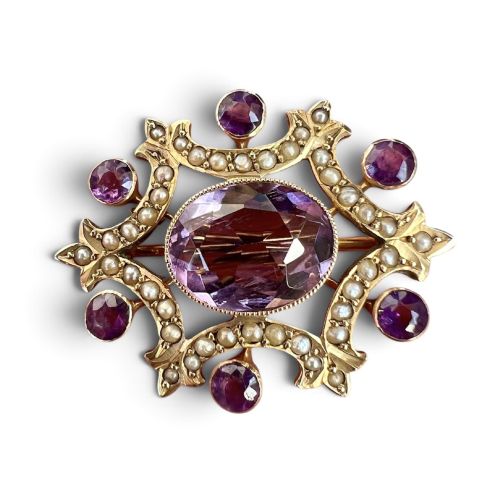
Makers utilised various configurations, pairing the central purple stones with accent materials to enhance visual depth. Target brooches, double clusters, and spray motifs demonstrate the imaginative ways jewellers arranged these components.
Materials and construction
Goldsmiths constructed these jewels primarily using yellow gold in both 9ct and 18ct purities, providing a robust yet warm foundation for the gems. Collets and claws secure the central stones safely within their mounts.
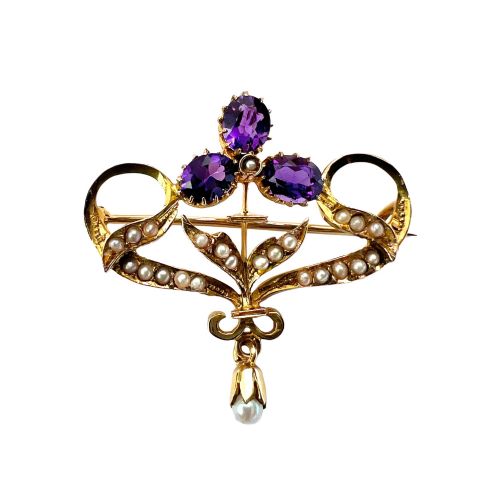
Jewellers frequently embellished the principal purple stones with seed pearls, natural pearls, and diamonds, creating pleasing textural contrasts. Enamel work and rose diamonds also appear in specific pieces, adding further complexity to the metallic frames.
Gold Amethyst Pin Retail Price Guide 2026
Typical asking prices for gold amethyst pin among the pieces listed under this phrase on Sellingantiques today, from the lower quarter to the upper quarter. They describe what is for sale here now, not the wider market.
Listings feature yellow gold, 9ct gold, and 18ct gold alongside amethyst, seed pearl, natural pearl, diamond, and enamel materials.
Assessing quality and design
The depth of colour in the central quartz and the precision of the stone-cutting dictate visual distinction across the range. Step-cut stones and large clusters demand superior raw material and careful facet alignment.
The intricacy of the surrounding metalwork and the integration of delicate accent gems determine the refinement of an item. Pieces featuring balanced seed pearl borders or articulated drops show higher execution standards than simpler mounts.
The Gold Amethyst Pin Glossary
- Cluster brooch
- A piece featuring a prominent central stone surrounded by a tight ring of smaller gems. This configuration maximises the visual impact of both the primary quartz and the accent stones.
- Seed pearl
- A tiny, naturally small pearl used extensively in clusters and borders during the Edwardian and Victorian eras. These delicate spheres provide a creamy white contrast to deep purple quartz.
- Target brooch
- A circular ornament designed with concentric rings of stones radiating from a centre point. The geometric harmony draws the eye inward toward the main gem.
- Step-cut
- A faceting style featuring parallel rectangular facets that emphasise the clarity and inner depth of transparent stones. This cut produces broad flashes of light rather than scattered sparkle.
- Spinning fob
- A rotating double-sided charm often mounted on a swivel loop. It allows the wearer to display two distinct faces or stones.
Gold Amethyst Pin: Frequently Asked Questions
What periods do these pieces date from?
The selection spans from Georgian and Victorian times through the Edwardian era and into the mid-20th century. Each period brings distinct metal colours and mounting styles.
Edwardian and Victorian examples dominate the current offerings, accompanied by French antique items and earlier Georgian designs.
What gold purities are used?
These jewels utilise 9ct gold and 18ct gold settings to secure the purple stones. Yellow gold is the predominant metal colour seen throughout the inventory.
Some pieces also incorporate higher or lower gold standards depending on their regional origin and historical period.
How were these brooches worn?
Victorians and Edwardians pinned these ornaments to lapels, bodices, and collars to add colour and status to daily attire. Some versatile examples also function as pendants or incorporate hanging drops.
Stick pins and tie pins offered gentlemen and ladies a smaller method for securing cravats and lapels.
What accent stones accompany the quartz?
Jewellers frequently paired the purple quartz with seed pearls, natural pearls, and diamonds. Enamel accents and flat-cut rubies also appear in specific antique examples.
These secondary materials create pleasing contrasts in texture and colour against the warm gold mountings.