
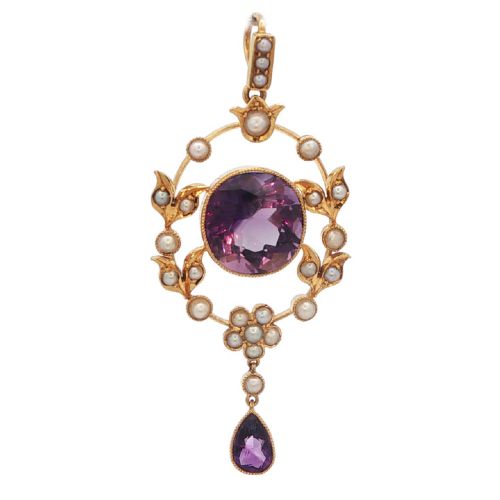
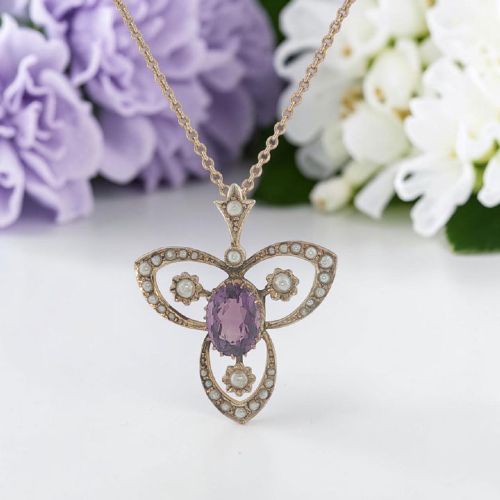
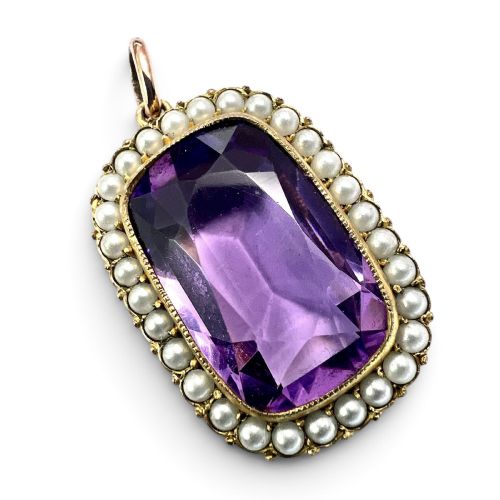
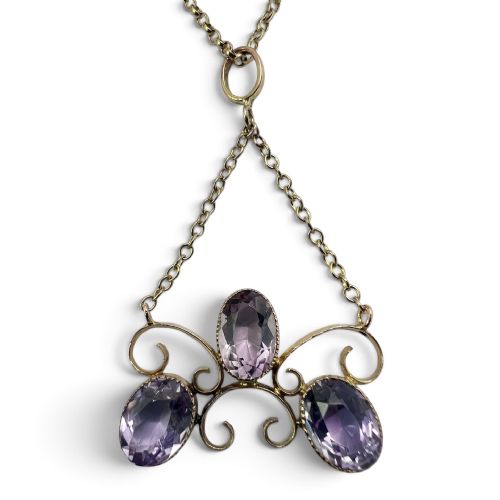


Purple Amethyst Gold Necklace
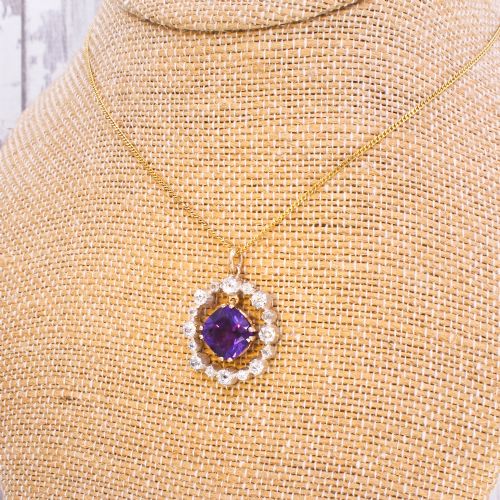
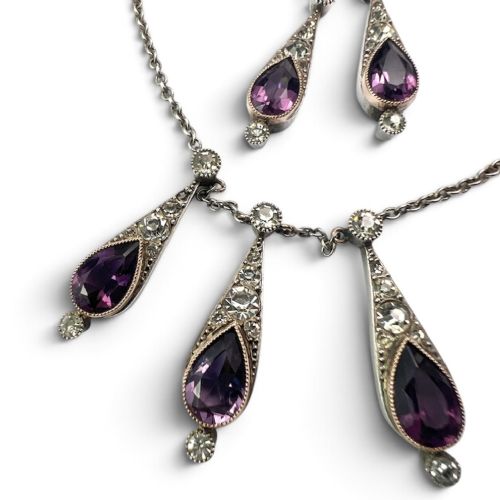
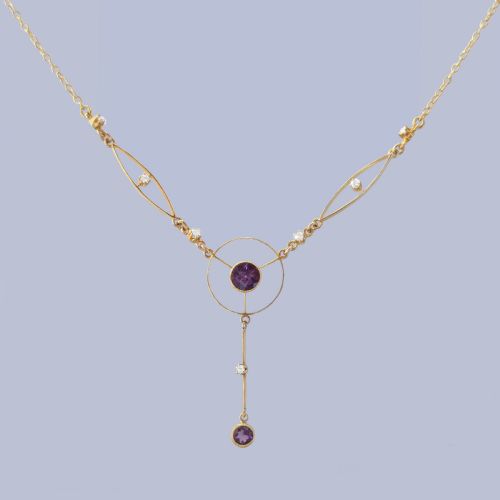
A purple amethyst gold necklace brings together deep purple quartz and warm yellow metal in designs spanning from the Victorian era to the mid-twentieth century.
How they were made
Goldsmiths utilised 9ct, 12ct, 14ct, 15ct and 18ct yellow gold to form the bezels, chains and decorative frames that hold the stones. Metalwork from the Edwardian and Victorian periods frequently incorporates detailed wirework, millegrain edges and openwork galleries.
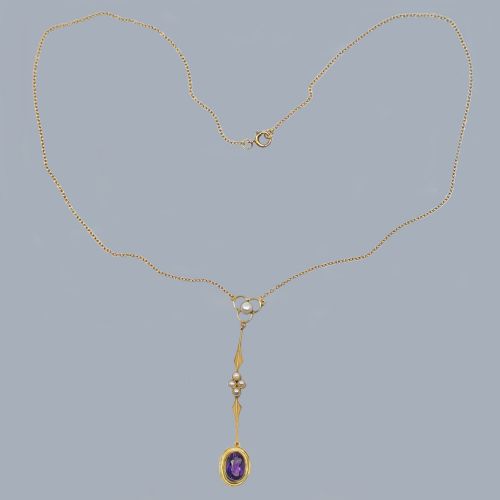
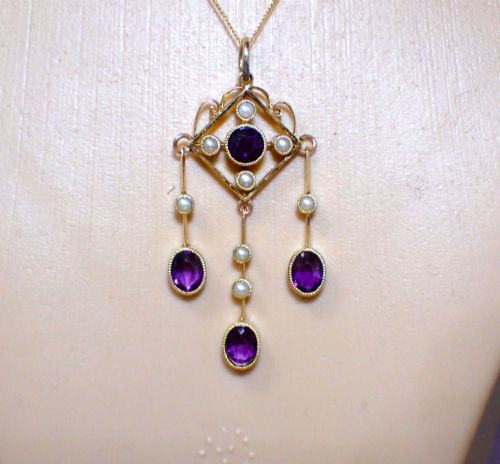
Natural pearls, seed pearls and old-cut diamonds complement the central amethysts in cluster and drop configurations. Craftsmen also employed paste stones in select period and vintage pieces to achieve specific hues and settings.
What varies in quality
The depth of colour in the amethyst and the overall harmony of the design dictate the standing of a piece within its period. Examples featuring high-carat gold alongside well-matched natural pearls command attention through superior material selection.
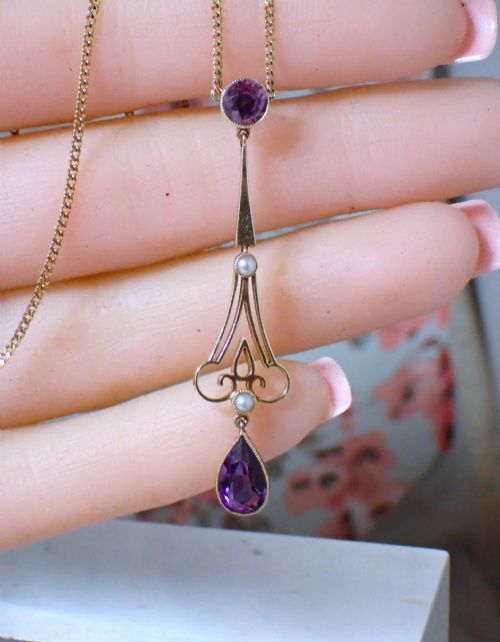
Makers who integrated fluid Art Nouveau lines or balanced lavalier drops created compositions that display exceptional craftsmanship. The integration of old-cut diamonds further elevates specific necklaces above standard production.
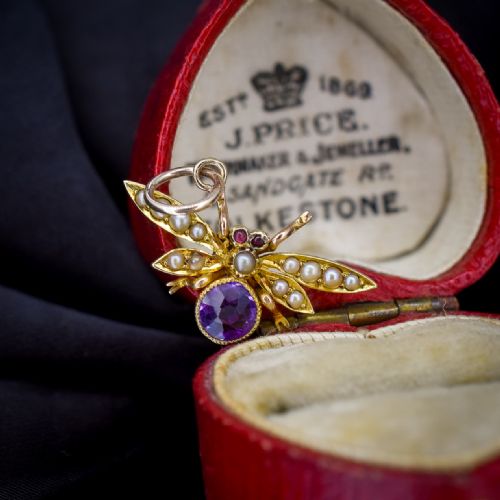
Pendant designs incorporate insect motifs, heart shapes, and foliate drops alongside traditional stone clusters.
S. Blanckensee & Son·Hamilton & Co
The Purple Amethyst Gold Necklace Glossary
- Lavalier
- A pendant necklace featuring a central suspended stone or drops that hang below the main chain line.
- Seed pearl
- A very small, naturally formed pearl, often half-drilled and glued or pegged onto gold settings in Victorian and Edwardian jewellery.
- Paste
- Hand-cut and polished glass utilised in historical jewellery to imitate gemstones.
- Millegrain
- A decorative technique involving a line of tiny raised metal beads along the edge of a setting.
- Negligé
- A necklace style featuring two unequal drops suspended from a central motif.
Purple Amethyst Gold Necklace: Frequently Asked Questions
What periods do these necklaces come from?
The pieces span several eras, with Victorian and Edwardian examples forming the majority of the available selection. Items from the Art Nouveau, Art Deco, and mid-century periods also appear.
Craftsmanship and design motifs shift across these decades, moving from ornate Victorian clusters to flowing Edwardian lavaliers and later vintage styles.
How do I care for my gold and amethyst necklace?
Amethyst is a quartz variety that benefits from gentle cleaning with warm soapy water and a soft brush. Harsh chemicals and ultrasonic cleaners should be avoided to protect both the stones and the pearls.
Store the necklace separately in a lined box or pouch to prevent the gold and gemstones from scratching against other items.
What gold purities are common?
Jewellery from these periods utilises a range of gold standards, most notably 9ct and 15ct gold in British pieces, alongside 14ct and 18ct gold.
Each purity offers a distinct shade of yellow metal, influenced by the alloy metals mixed with the pure gold during manufacture.
Are the pearls natural or cultured?
Many Victorian and Edwardian pieces incorporate natural seed pearls or small natural pearls typical of the era before cultured pearls became widespread. These delicate pearls contribute to the distinct aesthetic of antique floral and drop designs.
Examining the pearls under magnification reveals the organic variations characteristic of period pieces.