

Purple Amethyst Gold Drops
Purple amethyst gold drops bring together rich purple stones and warm metal in pendants, earrings and necklaces that span several historic periods.
Purple Amethyst Gold Drops
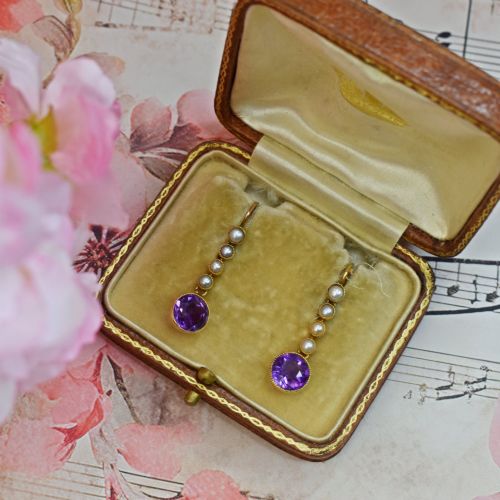
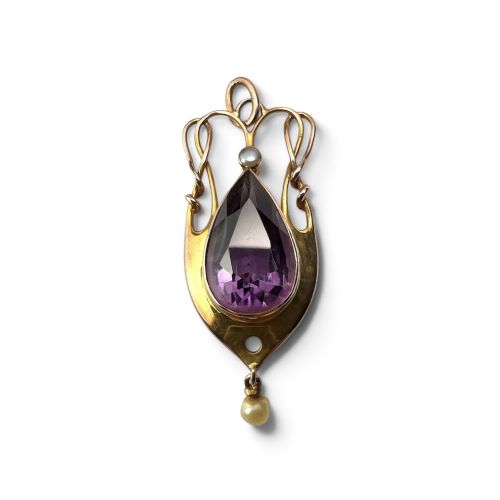
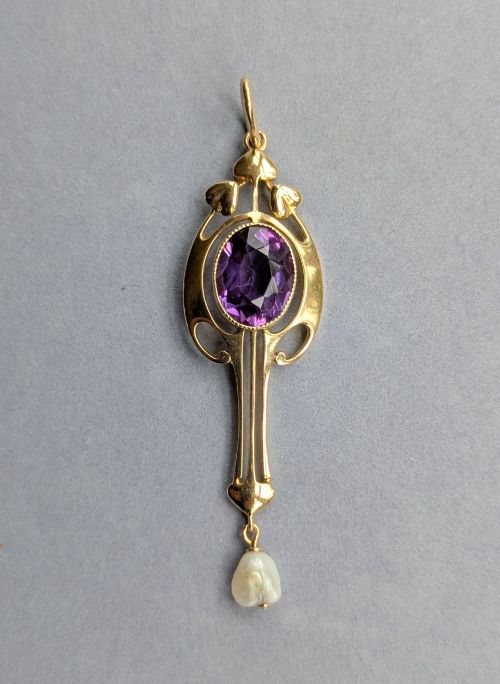
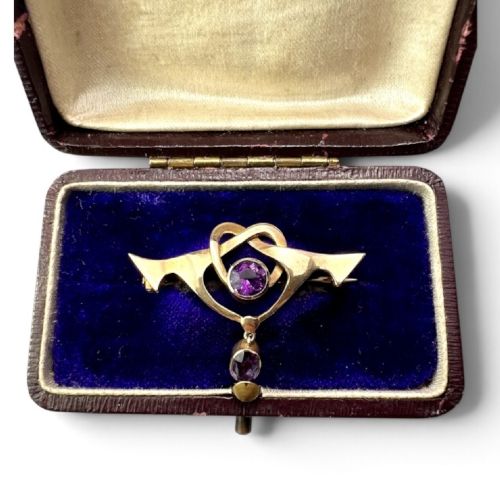
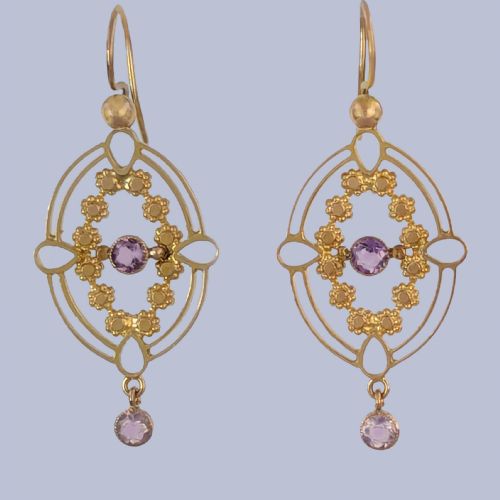
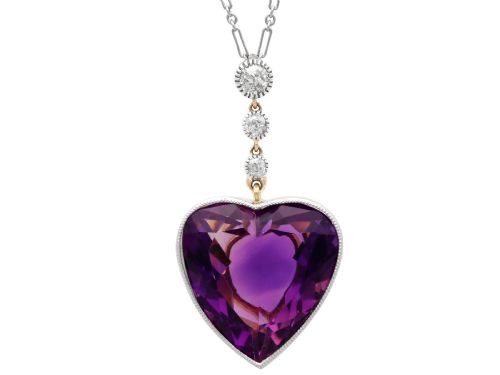
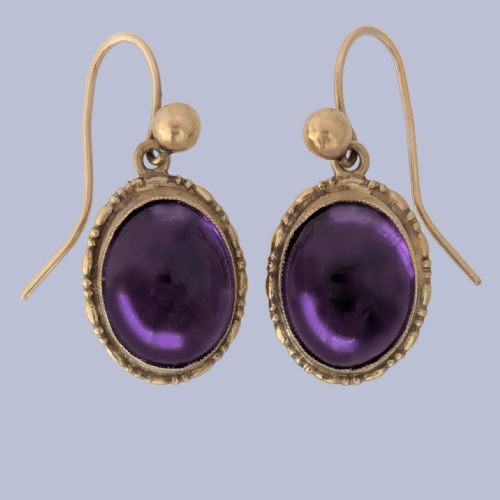
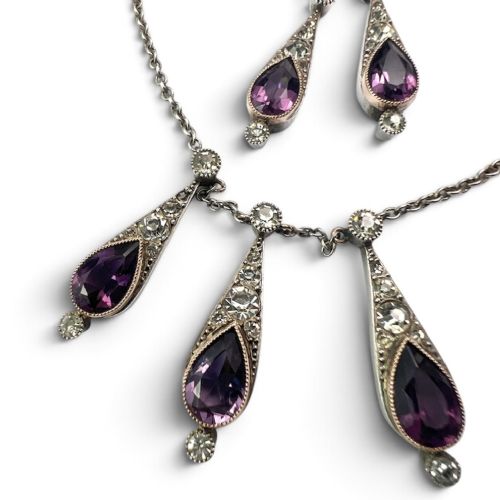
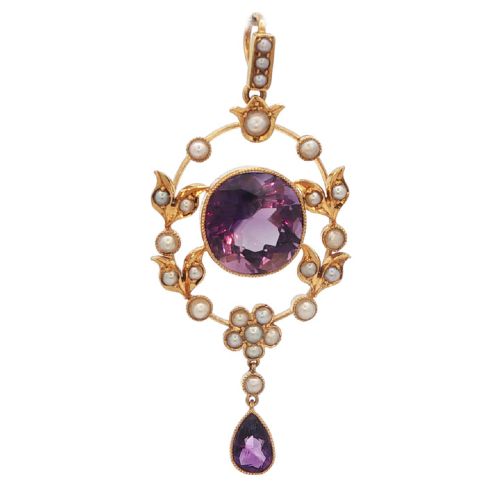
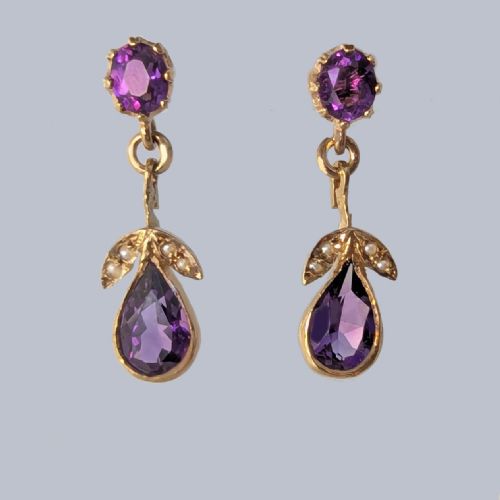
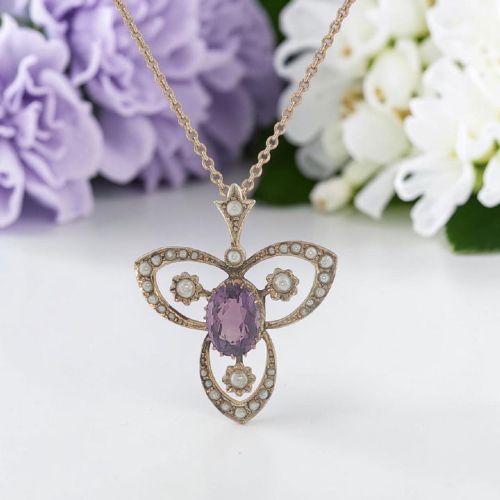
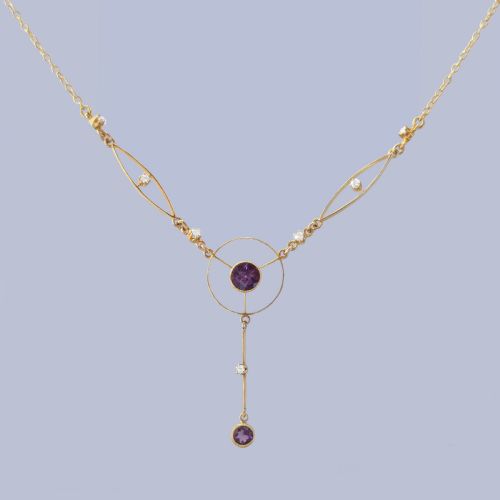
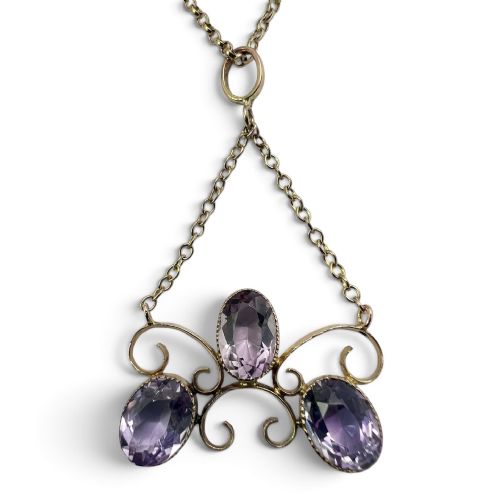
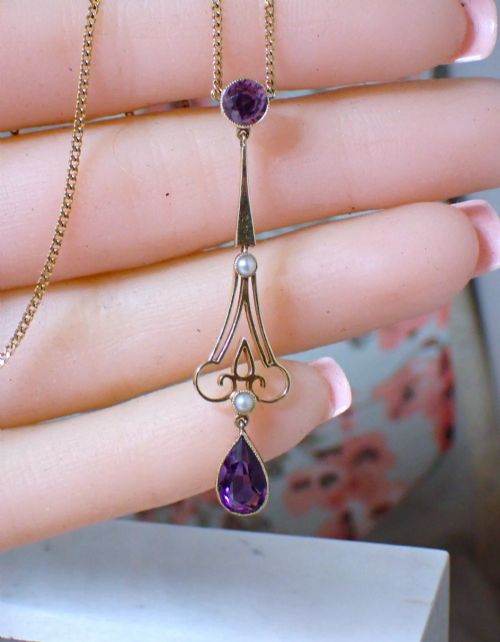
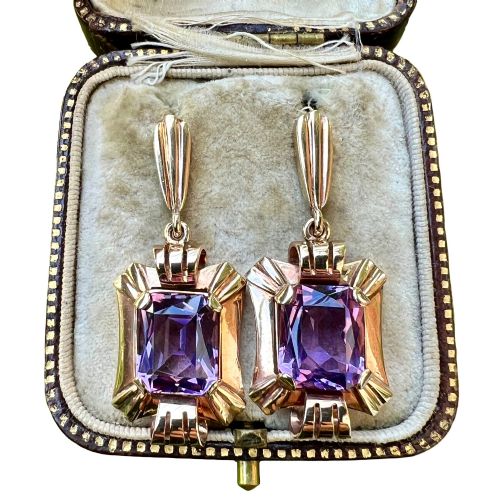
Purple amethyst gold drops encompass earrings, pendants and necklaces featuring purple quartz set in gold. These items surface frequently from the Edwardian and Victorian eras, carrying distinct period character.
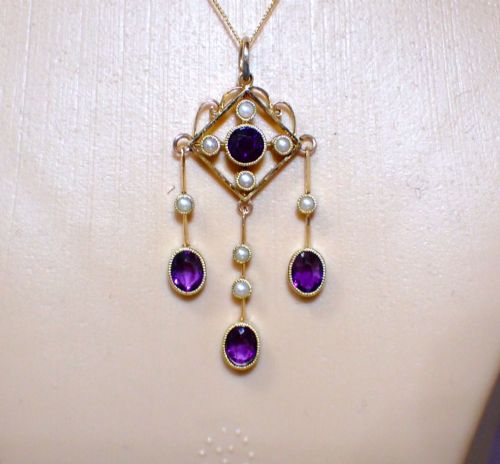
The most common versions met on this page are Edwardian drop earrings and pendants combining amethysts with seed pearls in nine carat or fifteen carat gold. Art Nouveau pieces with flowing organic lines also appear regularly alongside later twentieth century vintage interpretations.
Makers and designers from the nineteenth and twentieth centuries produced these items as matching suites, individual drop pendants, or articulated earrings designed to catch the light.
How they were made
Goldsmiths utilised nine carat and fifteen carat yellow gold, alongside silver and white gold in later pieces, to house faceted or smooth purple amethysts. Seed pearls and natural pearls were frequently wired or set alongside the central quartz to accent openwork floral and geometric motifs.
Techniques relied on hand fabrication, including openwork gallery wire, fine collet settings for stones, and articulated joints that allowed drops to swing freely on chains or shepherds hooks.
Purple Amethyst Gold Drops Retail Price Guide 2026
Typical asking prices for purple amethyst gold drops among the pieces listed under this phrase on Sellingantiques today, from the lower quarter to the upper quarter. They describe what is for sale here now, not the wider market.
The listings span from early Victorian pieces of the eighteen thirties up to nineteen sixties vintage items, with Edwardian examples forming a large portion of the selection.
What varies in quality
The depth of purple saturation in the amethyst and the clarity of the crystal distinguish different grades of these items. Higher tier examples pair stones with substantial gold weight and well preserved seed pearls.
Workmanship in the metalwork itself marks the division between standard production and superior output. Finely executed openwork, secure settings and intact maker marks elevate particular pieces above simpler commercial designs.
Murrle Bennett·Deakin & Francis·S. Blanckensee & Son·Hamilton & Co
The Purple Amethyst Gold Drops Glossary
- Amethyst
- A purple variety of quartz prized for its violet hue, frequently faceted into oval or drop shapes for jewellery.
- Seed pearl
- A very small natural or cultured pearl, often drilled and strung or mounted in clusters around central gemstones.
- Lavalier
- A pendant necklace featuring a central drop suspended from a chain, popular during the Edwardian period.
- Openwork
- Metalwork pierced or cut through to create a patterned design resembling lace or trellis work.
- Shepherd hook
- A curved wire fastener designed to pass through the pierced earlobe without a separate clasp.
Purple Amethyst Gold Drops: Frequently Asked Questions
How do I clean my amethyst and gold drop earrings?
Warm soapy water and a soft brush will remove everyday oils from the amethyst and gold surfaces safely. Avoid harsh chemical dips, which can damage the delicate pearls often set alongside the stones.
Dry the metal and stones thoroughly with a soft cloth before storing them in a lined box. Periodic checks by a jeweller will ensure the claw settings remain secure.
Are these pieces suitable for daily wear?
Amethyst rates well on the hardness scale, making it durable enough for regular use when mounted securely in gold. However, seed pearls require extra care because they are softer and sensitive to cosmetics and perfumes.
Remove drop earrings and pendants before swimming, sleeping, or applying hairsprays to preserve the original condition of the pearls and metalwork.
How can I tell an Edwardian piece from a Victorian one?
Edwardian designs tend to feature lighter openwork, garland motifs, and combinations of amethysts with seed pearls in platinum or high carat gold. Victorian items often display heavier gold settings, closed backs in earlier examples, and bolder geometric or naturalistic shapes.
Maker marks, hallmarks and clasp types also offer clues to the exact decade of manufacture.