



Provincial Walnut Credenza
A provincial walnut credenza brings tactile warmth and regional character to a room, offering substantial storage through rich timber surfaces and classic proportions.
Provincial Walnut Credenza
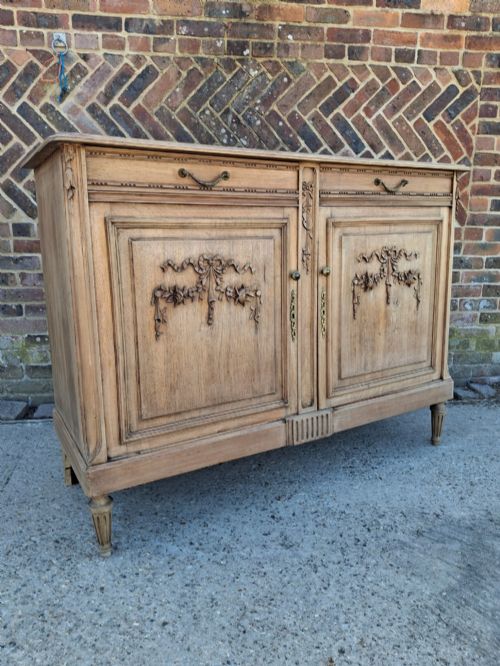
When searching for a provincial walnut credenza, buyers examine heavy wooden sideboards, buffets, and side cabinets originating largely from French regional workshops. These pieces span centuries of production, appearing in eighteenth-century vernacular designs as well as nineteenth-century revival styles and early twentieth-century interpretations.
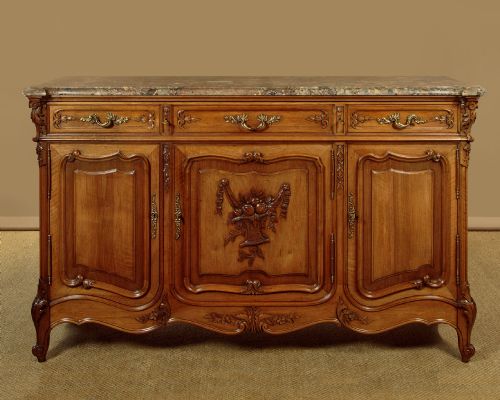
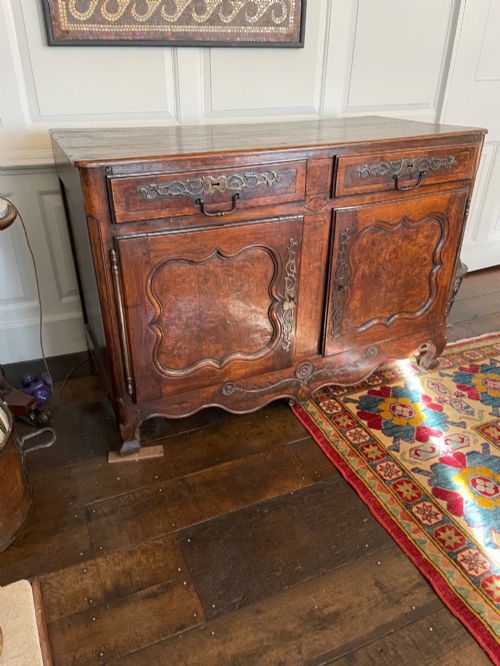
The most common examples on this page are eighteenth-century walnut buffets and commodes featuring carved details, serpentine fronts, and substantial timber construction. Alongside these, buyers encounter marble-topped sideboards and glazed display cabinets dating from the eighteen-fifties through the nineteen-thirties.
Regional variations lean heavily towards French provincial and chateau aesthetics, with occasional Italian walnut sideboards rounding out the selection. Forms range from simple four-door storage units to ornate carved servers bearing cherub motifs and detailed panelling.
Materials and construction methods
Construction relies primarily on solid walnut and walnut veneers, selected for deep grain patterns and resilience. Cabinetmakers paired this primary timber with secondary hardwoods for internal framing and drawer linings.
Surface ornamentation integrates carved wood elements alongside applied brass and ormolu mounts. Selected pieces incorporate inset marble tops and glass panels to provide functional serving surfaces and display capabilities.
Provincial Walnut Credenza Retail Price Guide 2026
Typical asking prices for provincial walnut credenza among the pieces listed under this phrase on Sellingantiques today, from the lower quarter to the upper quarter. They describe what is for sale here now, not the wider market.
One display cabinet carries hand sign-written references to the Rhone valley vineyards of Chateauneuf-du-Pape.
Assessing quality in regional cabinetry
Quality separates through the crispness of hand-carved ornamentation and the selection of timber figures across primary panels. Superior pieces display thoughtful integration of mounts, tight joinery in drawers and doors, and proportional balance.
Lesser examples show mechanical replication in carving or structural alterations over time. The integrity of the timber ground and the fidelity of period hardware significantly influence the standing of an individual piece.
The Provincial Walnut Credenza Glossary
- Buffet
- A low sideboard or cabinet traditionally used for storing and serving food. These storage pieces often feature multiple doors and drawers across the front elevation.
- Serpentine
- A furniture front characterised by a wavy outline with a convex centre flanked by concave curves. This contour requires skilled carpentry to shape accurately.
- Ormolu
- Gilded bronze mounts applied to furniture for decorative effect. The technique involves treating metal with a mercury and gold amalgam before heating.
- Commode
- A low chest of drawers or cabinet originating in France. They typically stand on short legs and serve both decorative and practical storage functions in domestic interiors.
- Provincial
- Denoting styles originating from regions outside the capital city. These designs often interpret metropolitan fashions through local materials and traditional craftsmanship.
Provincial Walnut Credenza: Frequently Asked Questions
What is a provincial walnut credenza used for?
These pieces function primarily as heavy storage units for dining rooms and living spaces, holding tableware, linens, and household items. The flat top surface also serves as a display area for decorative objects or a temporary surface during serving.
Historically, regional workshops built these cabinets to meet domestic storage demands in manor houses and rural farmhouses. Today, owners utilise them to anchor large walls while adding historical texture and practical surface area to contemporary rooms.
How do I date an 18th-century piece?
Dating relies on examining construction techniques, joinery marks, and tool traces hidden on internal drawer linings and backboards. Hand-cut dovetails and pegged joints generally indicate earlier periods of manufacture.
Stylistic cues such as serpentine shaping, hardware configurations, and regional carving motifs also help determine the age. Comparing the timber patination and wear patterns against documented examples provides further chronological clarity.
Where were these cabinets made?
The majority of these cabinets originate from regional workshops across France, particularly agricultural areas such as the Rhone valley. Local cabinetmakers utilised native walnut timbers to create sturdy furniture suited to provincial tastes.
Production also extends to Italian workshops and later revivalist factories across Europe. Each region adapted prevailing metropolitan styles to local preferences and available materials.
How do I care for walnut furniture?
Maintenance involves keeping the timber away from direct heat sources and fluctuating humidity to prevent wood movement and splitting. Regular dusting with a soft, dry cloth protects the wax or polish finish from abrasive particles.
Applying a quality feed or wax periodically helps nourish the walnut grain and maintain its natural depth. Avoid using silicone-based sprays or harsh chemical cleaners that can degrade antique surface finishes.