

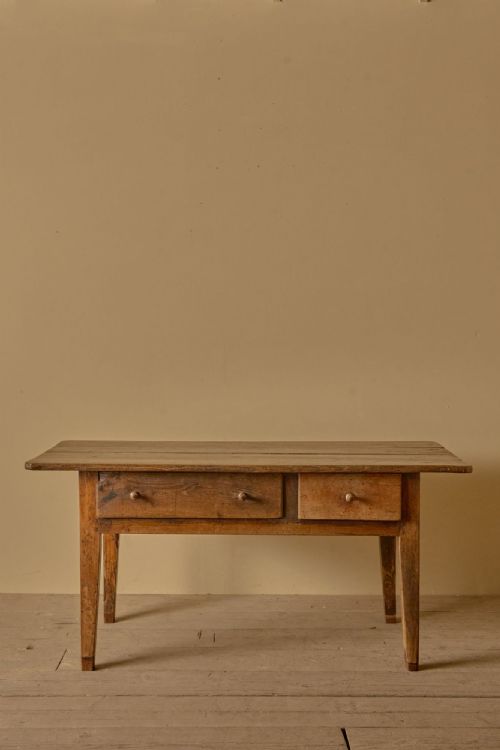
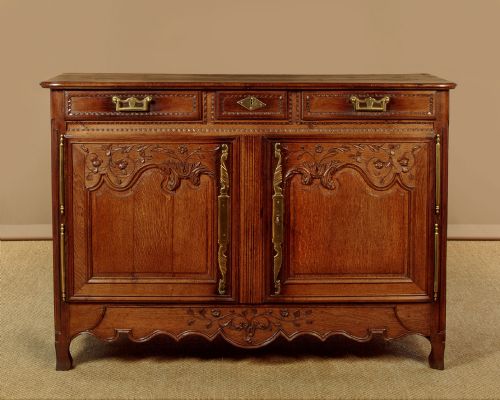

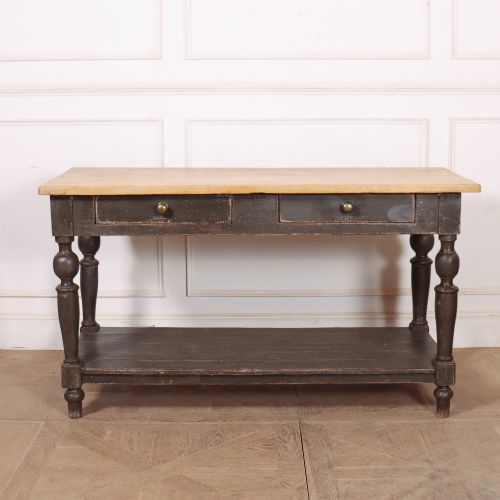
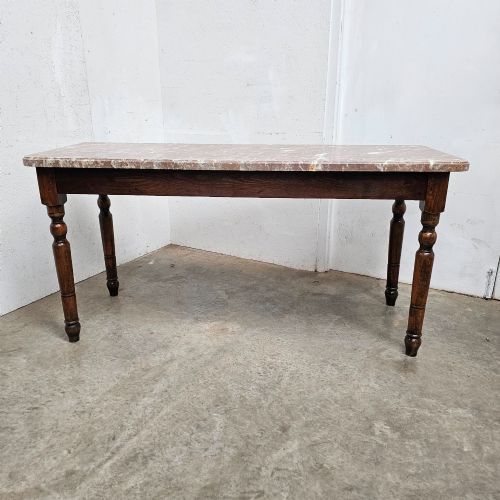
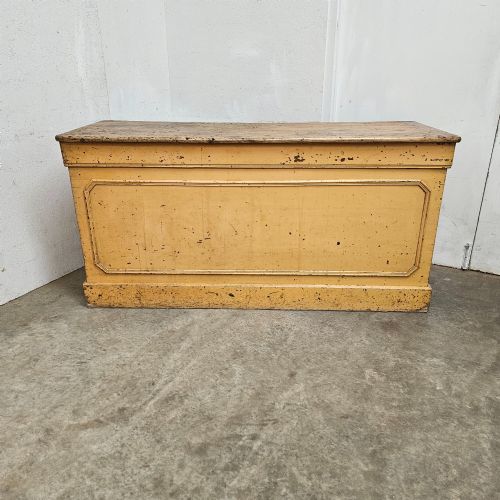

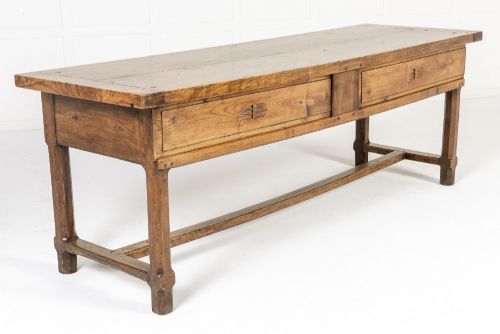


Provincial Kitchen Server
These provincial kitchen server pieces are working furniture from country houses and shops, offering honest timber surfaces and deep utility for modern homes.
Provincial Kitchen Server
When you search for a provincial kitchen server, you are looking at utilitarian tables, dressers, and counters built for hard work in domestic or commercial spaces. These objects come from the eighteenth and nineteenth centuries, spanning regions from England to France and Scotland.
The most common forms on this page are sturdy drapers tables, dresser bases, and serving tables. They are typically fashioned from regional timbers such as oak, pine, chestnut, and cherry.
Makers designed these pieces for daily food preparation, storage, and display rather than formal dining. Their straightforward construction reflects the practical demands of rural kitchens, manor houses, and country shops.
Materials and construction
Makers relied on solid regional timbers, building frames in oak, pine, chestnut, cedarwood, and cherry to withstand heavy daily use. Work surfaces often feature thick boards of scrubbed oak or marble designed for rolling pastry and food prep.
Joinery is robust and unadorned, using traditional pegged joints and hand-cut drawers to ensure longevity. Many pieces retain original layers of paint, showing the history of working surfaces touched by generations of domestic labour.
Provincial Kitchen Server Retail Price Guide 2026
Typical asking prices for provincial kitchen server among the pieces listed under this phrase on Sellingantiques today, from the lower quarter to the upper quarter. They describe what is for sale here now, not the wider market.
Distinguishing quality
Quality rests in the integrity of the original timber and the survival of honest working surfaces, such as thick scrubbed tops or undisturbed old paint. Pieces that retain their original drawers, brass hardware, and pot-shelves carry greater authenticity.
Proportion and scale also separate standard utility items from exceptional examples, such as tall manor house tables or fitted shop counters. Better pieces show evidence of regional hand-craftsmanship in their framing rather than mass production.
The Provincial Kitchen Server Glossary
- Drapers table
- A long, narrow table historically used in textile shops for folding cloth, now prized as a kitchen island or serving surface.
- Dresser base
- The lower section of a kitchen dresser featuring drawers and cupboards, used for storing culinary equipment and serving food.
- Pot-shelf
- An open lower shelf built into a serving table or dresser base specifically designed to hold heavy pots and pans.
- Patisserie display table
- A specialised counter featuring a marble top, traditionally used for rolling pastry and displaying baked goods in French shops.
Provincial Kitchen Server: Frequently Asked Questions
What is a provincial kitchen server?
A provincial kitchen server is a sturdy, practical table or low dresser originating from rural workshops in Britain and France. These pieces were built for heavy domestic tasks like food preparation and storage.
Today, they serve as kitchen islands, sideboards, or preparation tables in modern homes, bringing honest historic utility and warmth to open spaces.
How were these tables used originally?
Originally, these tables and counters stood in kitchens, manor houses, and rural shops to handle daily chores. They provided stable surfaces for rolling dough, butchering meat, and organising provisions.
Shop counters and drapers tables held goods for customers, while dresser bases kept plates and cookware close at hand for busy households.
How do I care for an antique wood top?
Care for antique wood and scrubbed timber surfaces by dusting regularly with a dry cloth and avoiding harsh chemical cleaners. Spills should be wiped up promptly to protect the aged grain and patina.
Applying a light coat of natural beeswax occasionally helps nourish dry timber without sealing the historic surface under modern varnishes.
How do I distinguish French and English pieces?
French pieces often utilise regional woods like chestnut, cherry, and walnut, frequently featuring carved cabriole legs, pot-shelves, or original painted finishes. English examples commonly lean towards sturdy oak and pine with cleaner, more straightforward structural lines.
Examining the joinery style and the specific character of the timber helps reveal the likely geographic origin of the workshop.