


Printed Earthenware Pitcher
These printed earthenware pitchers are practical pouring vessels carrying transfer-printed designs, offering a tangible link to domestic and commemorative life across the Georgian and Victorian eras.
Printed Earthenware Pitcher
A printed earthenware pitcher takes the form of a handled pouring vessel, commonly utilised for water, beer or large-scale table service. When you search for a printed earthenware pitcher, you encounter substantial jugs created for domestic use or public houses.
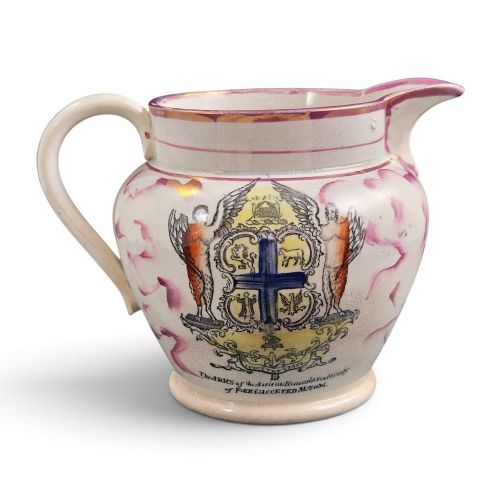
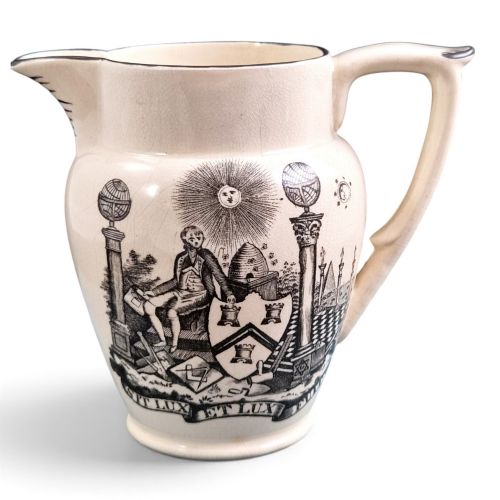
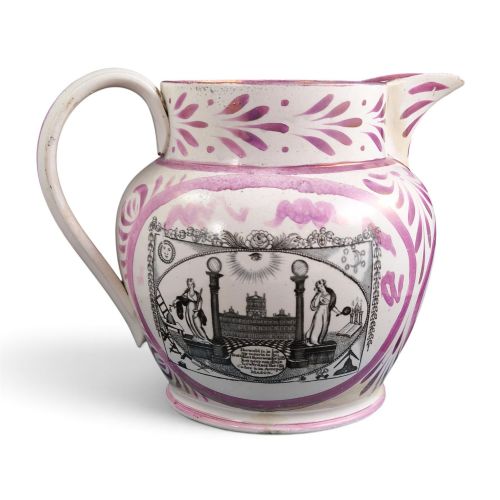
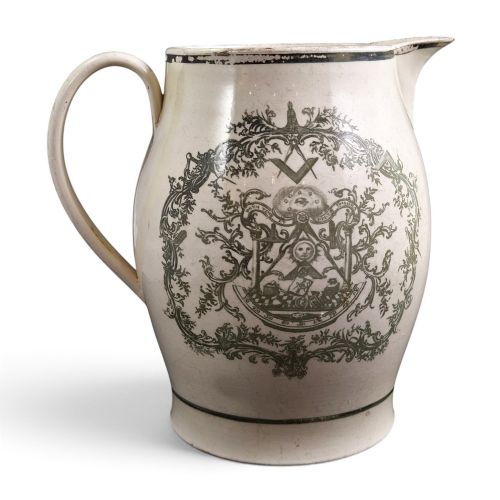
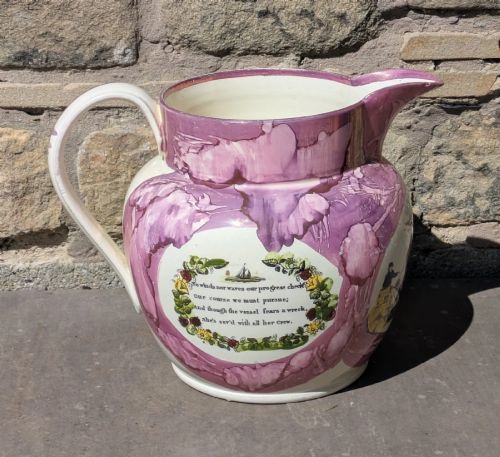
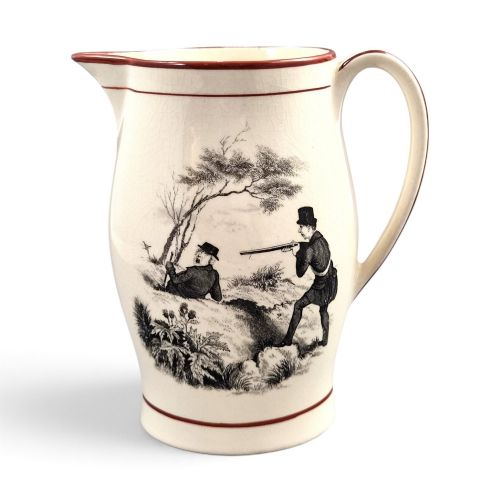
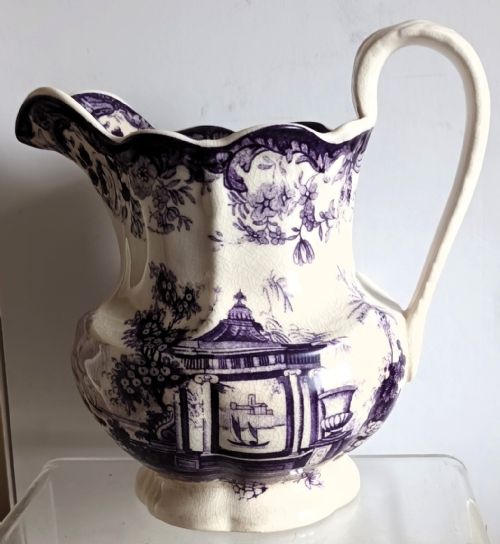
The examples gathered here span from the Georgian period through the Victorian era, encompassing creamware and standard earthenware bodies. Many pieces display transfer-printed decoration featuring Masonic emblems, maritime themes, clipper ships and civic buildings such as the Boston State House.
You meet both large one-gallon vessels and decorative jugs, originating primarily from Staffordshire potteries and Sunderland potteries. These pieces range from utilitarian hotel ice water jugs to heavily embellished pink lustre exhibition pieces.
Manufacturing methods and materials
Potters formed these pitchers using earthenware clay bodies, often refined into creamware for a smoother pale yellow surface. Artisans then applied transfer-printed designs in black, blue, magenta or green directly onto the ceramic body before glazing.
Surface enhancement frequently involved metallic finishes, specifically pink lustre glaze and various lead or cobalt glazes. Firing in kilns set the transfer print beneath or within the glaze, sealing the intricate maritime and Masonic motifs for everyday utility.
The documented periods span the Georgian, Regency and Victorian eras, alongside mid-nineteenth and twentieth-century dates.
Judging quality and execution
Quality rests in the crispness of the transfer print and the complexity of the secondary decoration, such as hand-applied pink lustre washes or multi-scene applications. Simpler hotel or commercial wares prioritize robust walls over ornamental detail.
The refinement of the earthenware body, from heavy commercial creamware to thin-walled exhibition pieces, dictates the sophistication of the vessel. Superior examples align sharp historical or Masonic printing with harmonious glaze applications.
Sunderland Garrison Pottery·Staffordshire potteries
The Printed Earthenware Pitcher Glossary
- Creamware
- A refined light-coloured earthenware developed in the eighteenth century, providing a smooth surface for transfer printing.
- Transfer print
- A decorative technique where an engraved copper plate transfers an inked design onto paper and then onto the ceramic body.
- Pink lustre glaze
- A metallic glaze containing gold in solution, firing to a characteristic iridescent pink sheen often seen on Sunderland pottery.
- Creamware body
- The porous, low-fired ceramic core beneath the glaze, typically pale yellow or off-white in tone.
- Masonic jug
- A commemorative vessel decorated with symbols and emblems associated with Freemasonry, frequently produced in nineteenth-century potteries.
Printed Earthenware Pitcher: Frequently Asked Questions
What were printed earthenware pitchers used for?
These vessels served practical pouring functions at the table, holding water, beer or other beverages for household and commercial dining. Large one-gallon formats and hotel ice water jugs accommodated communal drinking in busy establishments.
Beyond basic utility, many served commemorative roles. Masonic and maritime jugs marked memberships, ships or civic pride, often displayed prominently on mantelpieces rather than kept in cupboards.
How do I identify a Georgian pitcher?
Georgian examples, typically dating from around 1800 to 1830, frequently employ creamware bodies with black, blue or green transfer printing. Forms tend to be robust, utilising early transfer techniques that predate mid-Victorian industrial standardisation.
Look for subject matter tied to the period, such as early civic buildings like the Boston State House or classical Masonic iconography. The glaze will often show the softer, warmer tones characteristic of late eighteenth and early nineteenth-century kilns.
What is pink lustre?
Pink lustre is a metallic glaze technique that produces a distinctive iridescent, coppery-pink sheen across parts of the ceramic surface. Potters achieved this effect by applying a metallic solution containing gold before a specialised kiln firing.
On these pitchers, pink lustre often frames transfer-printed maritime scenes or highlights the rims and handles, adding a bright reflective quality to the earthenware body.
How should I display my pitcher?
Display your pitcher on a stable, flat surface away from direct sunlight and heavy foot traffic to protect the earthenware body and glaze. Because many of these pieces are large and heavy, sturdy shelving is essential.
Keep them clear of frequent handling, particularly pieces with delicate pink lustre or extensive transfer printing, to preserve the historic surface decoration over time.