


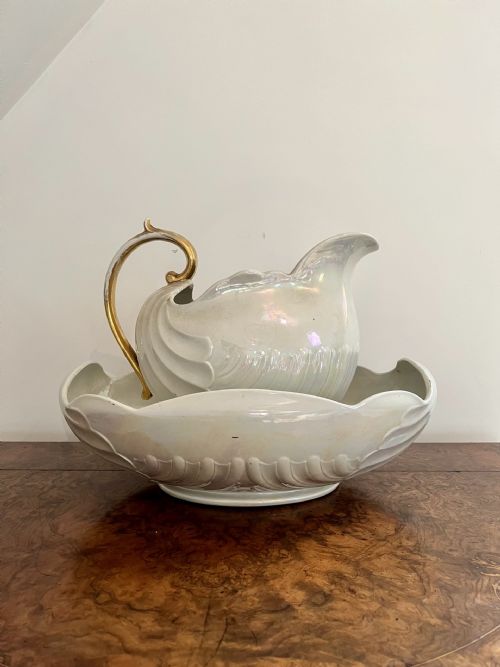
White Glazed Ceramic Pitcher
White glazed ceramic pitcher selections range from seventeenth-century Dutch Delftware to twentieth-century Staffordshire earthenware, offering practical utility and historic display value.
White Glazed Ceramic Pitcher
A white glazed ceramic pitcher is a hollow vessel designed for holding liquids, appearing across multiple centuries of European production. These pieces serve functional pouring roles or stand as decorative objects in domestic settings.
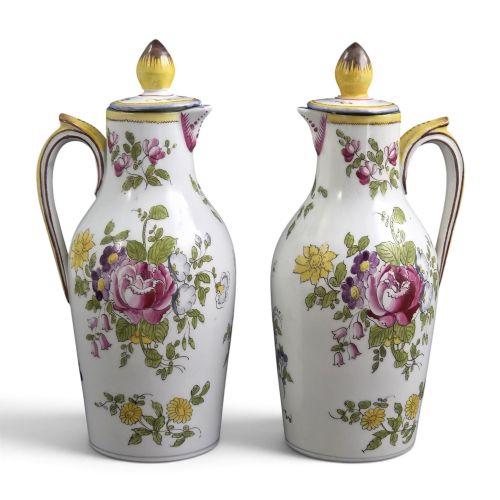
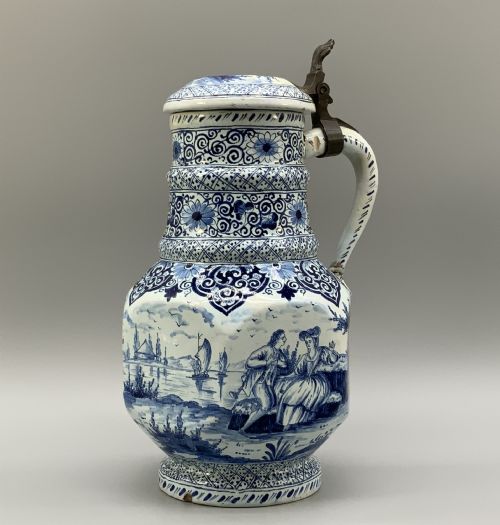
The selection here draws heavily on historic tin-glazed earthenware traditions, notably Dutch Delftware and English delftware alongside later nineteenth-century Staffordshire and Victorian examples. Collectors encounter various forms, from blue and white floral vessels to figurative Toby jugs and coffee pots.
Earlier pieces often feature tin glaze applied over an earthenware body, sometimes paired with pewter lids or manganese painting. Later nineteenth and twentieth-century items incorporate refined ceramic bodies with transfer-printed or hand-painted patterns.
What varies in quality
Quality rests upon the crispness of the painted decoration, the evenness of the white glaze application, and the overall survival of the ceramic body. Early tin-glazed pieces display subtle variations in brushwork control and glaze thickness across individual workshops.
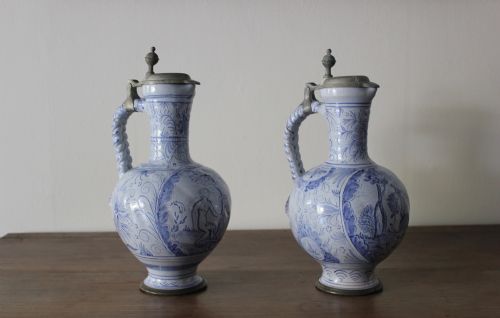
The presence of original mounts, such as contemporary pewter lids on eighteenth-century jugs, elevates a piece. Condition of the delicate tin glaze edges and the stability of the earthenware body remain central to evaluating these items.
The selection includes Dutch Delftware, Italian majolica, Victorian wares, and Staffordshire pottery forms.
Pieter Verburg·Doulton Lambeth·Shelley
The White Glazed Ceramic Pitcher Glossary
- Tin glaze
- An opaque white glaze containing tin oxide, applied to earthenware to create a smooth surface for painted decoration. This technique defines traditional Delftware and majolica production.
- Earthenware
- Porous pottery fired at lower temperatures, requiring a glaze to hold liquids. It forms the structural body for the majority of these jugs and pitchers.
- Delftware
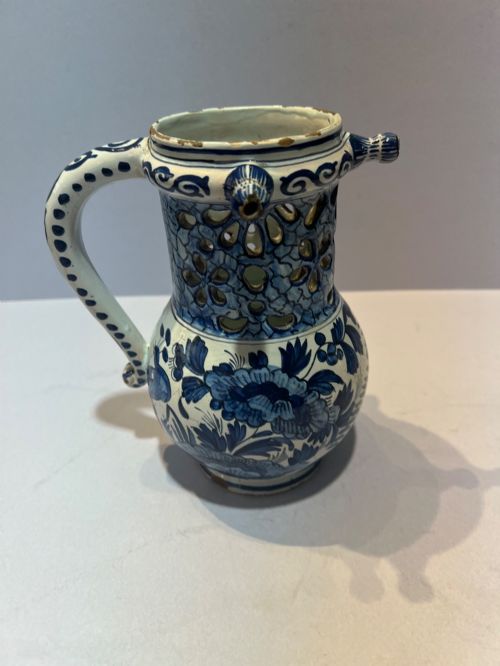
- Tin-glazed earthenware produced in the Netherlands and England, frequently decorated in blue and white. The style encompasses domestic vessels, puzzle jugs, and apothecary jars.
- Toby jug
- A pottery jug modelled as a seated figure, typically an eighteenth or nineteenth-century character holding a mug and beer mug. Examples appear in Dutch Delft and Staffordshire traditions.
- Faience
- European tin-glazed earthenware, particularly that produced in France, Italy, and the Netherlands. The term distinguishes continental tin-glazed wares from English equivalents.
White Glazed Ceramic Pitcher: Frequently Asked Questions
How do I date a white glazed pitcher?
Dating relies on examining the ceramic body, glaze characteristics, and decorative motifs present on the piece. Seventeenth and eighteenth-century examples typically utilise tin glaze over soft earthenware, whereas later nineteenth-century pieces show industrial Staffordshire or Doulton bodies.
Changes in palette also assist attribution, such as early cobalt blue and manganese shifting towards polychrome Victorian transfer prints or Gaudy Welsh patterns.
Were these pitchers used for daily dining?
Many historical vessels served functional roles at table for pouring water, wine, or milk, while others held hot beverages like coffee. Puzzle jugs and decorative display plaques fulfilled more social or ornamental purposes.
Heavier hotel wares and graduated Staffordshire sets indicate practical service needs in domestic and commercial dining environments during the nineteenth century.
How should I clean my antique pitcher?
Gentle dusting with a dry, soft cloth remains the safest maintenance for fragile tin-glazed surfaces and delicate nineteenth-century ceramics. Avoid submerging older earthenware in water, particularly if the glaze shows hairline cracks or historical repairs.
Harsh chemical detergents can damage the soft lead or tin glazes found on early European pottery, permanently dulling the painted surface.
What is tin-glazed earthenware?
Tin-glazed earthenware consists of a clay body covered in a white glaze made opaque through the addition of tin oxide. This white surface provided a canvas for painters working in blue, manganese, and polychrome pigments.
The technique travelled from the Middle East through Italy and the Netherlands, eventually reaching English potteries.