


Transferware Water Pitcher
These transferware water pitcher examples bring practical 19th century utility and transfer-printed scenes directly to the washstand or table.
Transferware Water Pitcher
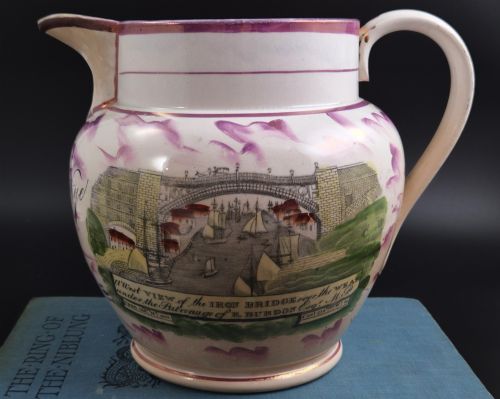
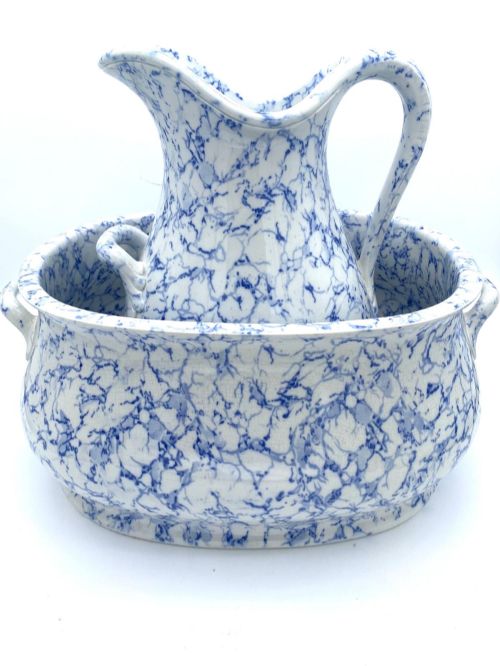
When you search for a transferware water pitcher, you are looking at ceramic vessels produced across the nineteenth century, including Georgian and Victorian periods, designed to hold water for washing or serving. The pieces on this page appear within larger wash sets, footbath jugs, or as standalone ewers decorated with transfer-printed motifs.
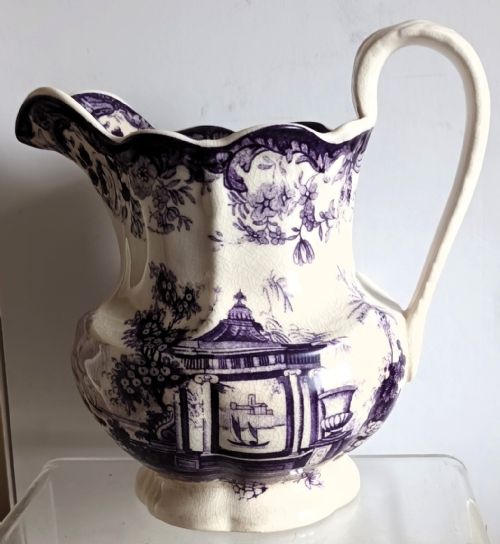
Most examples you meet here originate from English potteries, spanning simple blue and white patterns to vibrant pink lustre or flow blue decoration. Forms range from large one-gallon vessels to refined ewers associated with Arts and Crafts designs.
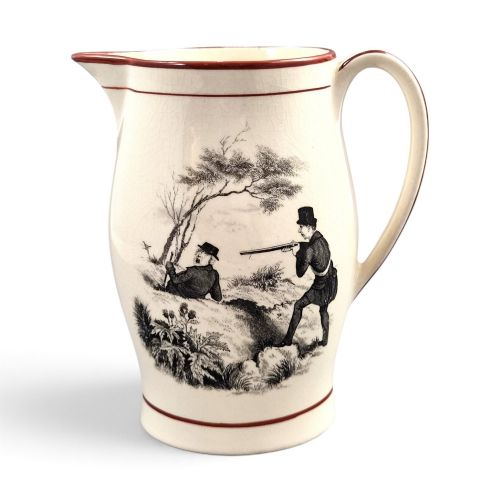
Makers utilised earthenware, creamware, and pearlware as bodies for these jugs, applying printed scenes that depict topographical views, literary themes, or classical patterns. These objects combine domestic utility with the narrative transfer printing techniques characteristic of their era.
Materials and production methods
Potters formed these pitchers using earthenware, creamware, or pearlware bodies, shaping them either by hand on a wheel or within moulds to achieve robust jugs suitable for daily use. The distinctive decoration relied on transfer printing, a technique where an engraved copper plate transferred a design onto tissue paper, which was then rubbed onto the unfired ceramic surface.
Following the print transfer, workers applied glazes, enamels, or lustre finishes - such as pink splash lustre or gold leaf highlights - before subjecting the piece to kiln firing to fuse the decoration permanently. Certain specialised forms, such as mask head jugs, incorporated moulded sculptural elements alongside the printed patterns.
Judging quality and execution
The distinction between standard commercial wares and finer pieces rests on the clarity of the transfer print and the sophistication of the ceramic body. Crisp, well-registered transfer lines without blurring indicate superior copper plate engraving and careful application by the printer.
Additional embellishments elevate certain pitchers, such as hand-painted enamel details, lustre glazes, or gilt highlights applied over the print. The reputation of the pottery and the artistic ambition of the form, from standard domestic jugs to architecturally inspired ewers, further define the standing of each piece.
Minton·Caughley Coalport·Doulton Burslem
The Transferware Water Pitcher Glossary
- Transferware
- Ceramic pottery decorated by printing a design from an engraved copper plate onto paper and then transferring it to the ceramic body before glazing. This method allowed intricate pictorial scenes to be replicated consistently.
- Creamware
- A refined earthenware developed in eighteenth-century Staffordshire, characterised by a pale yellowish-cream glaze. It provided a smooth, light ground ideal for transfer printing.
- Pearlware
- An improved earthenware body introduced in the late eighteenth century featuring a bluish-tinted glaze that pooled in recesses to simulate the whiteness of Chinese porcelain.
- Lustre glaze
- A metallic glaze applied to pottery to create an iridescent, reflective surface effect. Pink and copper lustre variations appear frequently on nineteenth-century jugs.
- Flow blue
- A style of transfer printing where cobalt oxide blurred intentionally into the surrounding white glaze during firing. This created a rich, soft-edged, smoky appearance highly favoured in Victorian ceramics.
Transferware Water Pitcher: Frequently Asked Questions
What is a transferware water pitcher used for?
These pitchers served as functional vessels for holding fresh water, historically paired with matching basins on washstands in bedrooms. They were also utilised in dining spaces for serving water or other beverages.
Over time, their roles shifted from daily washing utilities to decorative display items that showcase nineteenth-century ceramic artistry.
How do I date an antique water pitcher?
Dating relies on examining the ceramic body, glaze characteristics, and the style of the transfer-printed subject matter. Creamware and pearlware bodies generally point towards the Georgian era, while flow blue and heavier earthenware often indicate Victorian production.
Makers' marks stamped or printed on the base provide definitive attribution when present. Stylistic clues, such as Arts and Crafts forms, narrow the period further.
How should I display a pitcher safely?
Place your pitcher on a stable, level surface away from heavy household traffic to prevent accidental knocks. Ensure the supporting shelf or table can bear the weight of the ceramic vessel.
Keep pieces out of direct, prolonged sunlight to protect any overglaze enamels or lustre finishes from fading over time.