



Pressed Glass Vase
A pressed glass vase brings tactile relief and brilliant light play to any room, offering heavy-pressed clarity or soft opalescence.
Pressed Glass Vase
When you search for a pressed glass vase, you enter a domain spanning heavy Victorian tableware forms and striking Art Deco French masterworks. The pieces here range from early celery vessels and cornucopia designs to monumental sculptural bowls and floral cylinders.
You are most likely to meet two distinct eras on this page: mid-to-late nineteenth century Victorian productions and twentieth century French and Czech creations. The earlier items often display ribbed or pink cranberry colouration, while the later items frequently showcase opalescent finishes and figural motifs.
How they were made
Makers produced these objects by pressing molten material into metal moulds using a plunger, a mechanical process that allowed for rapid pattern replication. Flint glass, crystal, and coloured glass served as the primary media, taking on sharp relief from the interior and exterior plunger pressure.
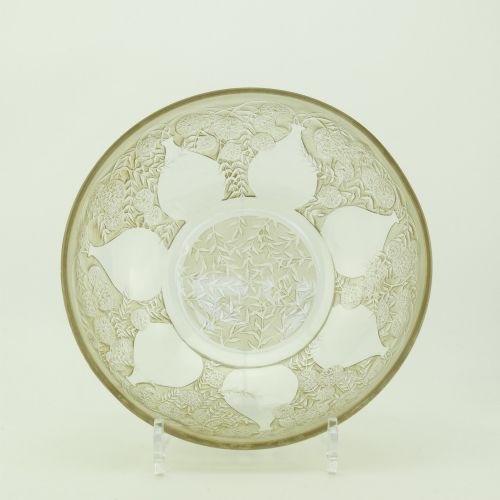
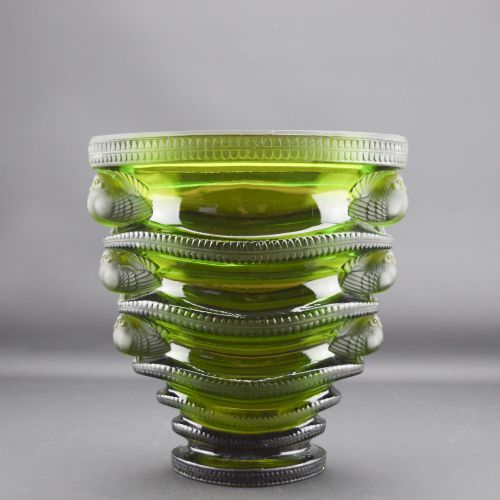
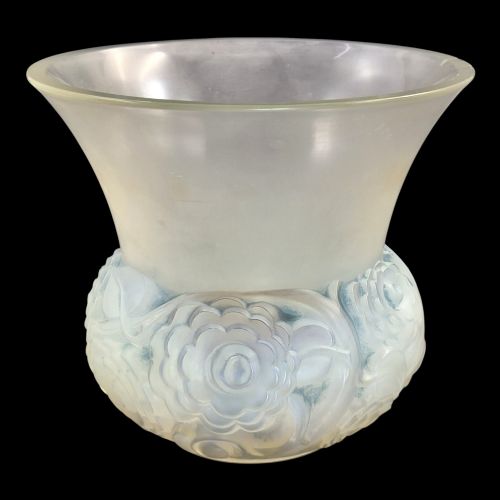
Many twentieth century examples incorporate frosted surfaces, blue staining, and olive green tints to accentuate the moulded relief. Victorian makers relied on rich pink cranberry hues and flint glass formulations to achieve their distinct weight and clarity.
Listings feature items spanning from the mid-nineteenth century through the Art Deco era, encompassing clear, frosted, and coloured glass.
What varies in quality
The sophistication of the mould design and the crispness of the relief separate standard domestic production from elite studio output. Superior examples display deep undercut details and intentional surface patination, such as blue staining or frosted finishes that catch ambient light.
Material composition also dictates the standing of a piece, with high-lead crystal and rich opalescent formulations offering superior depth and refractive index. The weight, wall thickness, and purity of the glass body reflect the care taken during the initial pressing stage.
Rene Lalique·Libochovice
The Pressed Glass Vase Glossary
- Pressed glass
- Glass formed by pressing molten metal into a metal mould with a mechanical plunger. This method revolutionised production speed and enabled intricate exterior patterns.
- Opalescent glass
- Glass containing specific chemical agents that cause it to appear milky-blue in transmitted light and warm amber or orange in reflected light. It is particularly characteristic of twentieth century decorative vessels.
- Flint glass
- A heavy, brilliant glass historically containing lead oxide, known for its high refractive power and clarity. Victorian makers frequently utilised this material for tableware and display vessels.
- Cranberry glass
- Glass coloured by the addition of gold chloride, producing rich pink and red tones. It became immensely popular during the Victorian period for ornamental cornucopia vases.
- Moulded glass
- Glass shaped by being blown or pressed into a prepared mould rather than free-blown by pipe. This technique leaves distinct pattern seams and sharp surface decoration.
Pressed Glass Vase: Frequently Asked Questions
How do I clean an opalescent vase?
Wash the glass gently in warm, soapy water using a soft cloth to protect the delicate surface texture. Avoid harsh chemical cleaners and abrasive scourers that can damage the frosted or stained highlights.
Dry the vessel thoroughly with a lint-free cloth to prevent water spots from dulling the opalescent finish. Take extra care around the moulded relief areas where dust and residue tend to accumulate.
What is the difference between pressed and blown glass?
Pressed glass is formed mechanically by forcing molten material into a metal mould with a plunger, which results in thick walls and sharp exterior patterns. Blown glass is shaped using a blowpipe and breath, creating thinner walls and smoother interior contours.
You can often identify pressed items by the presence of mould seams and exceptionally crisp, high-relief exterior decoration. Blown pieces generally show pontil marks on the base rather than the pressed distribution of material.
How can I date a Victorian celery vase?
Victorian celery vessels from the mid-nineteenth century typically feature heavy flint glass construction with deep vertical ribbing or panel cuts. They were designed specifically to stand upright on dining tables to hold stalks of celery in iced water.
Look for the characteristic weight, soft greyish refraction of older flint glass, and hand-finished pontil scars on the underside. These physical traits distinguish authentic nineteenth-century examples from later commemorative reproductions.