
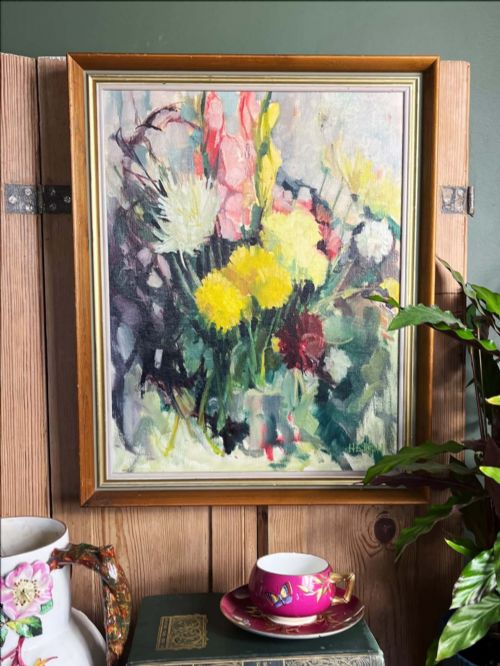
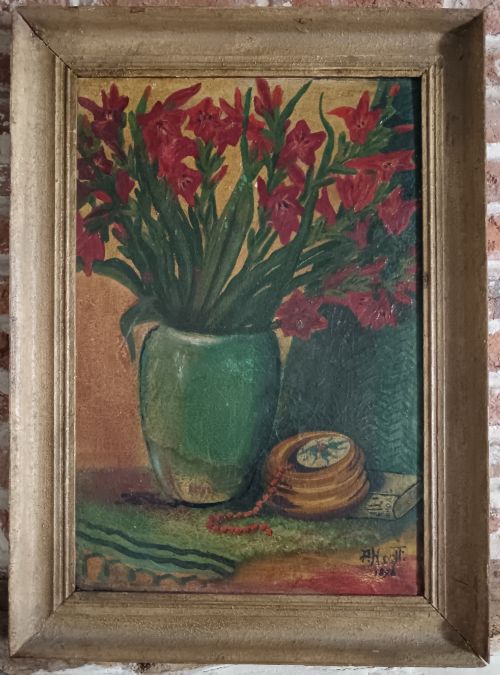


Post Impressionist Flower Canvas
These post impressionist flower canvas works bring vibrant floral studies home with textured brushwork and rich colour.
Post Impressionist Flower Canvas
A post impressionist flower canvas captures floral subjects through expressive brushwork and strong colour choices. Buyers seeking this phrase encounter works ranging from the late nineteenth century through the mid twentieth century.
The selections on this page span several decades, featuring oil paint on canvas, board, and framed surfaces. Domestic floral subjects like anemones, garden roses, and dahlias dominate the compositions.
British Impressionism and Modern British movements heavily influence these paintings. They offer a direct connection to early twentieth century artistic developments.
How they were made
Artists applied oil paint directly onto canvas or board using confident, visible strokes. Many pieces utilise wood frames, sometimes finished with gold leaf or gilt.
Makers built up textures to give depth to vases, pots, and petals. The physical surface remains central to the visual character of each piece.
Listings feature oil paint applied to canvas and board across several decades of the twentieth century.
What varies in quality
Confidence of brushwork and harmony of palette distinguish stronger examples from simpler studies. The handling of light within interiors or garden settings shows the painter's skill.
The strength of provenance and clarity of signatures elevate certain works above anonymous pieces. Materials such as gold leaf framing also indicate the original ambition of the piece.
Maud Frances Eyston Sumner·Ernest Higgins Rigg·Henry D'Arcy Hart·Herbert Davis Richter·Owen Bowen
The Post Impressionist Flower Canvas Glossary
- Oil Paint
- A slow-drying paint made from pigment suspended in a drying oil, commonly linseed. This medium allows artists to build rich textures and blend colours directly on the canvas.
- Pointillist
- A technique of painting where small, distinct dots of colour are applied in patterns to form an image. Optical mixing occurs when the viewer's eye blends the colours together.
- Board
- A rigid flat surface used as a painting support instead of stretched canvas. Artists often worked on board for smaller studies and plein air painting.
- Gilt
- A thin layer of gold applied to wood or other surfaces. It provides a decorative finish to frames surrounding the artwork.
- Still Life
- A work depicting mostly inanimate subject matter, typically commonplace objects like flowers in vases or bowls of fruit. This genre allowed artists to focus on colour, form, and composition.
Post Impressionist Flower Canvas: Frequently Asked Questions
What periods do these paintings cover?
The available works span from the late nineteenth century through the mid twentieth century, including pieces from the 1890s, 1920s, 1930s, and 1960s.
This broad range captures the transition from traditional academic styles into modernist British and Post-Impressionist approaches.
How should I display a canvas painting?
Most works arrive in period frames, often finished with gilt or gold leaf, ready to hang on the wall. Ensure you place them away from direct sunlight and excessive moisture to protect the oil paint.
Good interior lighting helps bring out the textured brushwork and subtle colour variations within each floral composition.
What subjects are most common?
Floral studies dominate these listings, featuring anemones, garden roses, and dahlias arranged in bowls, vases, or terracotta pots. Some compositions place the flowers within domestic interiors or quiet garden settings.
Artists focused heavily on the interplay of colour between the petals and their surrounding spaces.
Are these works signed by the artists?
Several pieces feature clear signatures or attributions to recognised figures from British Impressionist and Modern British groups. Other works remain anonymous studies created during the same artistic periods.
Signatures provide a direct link to known painters active in the early decades of the twentieth century.