





British Impressionist Still Life
British impressionist still life paintings capture domestic blooms and studio arrangements through loose brushwork, predominantly emerging from the early twentieth century.
British Impressionist Still Life
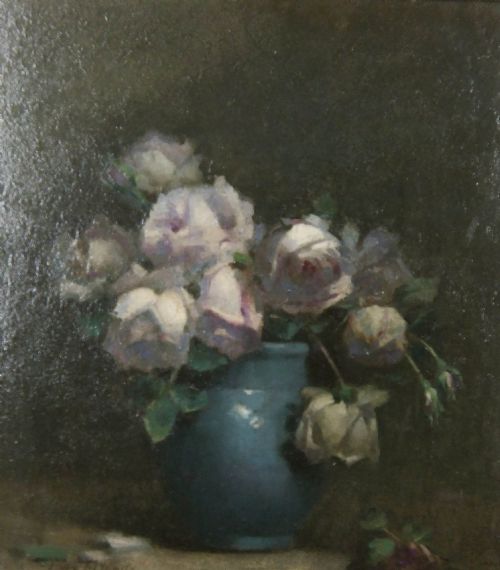
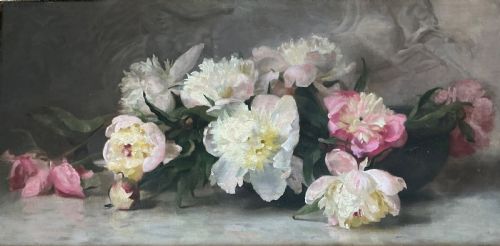
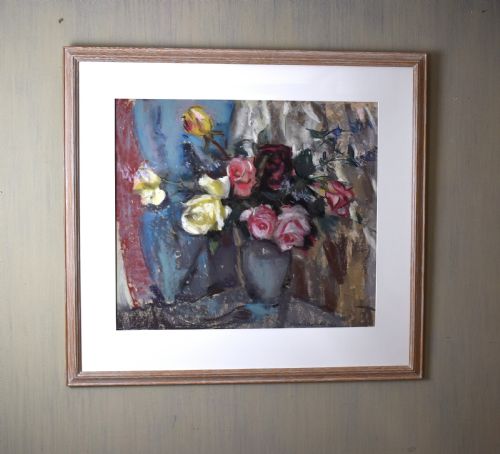
When searching for a british impressionist still life, you encounter framed studies of domestic blooms, garden flowers, and tabletop vessels. These works capture transient light upon simple floral subjects through the lens of early twentieth-century painters working across Britain.
The most common form on this page is the oil painting on canvas or wood panel, typically depicting roses, anemones, and peonies in modest vases. Alongside oils, watercolours and gouache works on paper appear frequently, maintaining the same lively focus on colour and atmosphere.
Dating chiefly from the decades between nineteen ten and nineteen forty, these pictures reflect regional artistic communities such as the Staithes group alongside independent practitioners. They offer an intimate view into British responses to continental impressionist and post-impressionist developments.
How they were made
Artists built these compositions primarily using oil paint applied to stretched canvas or wooden panels, sometimes employing gesso preparatory layers to seal and brighten the ground. The physical application relies on visible, confident brushstrokes that build texture rather than hiding the hand of the maker.
Works on paper utilise watercolour, gouache, or pastel media, allowing for swift execution and luminous washes that capture immediate effects of light. Framing often involves traditional wood mouldings which complement the painted surface without overpowering the domestic scale of the study.
British Impressionist Still Life Retail Price Guide 2026
Typical asking prices for british impressionist still life among the pieces listed under this phrase on Sellingantiques today, from the lower quarter to the upper quarter. They describe what is for sale here now, not the wider market.
The listings span several decades from nineteen ten to nineteen sixty, illustrating the sustained appeal of floral still life subjects across twentieth-century British art.
What varies in quality
Quality rests upon the confidence of the handling and the vitality of the colour relationships within the composition. Stronger examples demonstrate a sure sense of tonal balance where light defines form effectively, while lesser pieces rely on stiff outlines and flat colour application.
The personality of the brushwork and the clarity of the arrangement separate masterly studies from routine student exercises. A successful piece sustains tension across the entire surface, making the humble subject matter compelling through sheer painterly skill.
William Thomas Wood·Owen Bowen·Gertrude Hayes·Florence Hess·Lester Sutcliffe·Kershaw Schofield·Sir Matthew Smith·Rowland Henry Hill·Lena M Alexander·Elizabeth T. Sutcliffe·Ernest Higgins Rigg·Henry D'Arcy Hart·Herbert Davis Richter
The British Impressionist Still Life Glossary
- Staithes Group
- A collective of Northern English artists associated with plein air painting and impressionist techniques. Their members frequently recorded coastal scenes and floral still life subjects.
- Gesso
- A plaster-like mixture applied to canvas or wood to create a smooth, absorbent foundation for oil paint. This preparation helps preserve the luminosity of the colours over time.
- Gouache
- An opaque water-based medium that provides denser coverage than traditional watercolour. Artists utilise it for rich colour saturation and matte surface effects.
- Post-Impressionism
- An artistic movement following impressionism that emphasises expressive forms and symbolic use of colour. It strongly influenced British painters working in the early decades of the twentieth century.
British Impressionist Still Life: Frequently Asked Questions
What subjects do these paintings show?
The compositions focus primarily on floral arrangements including roses, peonies, anemones, and wallflowers placed simply in vases or bowls. These domestic subjects allowed artists to concentrate entirely on colour, light, and brush technique.
Such intimate arrangements reflect the quiet, domestic focus favoured by many British artists during the early decades of the twentieth century.
Which materials appear most often?
Oil paint on canvas or wood panel forms the majority of the works available here, accompanied by watercolours and gouache on paper. Gesso frequently serves as the foundational ground for the painted wooden and canvas surfaces.
These traditional materials ensure the enduring stability of the impasto and the continued vibrancy of the pigments.
How do these works relate to impressionism?
British practitioners adapted continental impressionist and post-impressionist ideas, applying loose brushwork and vibrant palettes to familiar domestic scenes rather than grand historical narratives. This translation created a distinctively British idiom focused on atmosphere and light.
Regional groups, particularly in the North of England, embraced these methods to capture everyday subjects with fresh immediacy.
How should I care for these paintings?
Protect oil paintings and works on paper from direct sunlight and fluctuating humidity to prevent canvas slackening and pigment fading. Glazed watercolours benefit from acid-free framing materials to preserve the paper support.
Gentle dusting with a soft, dry brush is sufficient for routine maintenance of the painted surfaces.