


Dark Wood Still Life
Dark wood still life paintings and panels capture domestic interiors and botanical subjects, offering traditional oil technique and period frames for your walls.
Dark Wood Still Life
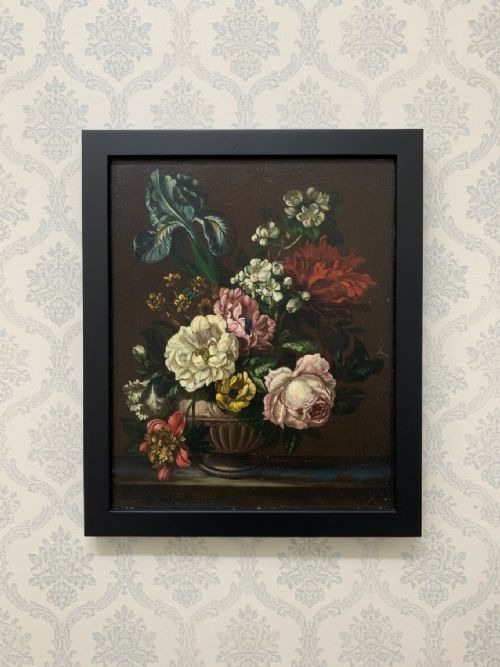
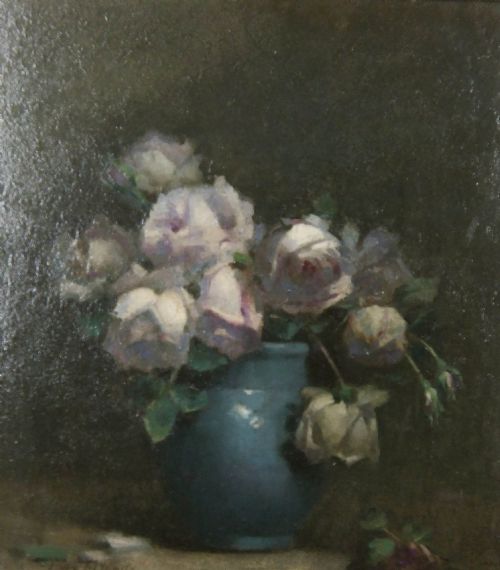
When you search for dark wood still life, you find oil paintings on canvas and wood panel alongside decorative items like fire screens and dummy boards. These works span the Georgian era through the nineteenth century and into the early twentieth century, capturing floral arrangements, fruit, and vanitas themes.
The most common examples on this page are nineteenth century oil paintings and panel works, often set within solid wood or gilt wood and gold leaf timber frames. You will also encounter miniature paintings of flowers and specialised pieces like eighteenth century floral dummy boards.
Origin points range from British and Dutch schools to Danish artists, reflecting classical still life traditions, Victorian tastes, and British Impressionism. Each piece demonstrates the enduring appeal of traditional oil paint applied to canvas or wood support.
How they were made
Makers built these pieces using oil paint applied to canvas or wood panel supports, capturing light and shadow within traditional compositional formats. The physical support often dictated the permanence of the work, with wood panels offering a rigid foundation for detailed brushwork.
Many of these paintings retain their original timber frames, frequently enhanced with gilt wood and gold leaf detailing that complements the darker tones of the subject matter. Specialised functional forms like dummy boards utilise shaped timber panels painted to create trompe l'oeil decorative objects.
Listings feature oil paint on canvas and wood panel, alongside timber frames finished in gold leaf.
What varies in quality
Quality in these works rests upon the precision of the brushwork and the structural integrity of both the painted surface and its housing. Finer examples display confident handling of light across fruit, flowers, and foliage, paired with original period frames that match the age of the artwork.
The choice between canvas and wood panel influences the texture and preservation of the paint layer over centuries. Superior pieces maintain their original surface tension and varnish clarity without excessive intervention, while lesser examples may show heavier restoration.
William Thomas Wood·Niels Wiwel·Herbert Davis Richter
The Dark Wood Still Life Glossary
- Oil paint
- A slow-drying paint made by combining pigment particles with a drying oil, typically linseed oil. This medium allows for rich colour depth and smooth blending across canvas and panel supports.
- Wood panel
- A flat wooden board used as a rigid support for painting instead of stretched canvas. Panels provide a stable surface favoured in Dutch and early traditional painting methods.
- Vanitas
- An artwork style that uses symbolic objects, such as skulls, fading flowers, or rotting fruit, to remind the viewer of the transience of life. These compositions are frequently rendered in oil during the seventeenth and nineteenth centuries.
- Dummy board
- A painted wooden figure cut to shape and supported by a brace to create a three-dimensional illusion in a room. Eighteenth and nineteenth century examples often depict figures, animals, or floral arrangements.
- Gilt wood
- Wood that has been coated with a thin layer of gold leaf or metallic powder. This finish is commonly found on period frames designed to highlight oil paintings.
Dark Wood Still Life: Frequently Asked Questions
What is a vanitas still life?
A vanitas still life incorporates symbolic objects like fading flowers, fruit, or skulls to represent the brevity of earthly life. Artists rendered these subjects in oil on canvas to provoke contemplation.
These works often employ dark palettes and dramatic lighting to emphasise the contrast between life and decay. They form a distinct subgenre within historical painting.
How do I date an oil panel?
Dating an oil panel relies on examining the type of wood, preparation grounds, and stylistic conventions of the brushwork. Nineteenth century panels often exhibit machine-cut uniformity compared to earlier hand-worked boards.
The accompanying frame can also offer clues, as period timber and gilt wood treatments changed across decades. Examining the reverse of the panel often reveals old stamps, labels, or maker marks.
Where were dummy boards placed?
Dummy boards served as decorative trompe l'oeil objects placed near doorways, fireplaces, or stairwells in period homes. Their painted wooden shapes created the illusion of a person, animal, or floral arrangement standing in the room.
Floral examples like nineteenth century dummy boards added colour and architectural interest to empty hearths during summer months. They combined carpentry with fine art painting.
How do I care for antique oil paintings?
Antique oil paintings require stable indoor humidity and temperature to prevent the canvas or wood panel from warping or cracking. Keep them away from direct sunlight and heat sources to protect the pigments and varnish.
Dust the surface gently with a soft, dry brush without applying pressure or cleaning agents. Professional conservators should handle any deeper cleaning or varnish removal.