

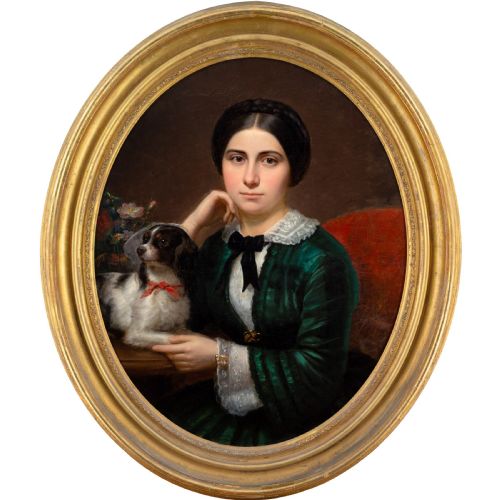
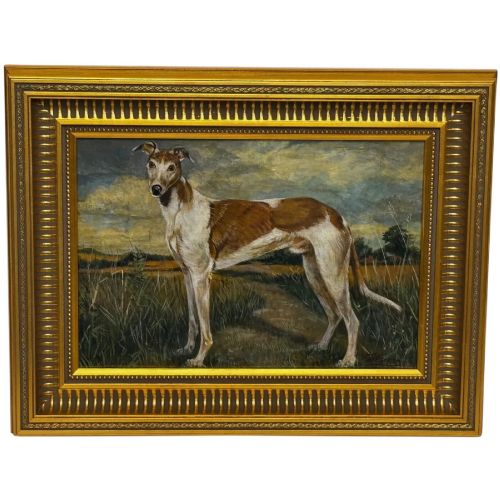
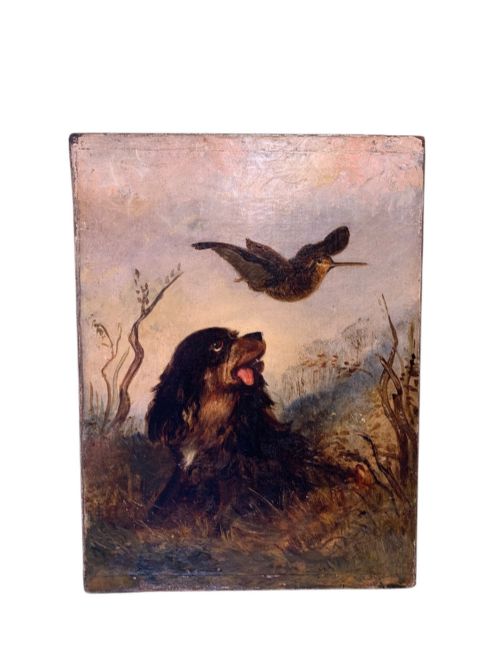
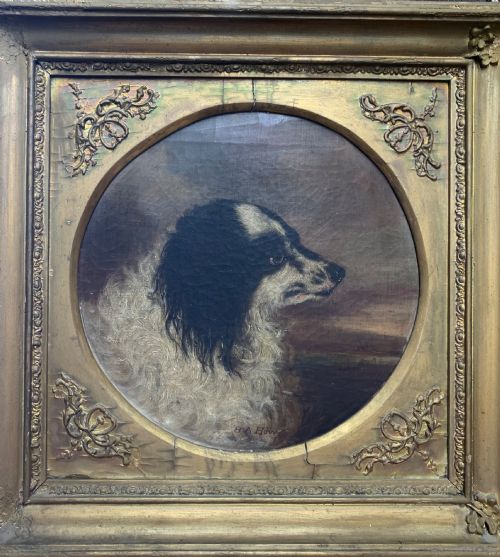
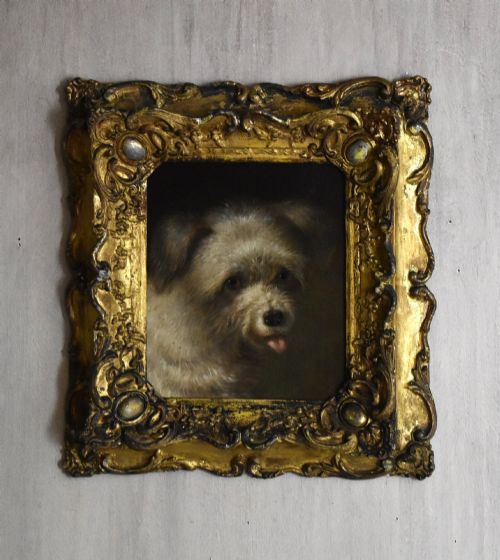
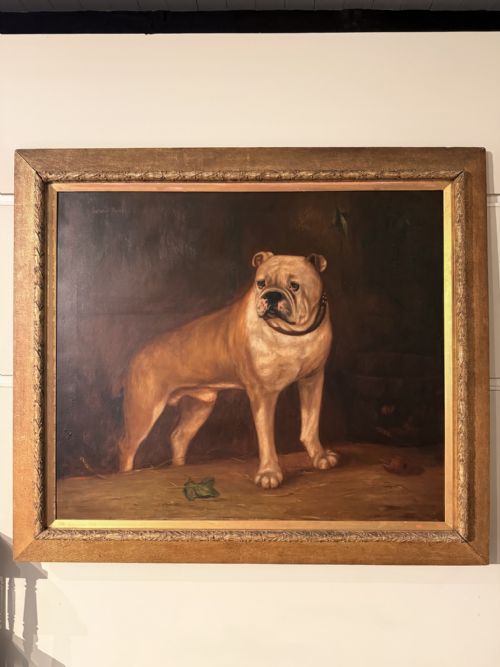

Portrait with Dog Painting
A portrait with dog painting captures an enduring bond between human and animal, bringing historic character into a room.
Portrait with Dog Painting
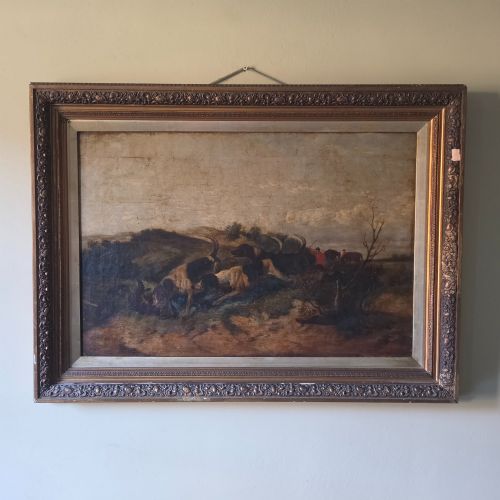
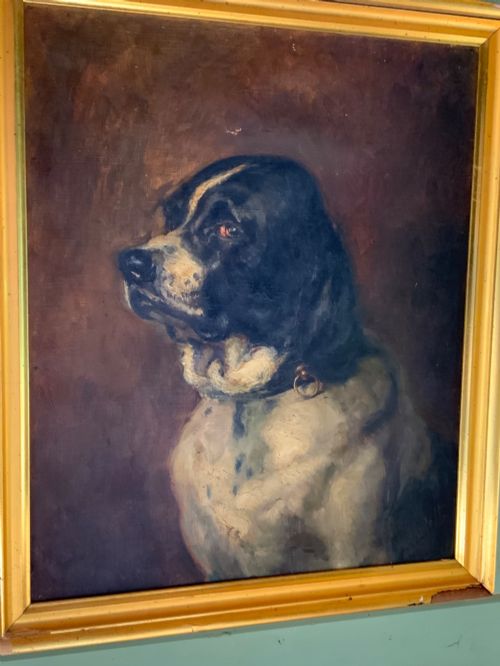
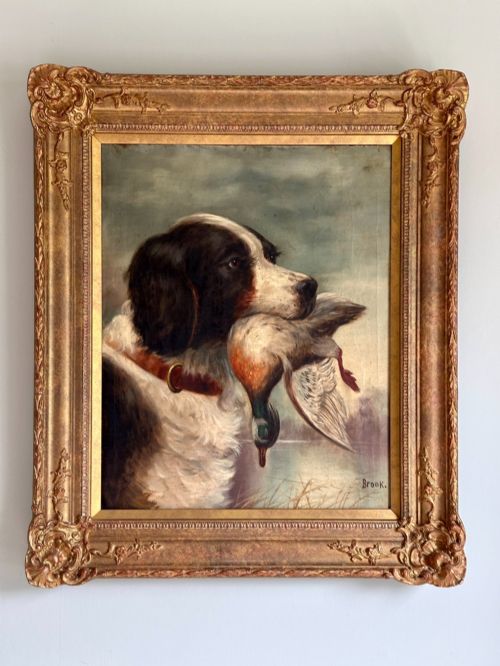
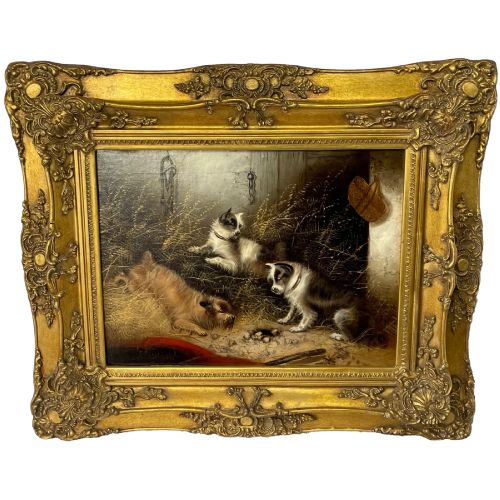
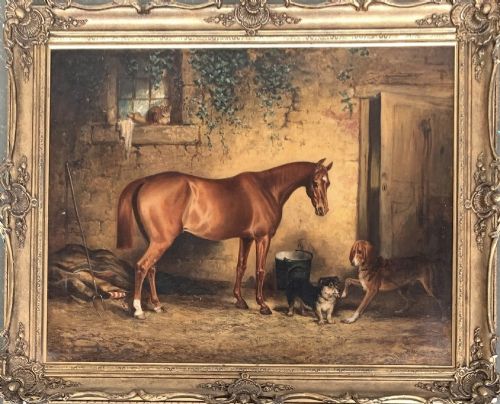
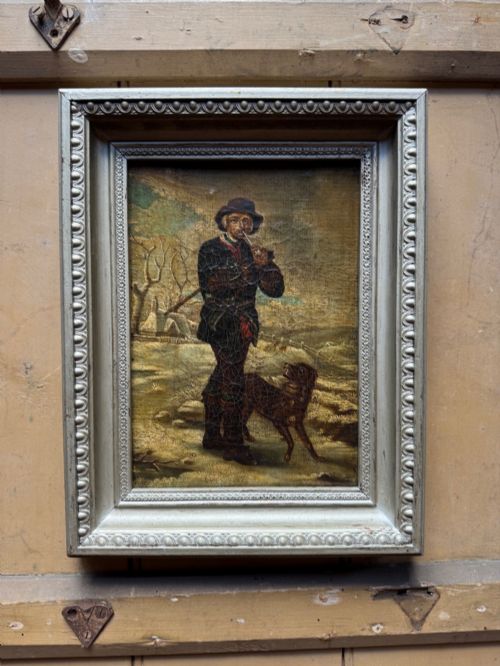
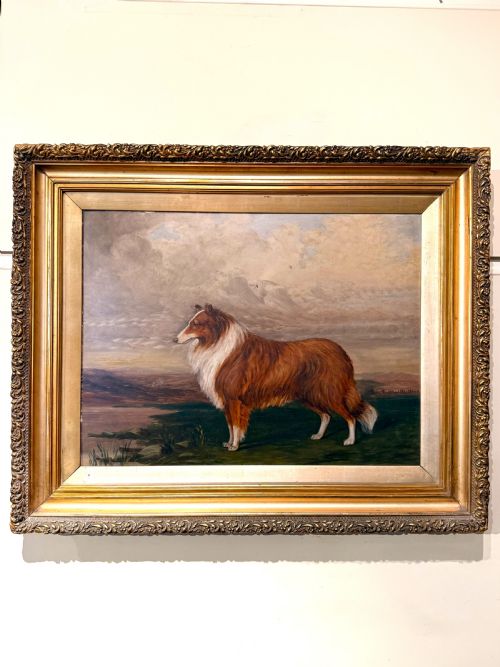
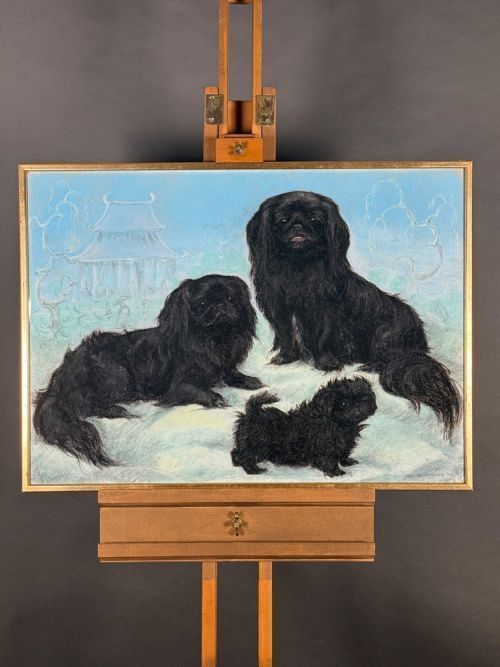
A portrait with dog painting depicts individuals, children, or landed gentlemen accompanied by their canine companions, spanning centuries of artistic tradition. You will encounter works ranging from formal Georgian and Victorian oils on canvas to charming provincial watercolours and naive pieces.
The subjects vary from high-society commissions by recorded artists to intimate portrayals of family pets alongside children or country squires. These historic artworks reflect social status, affection, and the changing roles of dogs as working animals or cherished household companions.
How They Were Made
The materials are predominantly oil paint applied to stretched canvas or wood panels, alongside watercolours and pastels on paper. Canvases provide the durable support necessary for large-scale commissions, while watercolours capture delicate details in smaller, domestic formats.
Framing relies heavily on gilded wood and giltwood, designed to complement the rich pigments of the period. Artisans prepared grounds carefully before building up layers of oil paint to render textures like dog fur, silk garments, and polished leather.
Listings feature works executed in oil on canvas, watercolour, and pastel across the seventeenth, eighteenth, and nineteenth centuries.
What Varies in Quality
Quality rests upon the artist's ability to render anatomy, expression, and texture with conviction. Superior works display confident brushwork in the rendering of both human and animal subjects, capturing distinct personalities rather than generic forms.
The sophistication of the composition and the preservation of the original surface determine the standing of a piece. Finer examples maintain crisp detailing in the dog's coat and the sitter's clothing, whereas simpler provincial works rely on naive charm.
John Sargent Noble·Samuel Raven·John Horsburgh·John Alfred Wheeler·Henri Schouten·Sydney Kendrick·Thomas Beach·Richard Waitt·Charles Bilger Spalding·Frank Owen Salisbury·George Romney·Richard Buckner·Thomas Blinks·Samuel John Egbert Jones·Francis Alleyne·Daniel Mytens
The Portrait with Dog Painting Glossary
- Oil on Canvas
- A painting medium where pigments are suspended in drying oils and applied to a woven fabric support. This combination allows for rich colour blending and lasting durability.
- Naive Art
- Work created by an artist without formal academic training, often characterised by a flat perspective and direct expression. These pieces offer an honest view of historical domestic life.
- Giltwood
- Wood that has been treated with a thin layer of gold leaf or metallic powder. Antique frames utilise this technique to add warmth and status to the artwork.
- Watercolour
- A painting method where fine pigments are suspended in a water-based solution on paper. It creates luminous, transparent washes favoured for intimate portraits.
Portrait with Dog Painting: Frequently Asked Questions
What periods do these paintings come from?
The selection spans from the seventeenth century through the Georgian and Victorian eras up to the early twentieth century. Each period brings distinct clothing styles and painting techniques.
Earlier works often show formal positioning, while nineteenth-century examples lean towards naturalism and narrative genre scenes.
How can I tell a naive painting from a formal portrait?
Formal portraits were painted by trained artists who understood perspective, proportion, and anatomy. They usually recorded wealthy patrons and pedigree animals.
Naive works exhibit a simpler, flat perspective with an immediate, charming character often produced by provincial artists.
Where should I hang a framed portrait with a dog?
These works suit traditional living spaces, studies, or hallways where their narrative character can be appreciated up close. They pair well with period furniture and wood-panelled walls.
Keep them away from direct sunlight to protect the canvas and watercolours from fading.
Why do so many historic portraits feature dogs?
Dogs symbolised loyalty, fidelity, and status across different social classes. Including a pet added warmth and revealed personal traits of the sitter.
Working dogs also highlighted the owner's sporting pursuits and landed estates.