
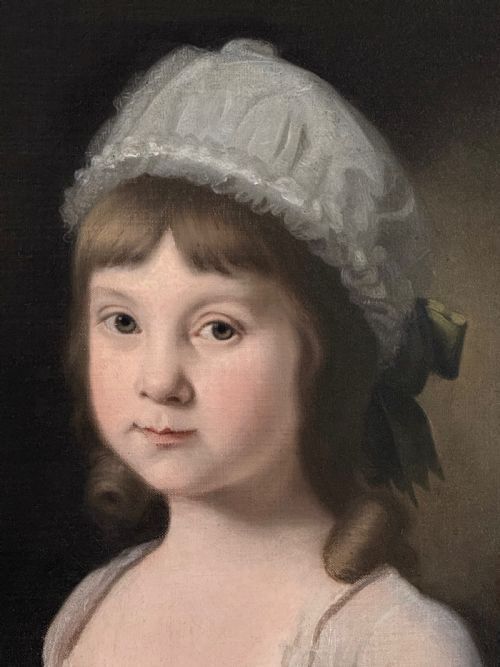
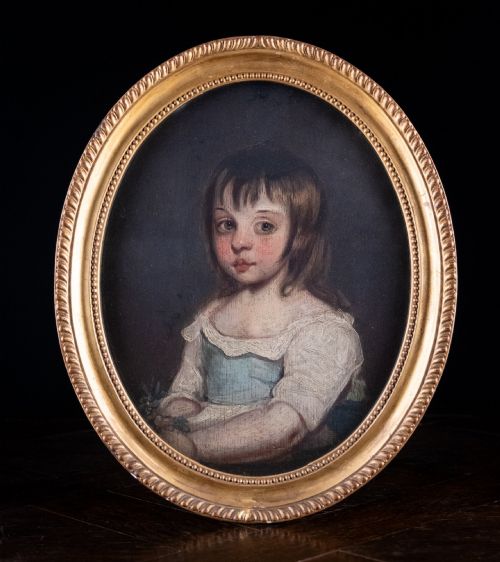
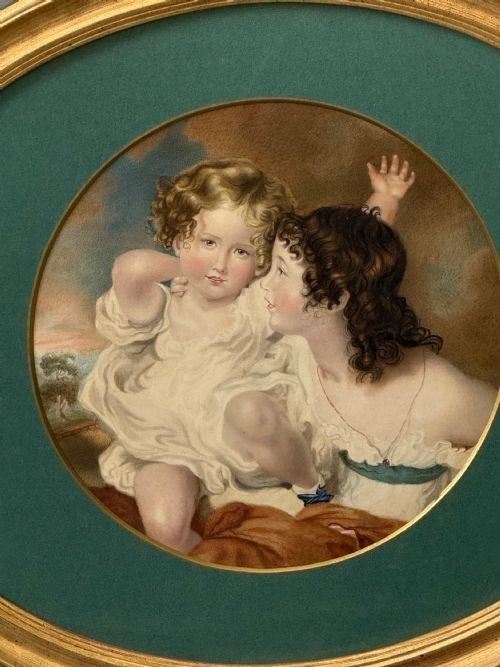
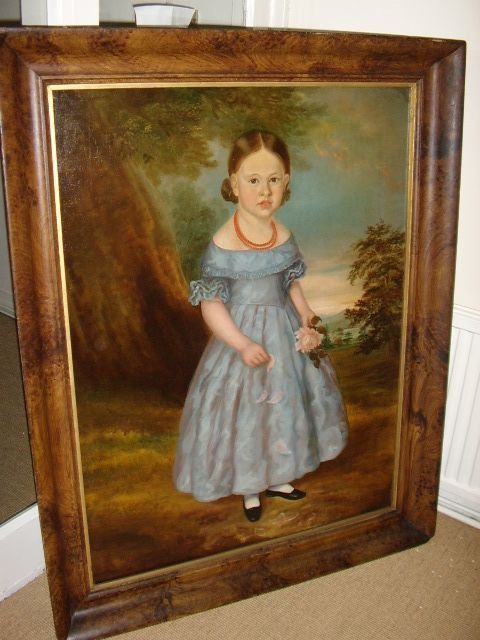




Georgian Child Portrait Painting
A georgian child portrait painting captures the direct gaze of youth through the skilled hands of 18th and early 19th-century portraitists.
Georgian Child Portrait Painting
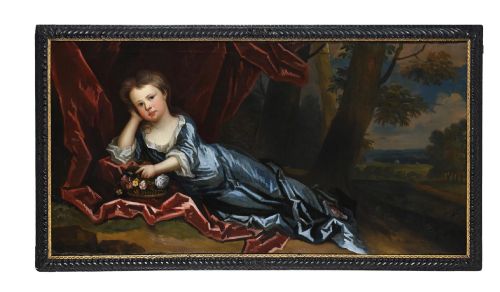
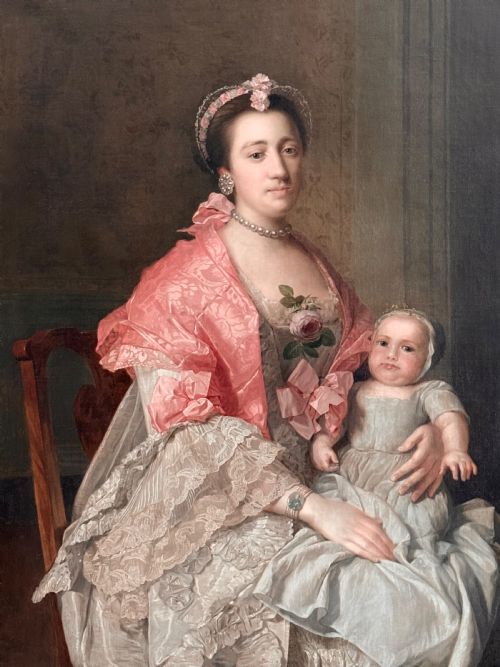
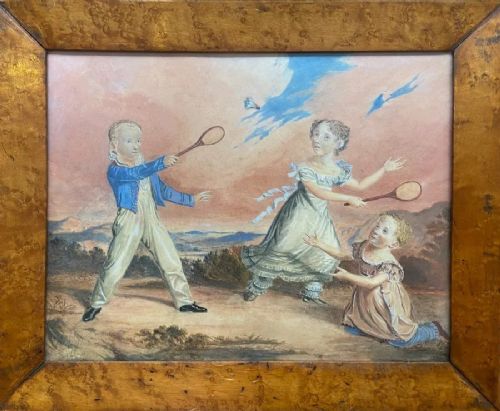
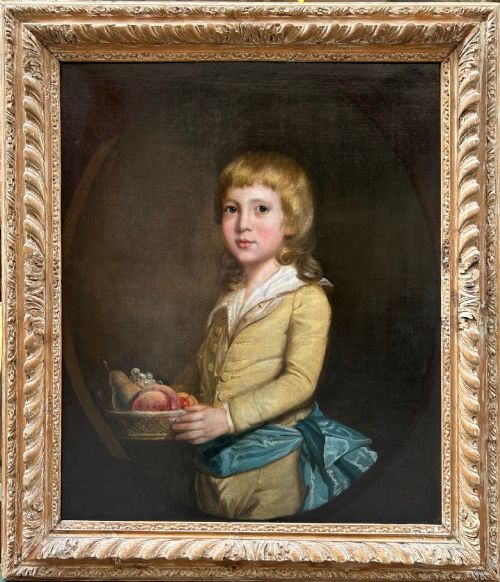
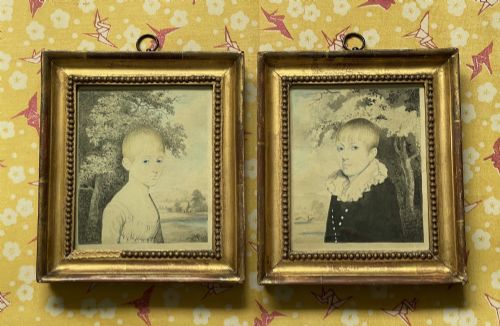
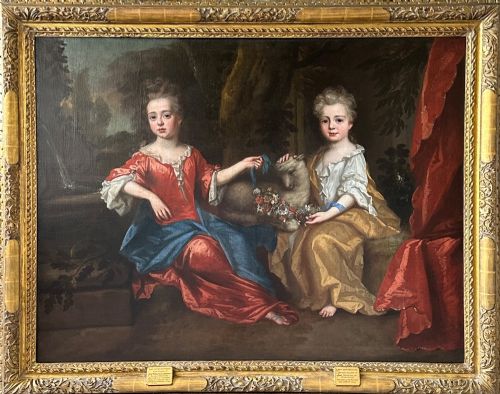
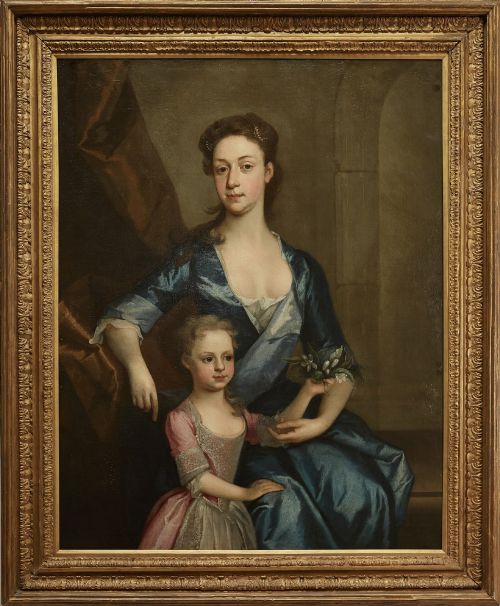
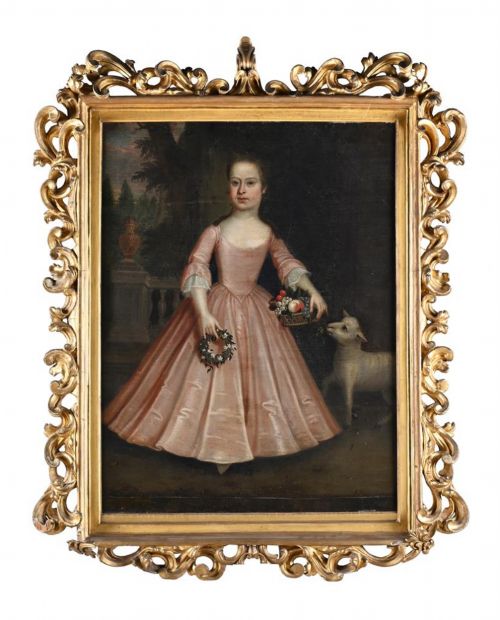
A georgian child portrait painting encompasses oil on canvas works, delicate watercolours, and intimate portrait miniatures produced during the 18th century, the Regency period, and into the early 19th century. These works depict young subjects either individually or alongside siblings, pets, and symbolic objects such as fruit baskets, birds' nests, or spinning tops.
The pieces on this page range from grand oil paintings attributed to prominent studios to charming, informal examples of English Naive Art. Buyers encounter both full-scale framed canvases and smaller works housed in period ebonised, maple, or giltwood frames.
How They Were Made
Artists working within this category relied primarily on oil paint applied to stretched canvas or utilised watercolour and ink on paper. Portrait miniatures frequently incorporated glass protection within specialised frames.
Support materials included traditional wood stretchers and paper supports, while framing often involved carved giltwood or polished wood surrounds appropriate to the Georgian and Regency periods.
Several young sitters share the canvas with unexpected companions, including an exotic bird and a remarkably patient dog named Mr Quiz.
What Varies in Quality
Quality in a georgian child portrait painting rests upon the anatomical handling of the subject, the expressive depth of the face, and the overall preservation of the painted surface. Works originating directly from established hands or major studios demonstrate superior brushwork and compositional confidence compared to simpler naive school outputs.
The survival of original framing materials, such as period giltwood or ebonised surrounds, contributes to the integrity of the piece. Subtle details in clothing, background architectural elements, and accompanying animals distinguish finer works from standard decorative examples.
Joshua Reynolds·Thomas Lawrence·Charles D Agar·Allan Ramsay·Thomas Beach·James Maubert·Michael Dahl·Joseph Highmore·Arthur William Devis·William Wood·George Engleheart·William Egley·Philip Mercier
The Georgian Child Portrait Painting Glossary
- Portrait Miniature
- A small-scale painting executed with fine detail, often created on paper or vellum and protected by glass within a small frame.
- English Naive Art
- A style characterised by a direct, unacademic perspective and simplified forms, frequently produced by provincial or untrained artists.
- Giltwood
- Wood carved and coated with a thin layer of gold leaf, commonly utilised for period picture frames.
- Regency
- The British stylistic period spanning from the early 19th century, noted for specific neoclassical design traits in furnishings and fine art frames.
- Mezzotint
- A printmaking process of the printmaker's art that achieves tonal gradation through roughening and scraping a metal plate.
Georgian Child Portrait Painting: Frequently Asked Questions
What is a georgian child portrait painting?
These artworks are period depictions of young subjects created in oil, watercolour, or miniature formats during the 18th and early 19th centuries. They range from formal studio commissions to informal naive studies.
Subjects are frequently shown with personal items, pets, or symbolic props characteristic of the era's portraiture conventions.
How were children's portraits displayed originally?
Wealthy families displayed large oil paintings on canvas within prominent rooms, often housed in heavy giltwood frames. Smaller works like miniatures and watercolours were kept in private spaces or carried on the person.
Many of these smaller pieces utilised specialised ebonised or maple frames designed to protect the delicate paper or pigment surfaces.
How do I identify a Regency period portrait?
Regency era portraits generally date from the early 19th century, reflecting distinct shifts in clothing styles such as white dresses with wide sashes. The framing and overall aesthetic lean toward cleaner neoclassical lines compared to earlier Baroque influences.
Artists of this time often employed softer watercolours alongside traditional oil paints on canvas.
What subjects accompany the children in these paintings?
Young sitters are frequently paired with domestic animals, including dogs and exotic birds, as seen in works featuring family groups. Other common symbolic objects include fruit baskets, spinning tops, and toys related to contemporary pastimes.
These elements were chosen by artists to reflect the status, character, or daily activities of the young subjects.