

Portable Writing Desk Box
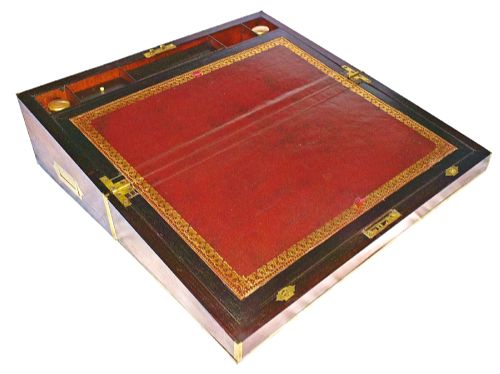
A portable writing desk box folds out to provide a firm, sloping writing surface alongside compartments for ink, pens and letters.
Portable Writing Desk Box
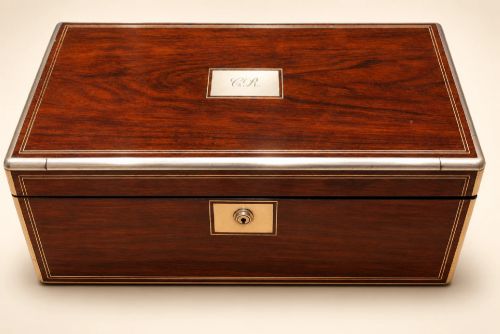
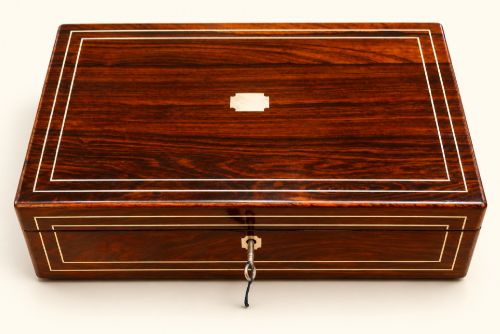
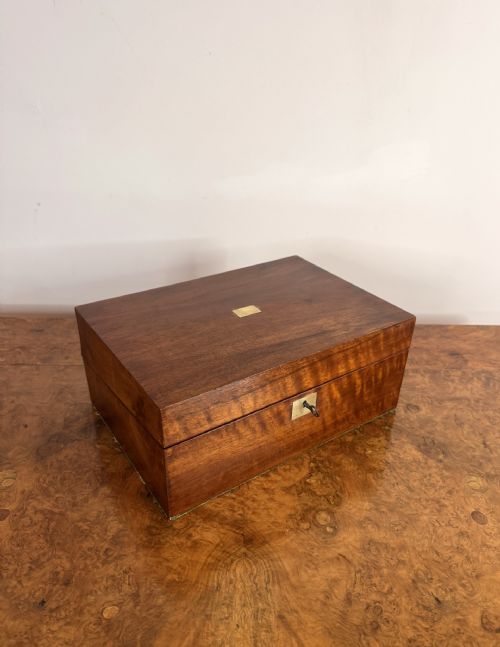
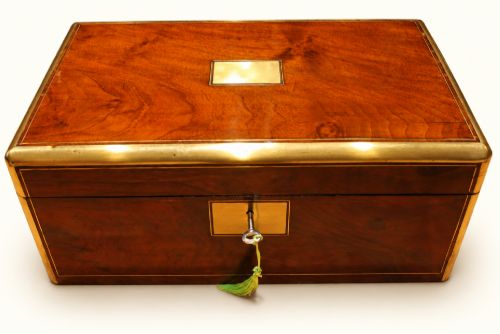
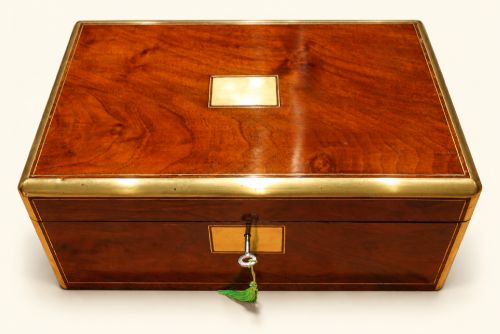
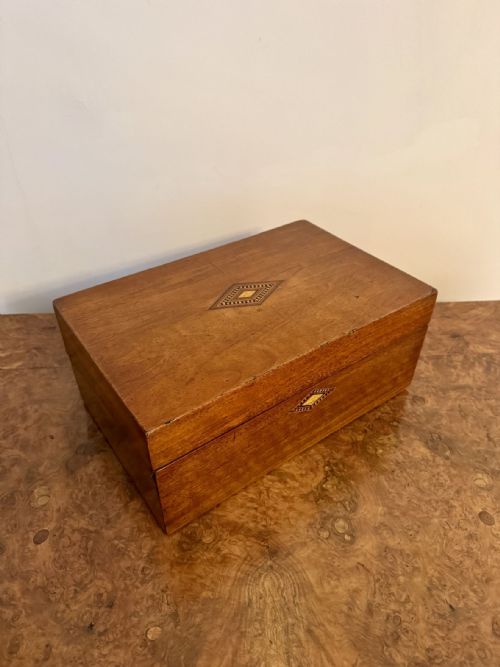
A portable writing desk box is designed for travel and correspondence, folding open to reveal a slanted writing surface and fitted interior compartments. The examples met most frequently on this page date from the nineteenth century, including Victorian walnut and mahogany pieces alongside earlier Georgian and Regency variants.
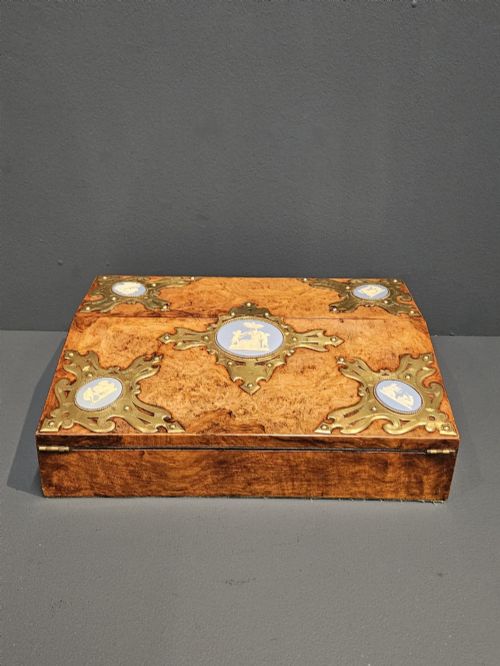
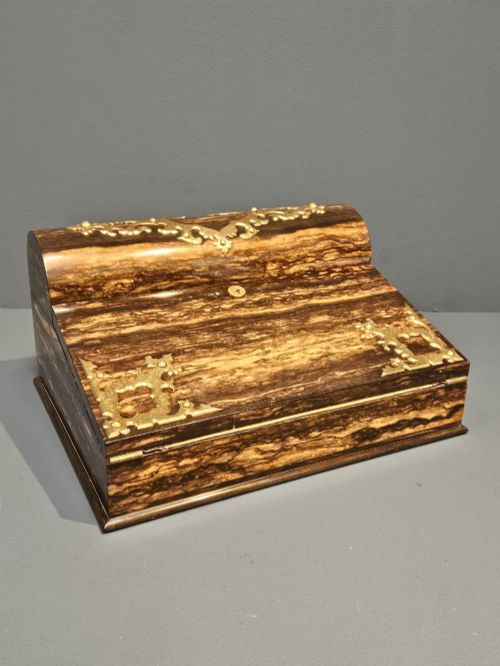
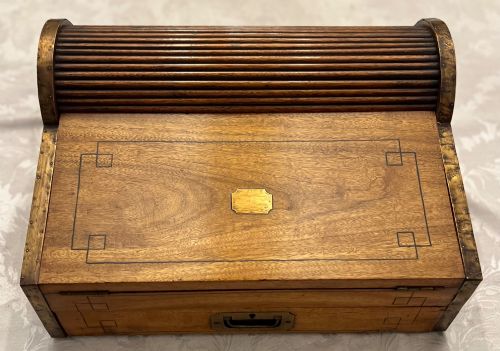
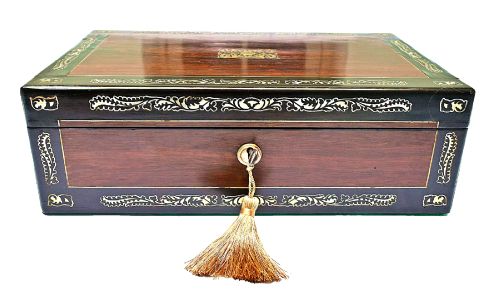
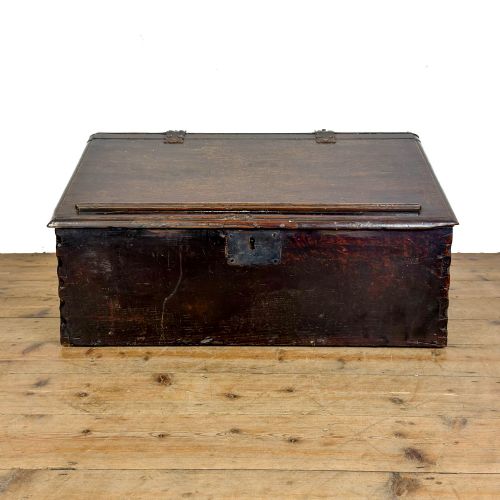
The form developed to accommodate the needs of travellers, officers and writers requiring a self-contained desk that could be packed away quickly. Construction ranges from modest oak and mahogany boxes to highly decorative coromandel, burr walnut and mother of pearl inlaid specimens.
Materials and construction
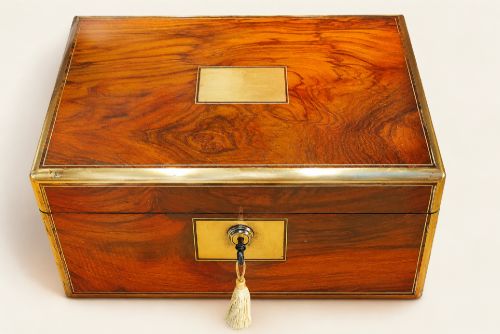
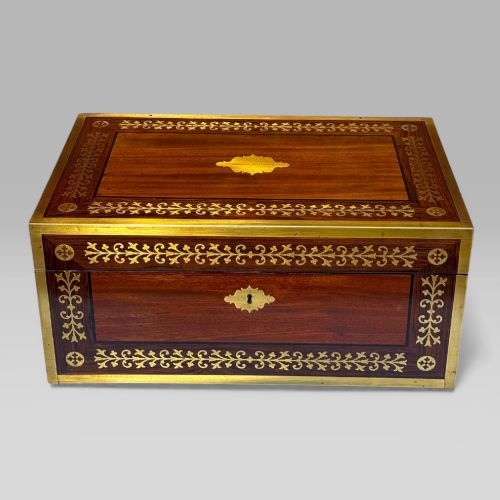
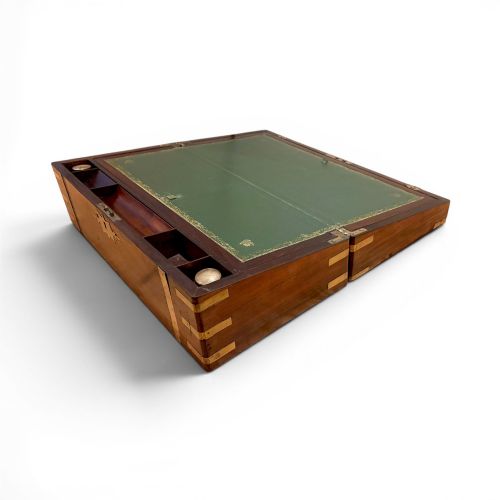
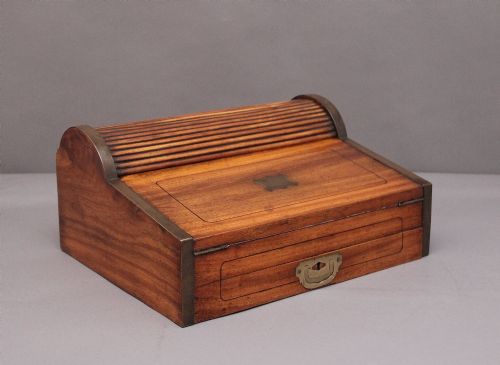
Makers utilised dense timbers such as mahogany, rosewood, walnut and camphor wood to construct the carcasses, often applying decorative veneers including burr walnut and pollard oak. Brass binding and corner braces protected the edges from the knocks of travel while reinforcing the structural joints.
Interiors typically feature tooled leather writing surfaces, small compartments for inkwells and pens, and hidden compartments accessed behind dummy drawers. Advanced examples incorporate specialised locks by makers such as Bramah to secure valuables.
Portable Writing Desk Box Retail Price Guide 2026
Typical asking prices for portable writing desk box among the pieces listed under this phrase on Sellingantiques today, from the lower quarter to the upper quarter. They describe what is for sale here now, not the wider market.
Evaluating quality and execution
Quality rests upon the selection of timber veneers, the precision of the brass inlay work, and the structural integrity of the folding hinge mechanism. Finer pieces display carefully matched grain patterns across the exterior surfaces and tight, well-fitted internal stationery compartments.
The sophistication of the internal mechanism, from secret drawer releases to quality brass locks and matched inkwells, separates standard utility boxes from superior domestic and campaign writing desks.
Mappin and Webb
The Portable Writing Desk Box Glossary
- Campaign box
- A portable furniture piece built for military or travel use, featuring protective brass corners, flush handles and robust timber construction. These elements allowed officers to transport their desk safely across long distances.
- Writing slope
- A box with an inclined lid that opens to form a slanted writing surface, typically lined with leather or velvet. Inside, compartments store pens, inkwells and correspondence.
- Secret drawers
- Concealed compartments hidden behind removable panels or spring-loaded partitions within the interior of a writing box. They were used to store valuables and confidential papers.
- Tunbridge ware
- Small wooden objects decorated with intricate mosaic patterns made from tiny tinted wood blocks arranged in geometric or pictorial designs. This technique frequently embellished Victorian walnut boxes.
- Bramah lock
- A high-security cylindrical lock patented in the eighteenth century, commonly fitted to superior nineteenth-century writing boxes and desks.
Portable Writing Desk Box: Frequently Asked Questions
How do you open a secret drawer?
Secret drawers in a portable writing desk box are usually concealed behind structural partitions, removable inkwell surrounds or dummy drawer stops within the fitted interior.
Finding them often requires sliding panels, lifting false bottoms or locating hidden spring releases inside the stationery compartments.
Were these desks used by the military?
Many portable writing desks were built as campaign equipment for officers and travellers on active service.
Sturdy timbers like camphor wood and mahogany, combined with brass edge bindings and recessed handles, helped the boxes withstand rough journeys.
How do you care for leather writing surfaces?
The leather inserts on writing slopes require minimal moisture and should be kept away from direct sunlight to prevent drying and cracking.
Gentle dusting with a soft, dry cloth preserves the gold tooling and the surface of the leather over time.