



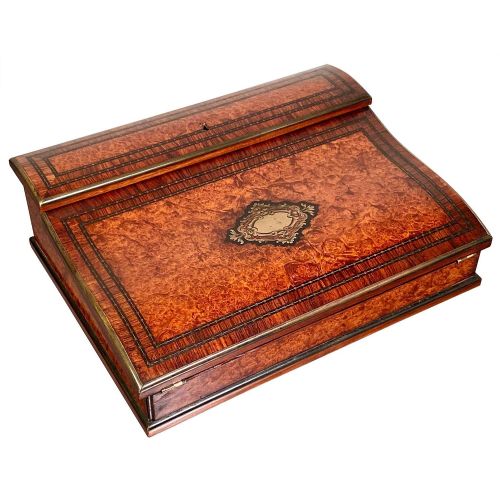
Victorian Campaign Writing Box
When you search for a victorian campaign writing box, you uncover portable desks built for officers and travellers on the move.
Victorian Campaign Writing Box
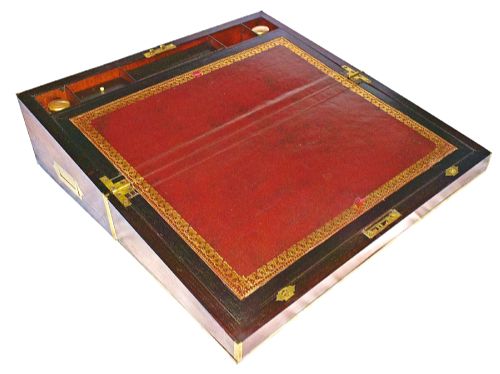
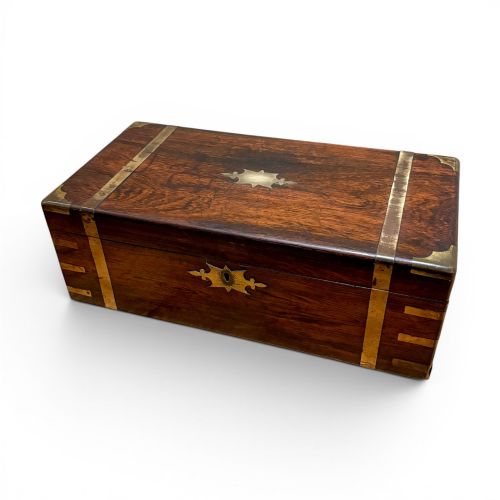
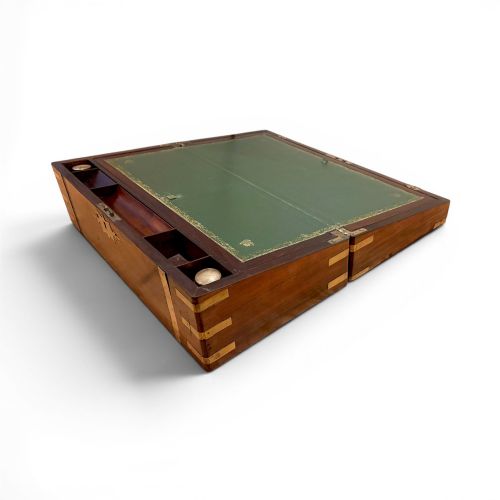
A victorian campaign writing box is a portable desk designed to fold shut, securing correspondence, ink and paper during transit.
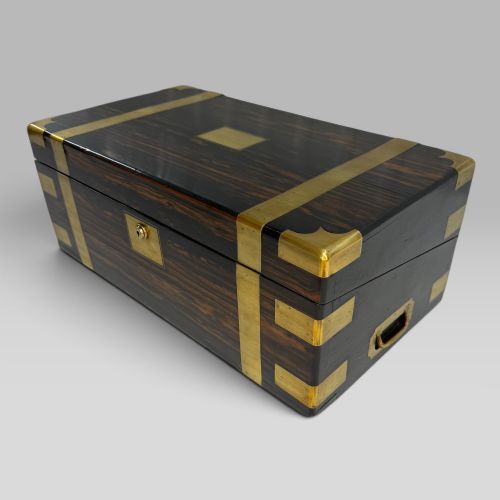
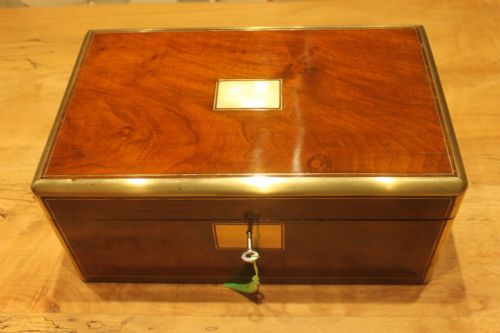
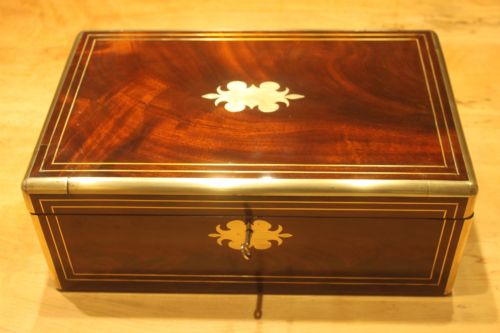
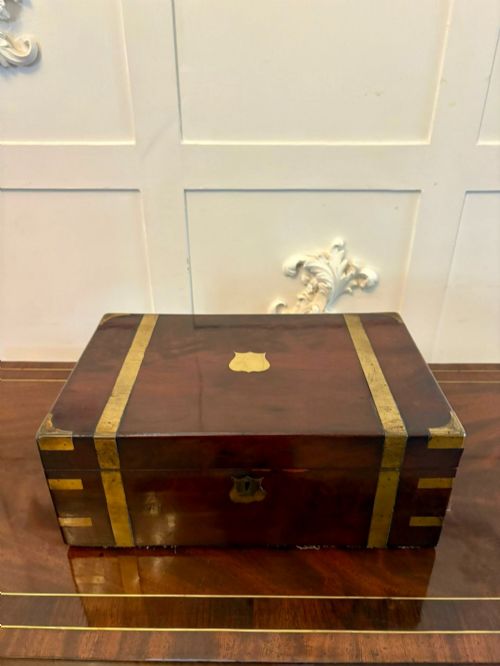
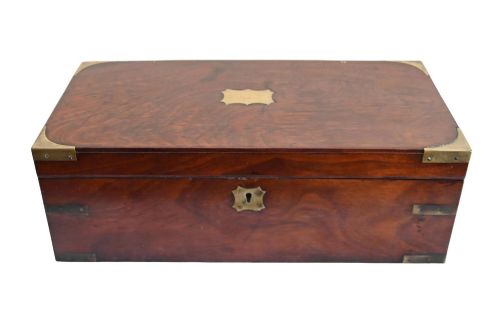
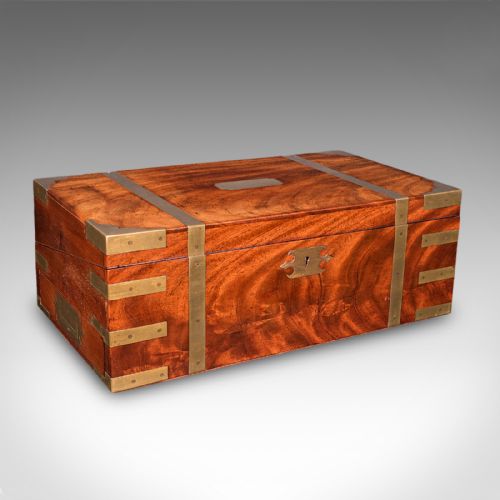
Most examples found here date from the nineteenth century, spanning mahogany, rosewood and walnut constructions fitted with brass corners and straps.
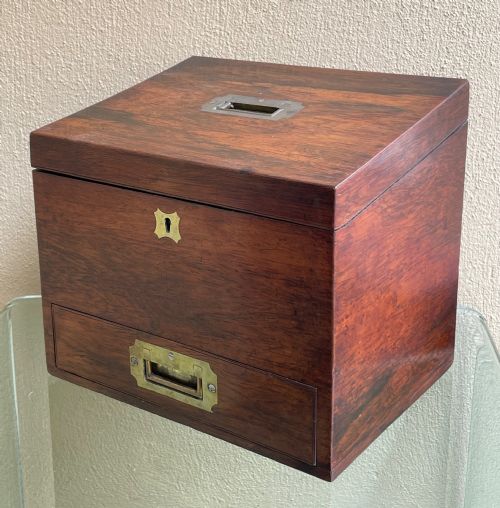
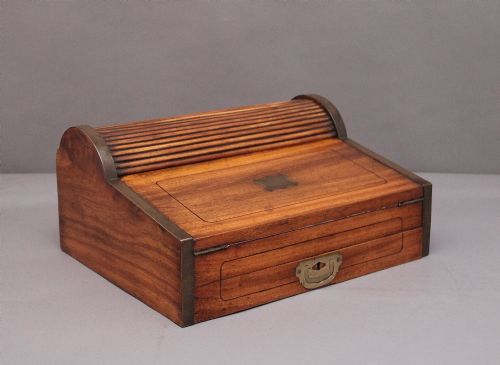
These pieces range from simple writing slopes to elaborate boxes containing secret drawers, candle sconces and stationery compartments.
How they were made
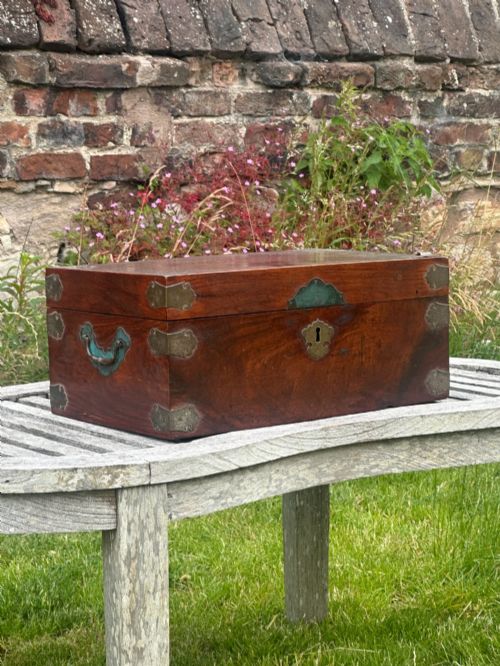
Cabinetmakers utilised dense timbers such as mahogany, teak, camphor wood and rosewood to withstand the rigours of travel.
Brass binding, corner brackets and inset campaign handles were screwed into the wood to protect edges from heavy impact.
Interiors combined fitted leather writing surfaces with concealed compartments accessed through secret spring mechanisms.
What varies in quality
The standard of a victorian campaign writing box rests upon the selection of timber veneers and the precision of the brass inlay work.
Superior pieces incorporate complex mechanical actions, such as Bramah locks, functioning secret drawers and integrated correspondence racks.
The integrity of the internal leather slope and the presence of original fittings like working keys elevate the standing of a box.
Mappin & Webb
The Victorian Campaign Writing Box Glossary
- Campaign slope
- A portable writing desk featuring a hinged slope that folds flat for travelling. It often includes internal partitions for inkwells and pens.
- Brass bound
- The practice of reinforcing box edges and corners with brass strips and corner pieces. This technique prevented splitting during military transport.
- Secret drawers
- Concealed compartments hidden behind false panels or accessed via sliding pins. They provided secure storage for valuables and confidential papers.
- Bramah lock
- A high-security cylinder lock invented in the late eighteenth century. These mechanisms were frequently fitted to quality portable desks.
- Lap desk
- A smaller variant of the writing box designed to rest comfortably on the knees. It served officers who lacked a stable surface in the field.
Victorian Campaign Writing Box: Frequently Asked Questions
What is a campaign writing box?
A campaign writing box is a portable wooden desk built to fold in half for travel. It contains compartments for paper, pens and ink.
Officers and officials carried them across the British Empire to maintain correspondence while away from permanent offices.
How do secret drawers work?
Secret drawers are hidden behind removable panels, false bottoms or internal partitions within the box. They are typically released by pressing a concealed spring or sliding peg.
Cabinetmakers integrated these compartments to protect money, jewellery and confidential documents.
What woods were used?
Cabinetmakers utilised durable hardwoods such as mahogany, rosewood, walnut and teak. Exotic timbers like camphor wood and padouk also appear.
These dense materials resisted warping and endured the humid conditions of overseas travel.
How do I date a box?
Dating relies on timber choices, brass hardware styles and lock mechanisms. Mid-century examples often feature heavy brass binding and rosewood or mahogany.
Later pieces from the late nineteenth century frequently incorporate burr walnut or teak alongside stamped manufacturer marks.