

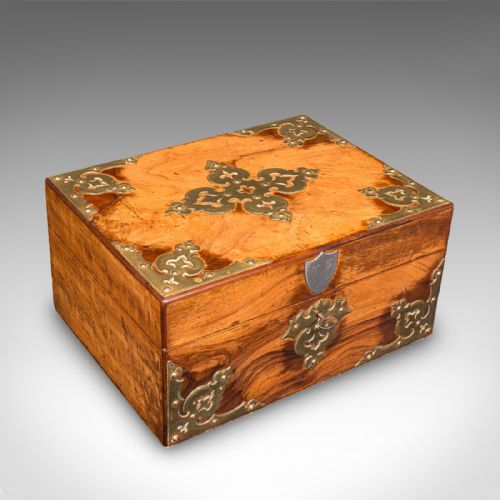


Brass Bound Walnut Chest
A brass bound walnut chest brings heavy-duty utility and rich grain together, making it a staple for anyone after tactile storage with military or colonial pedigree.
Brass Bound Walnut Chest
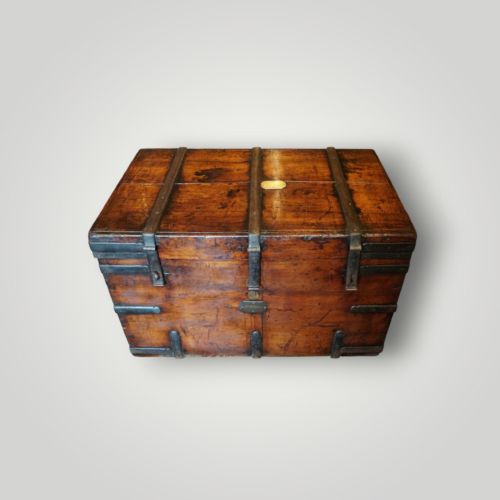
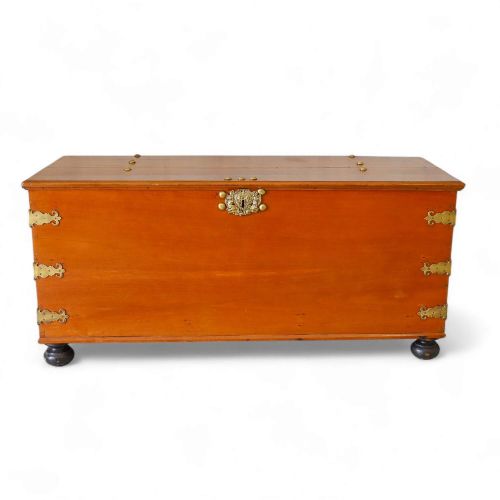
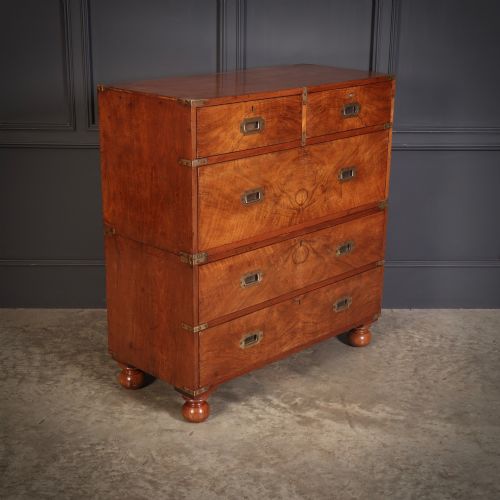
When you search for a brass bound walnut chest, you enter a domain of sturdy campaign boxes, colonial chests of drawers, and travel trunks built to withstand rough passage. The pieces on this page stretch from the eighteenth century through the Victorian era, taking forms as varied as large document boxes, writing slopes, and compact lockers.
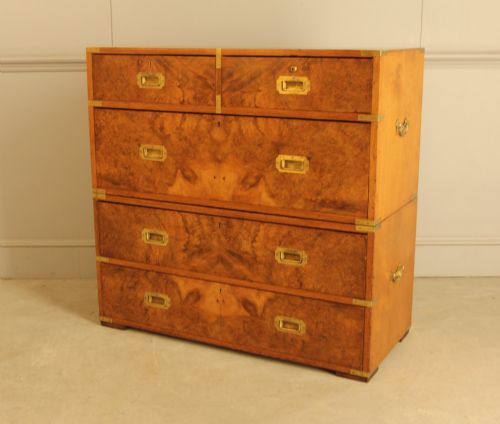
You are most likely to meet campaign chests and heavy trunks fashioned with inset brass corners and straps, designed to protect the timber during transit. Walnut and burr walnut dominate these finds, often framed by iron fittings or lined with felt for delicate contents.
Regional variations span English, Irish, Scottish, and Italian origins, alongside colonial iterations from the seventeen-nineties. The scale shifts from diminutive tea caddies and sewing cases up to monumental chests bearing the provenance of historical figures like Sir Randolph Isham Routh.
How they were made
Joiners built these chests from solid walnut and figured burr walnut, selecting timber for deep grain patterns and resilience. They reinforced vulnerable edges and joints with brass plates, straps, and corner brackets, secured using flush-fitting screws.
Hardware such as recessed drop handles and strapwork kept the exterior profile smooth to prevent snagging during travel. Interiors often featured fitted compartments, green felt linings, and secret drawers concealed behind sliding panels.
One recorded trunk carried the heavy-duty utility of Sir Randolph Isham Routh, Waterloo Commissary General.
What varies in quality
The distinction between ordinary and exceptional pieces lies in the choice of timber and the precision of the metalwork. Highly figured burr walnut commands attention through its swirling grain, while crisp, hand-cut dovetail joints reveal the joiner's hand.
Original brass hardware that sits flush with the timber without replacement screws marks a superior build. Documentation of provenance, such as engraved presentation plaques or identified historical ownership, elevates a piece further.
Austin
The Brass Bound Walnut Chest Glossary
- Campaign chest
- A portable set of drawers or a trunk made in sections for military officers on the move. These pieces feature brass corners and recessed handles to withstand transport.
- Burr walnut
- A specialised timber cut from walnut tree growths, prized for its intricate, swirling grain patterns. Cabinetmakers used veneers of this wood on high-status boxes and chest facades.
- Writing slope
- A portable box with an angled lid that opens to reveal a slanted desk surface and compartments for ink and pens. Many examples include velvet or leather writing pads.
- Tea caddy
- A small lidded box designed to store tea leaves securely away from moisture and light. Finer versions incorporate internal compartments and lockable lids.
- Gothic Revival
- A design style drawing on medieval architectural motifs, visible in pointed arches and decorative tracery. This aesthetic appears on nineteenth-century sewing cases and boxes.
Brass Bound Walnut Chest: Frequently Asked Questions
What is a brass bound walnut chest?
A brass bound walnut chest is a wooden storage box or set of drawers reinforced with brass corners, straps, and mounts. These pieces range from military campaign chests to domestic writing slopes and tea caddies.
Built to withstand travel or secure valuable documents, they combine utility with rich walnut and burr walnut timbers.
How were campaign chests used?
Campaign chests served military officers and colonial administrators on active service or long voyages. They were constructed in modular sections to ease packing and transport across difficult terrain.
The brass hardware protected the edges from heavy knocks, while internal compartments kept uniforms, papers, and personal items organised.
How do I tell Victorian pieces apart from 18th-century ones?
Eighteenth-century examples often lean toward colonial production with simpler lines and robust walnut construction. Victorian pieces frequently showcase decorative burr walnut veneers, gothic revival motifs, or specialised campaign engineering.
Examining the internal construction, lock mechanisms, and style of the brass hardware helps clarify the period.
How do I care for antique walnut furniture?
Keep walnut chests away from direct sunlight and strong heat sources to prevent the timber and veneers from drying out. Dust regularly with a dry cloth and apply a quality wax polish sparingly to maintain the finish.
Ensure brass fittings remain dry and avoid harsh chemical cleaners on the metal or the wood.