
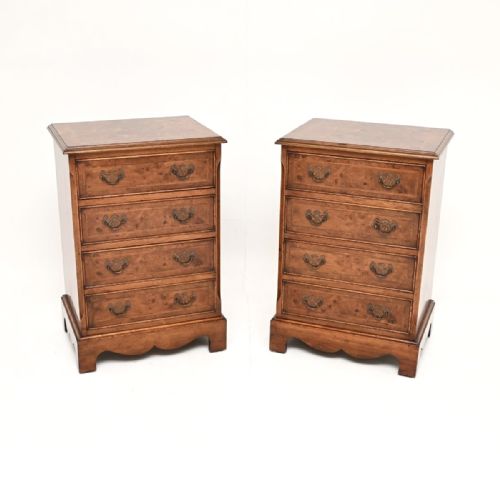
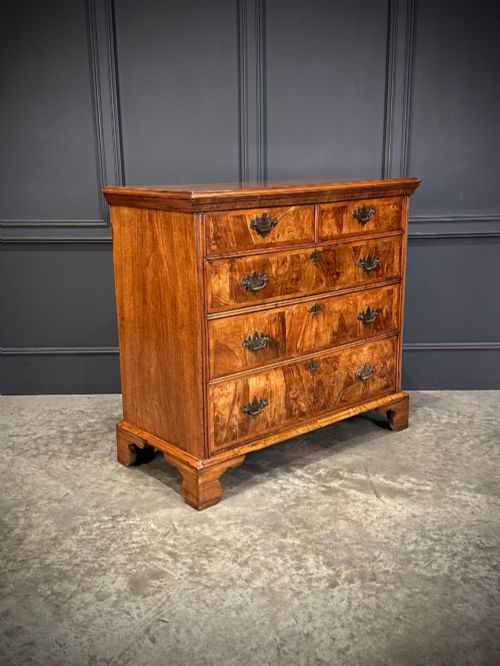
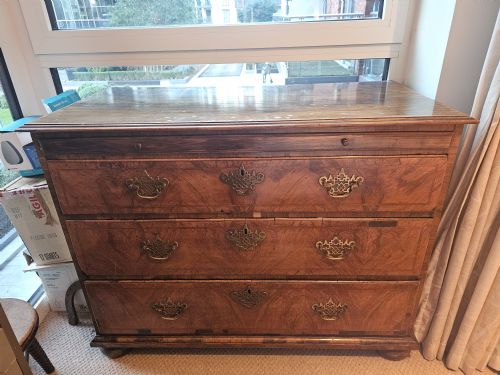
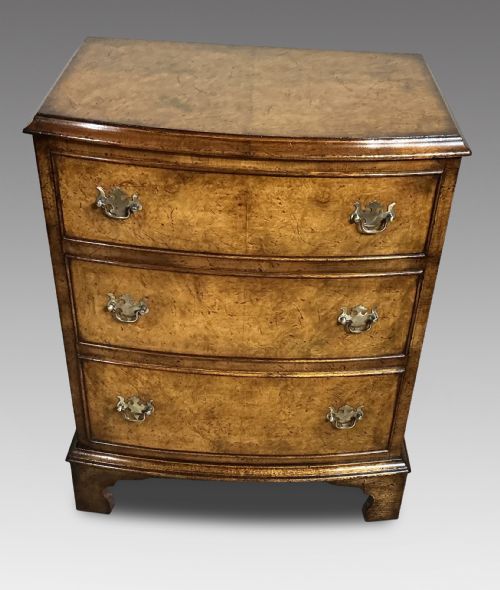


Burr Walnut Bachelor Chest
A burr walnut bachelor chest brings remarkable timber figuring and compact proportions to a room, offering both drawer storage and a writing surface.
Burr Walnut Bachelor Chest
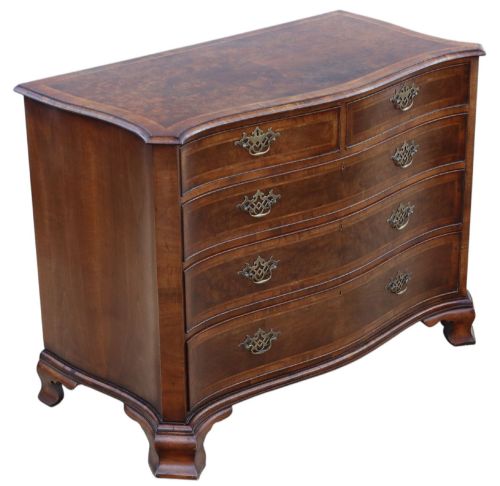
A burr walnut bachelor chest combines the practical storage of a chest of drawers with a fold-over or sliding top panel designed for writing. These pieces appear in forms ranging from compact 18th-century originals to later revival interpretations from the 1920s and 1930s.
Materials and Construction
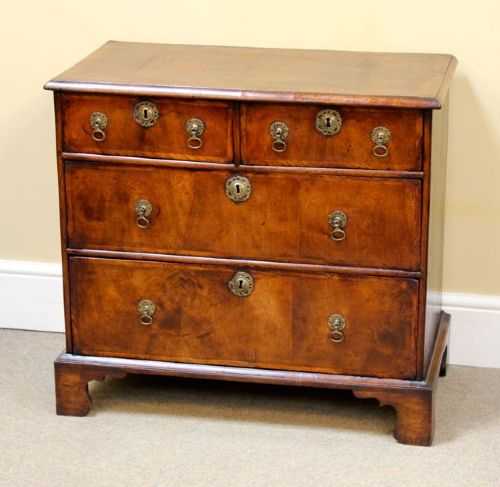
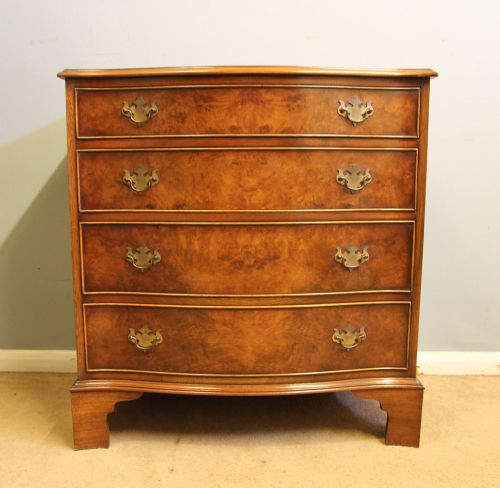
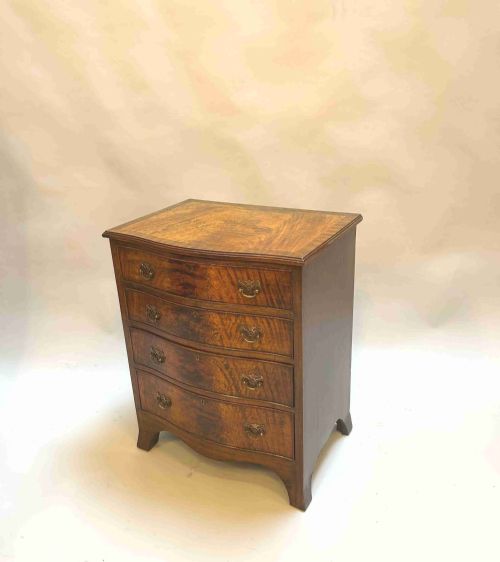
Cabinetmakers constructed these pieces using solid oak for interior drawer carcassing while applying highly figured burr walnut veneers to the visible exterior surfaces. Crossbanding often frames the drawer fronts and top panels to accentuate the intricate grain patterns.
Brass hardware, including swing handles and escutcheons, fastens to the primary timber framework. Specialised hinges support the folding or sliding tops characteristic of the bachelor form.
Listings feature pieces spanning the 18th century through to the 1930s, incorporating walnut, burr walnut veneer, oak, and brass hardware.
Assessing Quality and Character
The visual appeal depends largely on the density and symmetry of the burr walnut figuring across the front and top surfaces. Superior examples display carefully matched veneer panels that create a continuous, harmonious pattern rather than a disjointed patchwork.
Proportions and timber preservation define the higher tiers of these pieces. Original surface patination and crisp detailing around the mouldings and bracket feet separate accomplished cabinet work from later or heavier restorations.
Tozer
The Burr Walnut Bachelor Chest Glossary
- Burr walnut
- A specialised timber veneer harvested from the wart-like growths on walnut trees. It yields complex, swirling grain patterns highly prized for decorative furniture surfaces.
- Bachelor chest
- A small chest of drawers equipped with a folding or sliding top surface. This multifunctional design served for correspondence and personal grooming in domestic settings.
- Serpentine
- A front contour characterised by a gentle convex centre flanked by concave curves. This shaping requires advanced woodworking skill to execute cleanly across drawer fronts.
- Crossbanding
- A decorative border technique where narrow strips of veneer are laid perpendicular to the primary grain. It frames the central panel to create a neat visual boundary.
- Escutcheon
- A protective plate surrounding a keyhole. These hardware elements are typically cast in brass and secured to drawer faces.
Burr Walnut Bachelor Chest: Frequently Asked Questions
What is a burr walnut bachelor chest used for?
These pieces function primarily as compact storage chests with the added versatility of a pull-out or folding writing surface. The top provides a convenient flat area for correspondence or display.
Historically, the design accommodated the needs of a single household member requiring a writing desk and drawer space in a modest footprint. Today, they serve effectively in bedrooms or studies for similar practical purposes.
How do I identify an 18th-century piece?
Eighteenth-century examples display specific timber construction methods, including hand-cut dovetails on the drawer linings and native oak secondary woods. The patina develops naturally over centuries of handling and polishing.
Stylistic cues such as Queen Anne or George II proportions align with the period of manufacture. Closer inspection reveals the subtle irregularities typical of hand-wrought cabinet work.
What is the difference between original and revival pieces?
Period pieces from the 18th century carry the structural wear and timber shrinkage accumulated over hundreds of years. Their construction details reflect the specific hand tools and joinery conventions of their era.
Revival pieces, often dating from the 1920s and 1930s, utilise similar burr walnut veneers and Georgian styling but exhibit more uniform internal construction. These later interpretations offer the visual warmth of burr walnut with robust modern stability.
How do I care for burr walnut furniture?
Burr walnut benefits from stable room environments away from direct sunlight and rapid temperature fluctuations. Applying a quality natural wax occasionally helps preserve the lustre of the veneer.
Avoid excessive moisture and harsh chemical cleaners on the polished surface. Gentle dusting with a soft, dry cloth maintains the finish safely.