


Writing Slope Secret Drawers
Writing slope secret drawers open to reveal concealed compartments that hide letters and valuables from prying eyes.
Writing Slope Secret Drawers
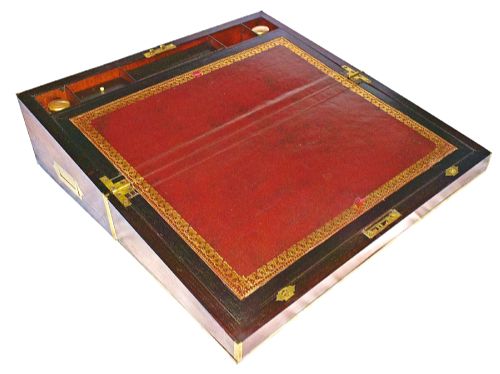
Writing slope secret drawers are compact wooden writing boxes designed to fold open into a slant, housing hidden compartments within their internal stepped or pigeonholed interiors. You are most likely to meet Victorian and Georgian examples constructed from dense hardwoods.
The objects take the form of portable boxes, campaign pieces, and occasional oak bureaus featuring concealed storage accessed by removing dummy panels or stationery dividers. These pieces reflect a period when correspondence required secure, private containment.
Materials and Construction
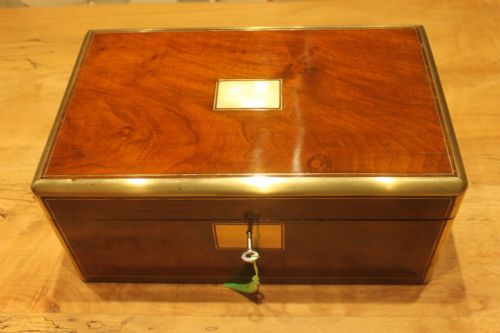
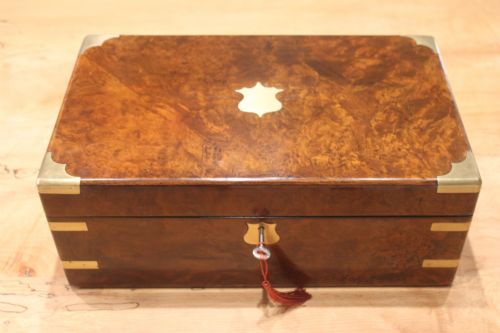
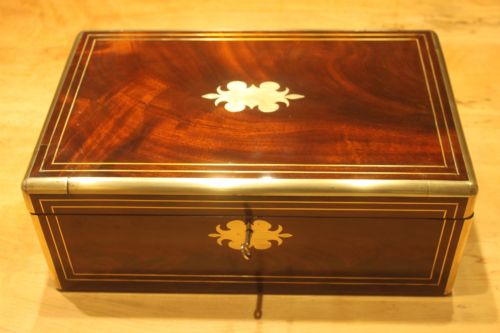
Cabinetmakers constructed these writing slopes from timber substrates faced in decorative veneers such as walnut, figured walnut, burr walnut, rosewood, and coromandel wood, alongside solid mahogany, oak, and pine. Carpenters reinforced the box corners and surfaces with brass binding, brass inlay, and brass edging.
Internal mechanisms rely on secret spring-loaded panels or sliding partitions that release the hidden drawers behind stationary pigeonholes. Locksmiths fitted secure mechanisms like Bramah locks to protect the contents of the main compartment and the hidden spaces.
Several boxes still retain their original keys tucked safely inside, waiting for someone to unlock a drawer that has stayed shut for over a century.
Judging Quality and Finish
The standard of a writing slope rests on the selection of timber veneers, where highly figured walnut, burr walnut, or dense coromandel indicate superior cabinetmaking. Finely matched grain patterns across the exterior surfaces separate standard boxes from more ambitious pieces.
Internal execution dictates the sophistication of the object, particularly the smooth operation of the concealed spring mechanisms and secret drawers. Precision in the brass inlay and the presence of branded locking hardware elevate the standing of the piece.
George Austin of Dublin
The Writing Slope Secret Drawers Glossary
- Writing slope
- A portable slant-topped box designed for correspondence, opening to reveal a writing surface and internal compartments.
- Secret drawers
- Concealed miniature drawers hidden behind removable panels, dummy partitions, or stationery compartments within a writing box.
- Bramah lock
- A high-security patented cylindrical lock mechanism invented in the eighteenth century, frequently fitted to better quality nineteenth-century boxes.
- Figured walnut
- Timber cut to highlight decorative natural patterns, swirls, and grain variations in the wood.
- Campaign style
- Portable furniture constructed with brass corners and recessed handles for transport during military travel.
Writing Slope Secret Drawers: Frequently Asked Questions
How do I find the secret drawers?
Most secret drawers are revealed by lifting internal stationery partitions, sliding out false panels, or pressing concealed spring catches within the pigeonholes. These hidden compartments often sit behind the main vertical dividers of the interior fitment.
Taking your time to examine how the internal wooden blocks fit together usually exposes the release mechanism. Do not force any panels, as the hidden catches are designed to operate smoothly when triggered correctly.
What woods were used for these boxes?
Cabinetmakers utilised a range of dense hardwoods, favouring walnut, figured walnut, burr walnut, rosewood, and coromandel wood for decorative veneer surfaces. Solid mahogany and oak also appear frequently, particularly in campaign pieces and earlier Georgian examples.
Pine serves as a secondary wood for internal carcases and secondary drawer linings on various boxes. The choice of exterior timber largely dictates the visual weight and decorative appeal of the piece.
Were these slopes used for travel?
Many writing slopes were built for portability, featuring robust wooden construction and protective brass binding to withstand movement. Campaign style examples in mahogany were specifically adapted for travel by military officers and officials.
Other larger examples functioned as stationary desk accessories kept in a domestic study rather than moved about. The inclusion of recessed brass handles generally indicates a piece intended for frequent relocation.
How do I date a writing slope?
Dating relies on combining the timber choice, construction style, and hardware types present on the box. Georgian pieces often display different internal layouts and simpler locking systems compared to later Victorian iterations.
Figured walnut and coromandel finishes combined with Bramah locks point toward the Victorian era. Examining secondary woods and construction joints helps narrow the period of manufacture further.