


Fitted Writing Slope Box
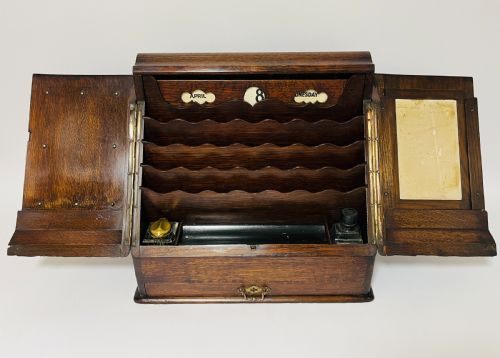
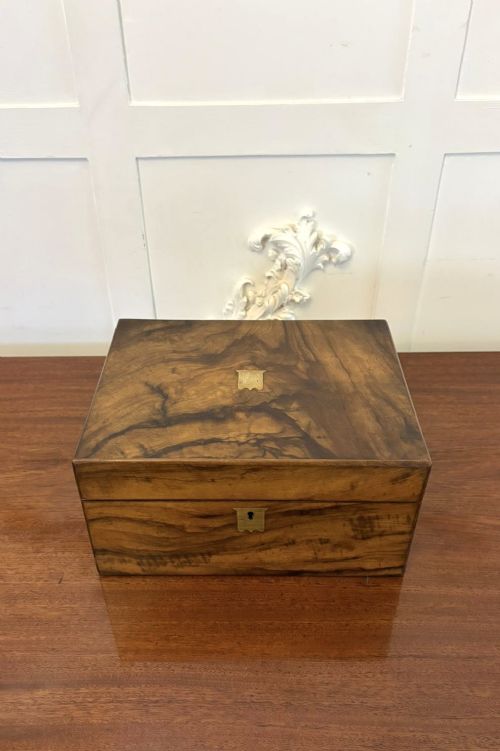
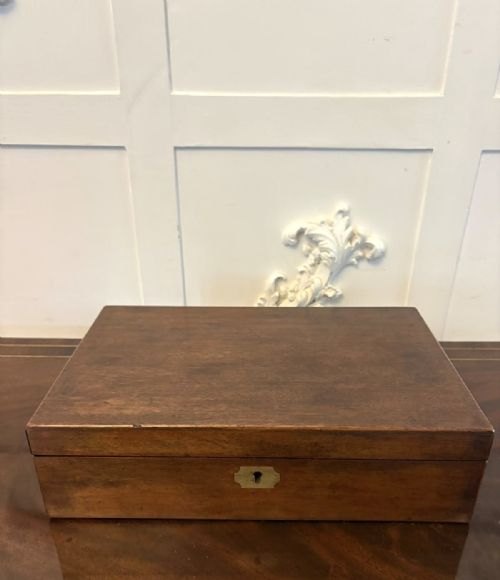
A fitted writing slope box offers a portable desk for correspondence, holding papers, ink and nibs securely within a hinged case.
Fitted Writing Slope Box
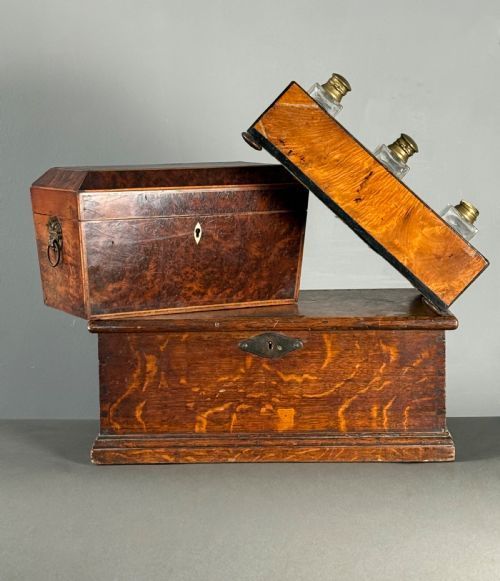
A fitted writing slope box is a portable desk designed for correspondence, featuring a slanted surface for writing and internal compartments for stationery. These pieces span the Georgian, Regency and Victorian periods, often taking the form of writing slopes, lap desks, campaign boxes and stationery cabinets.
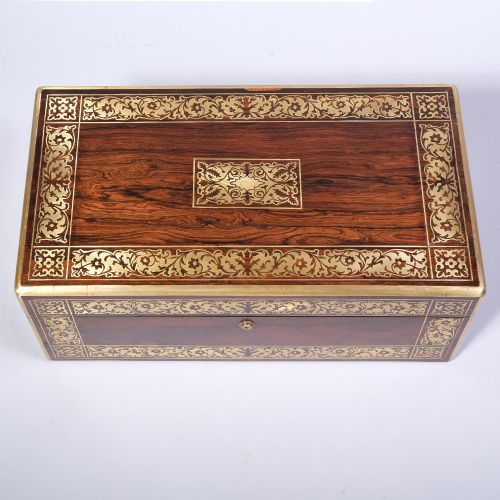
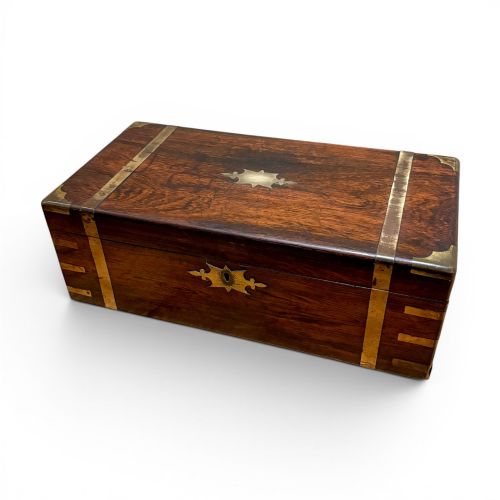
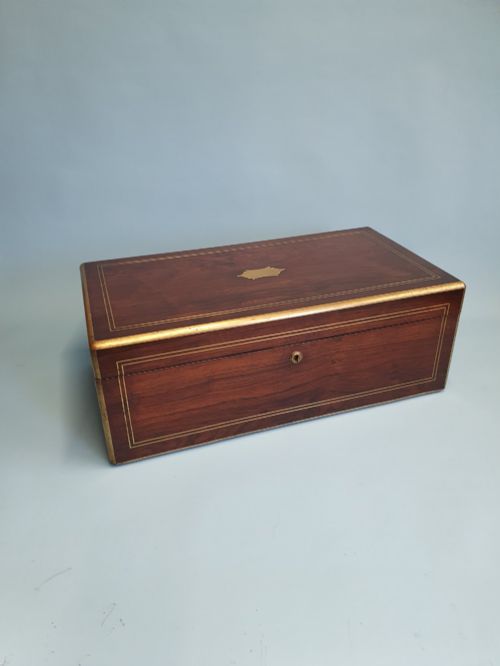
The most common examples on this page are Victorian and nineteenth-century pieces finished in walnut, mahogany or rosewood. Many incorporate brass binding, secret drawers, leather writing surfaces and working keys for travel and secure storage.
Regional variations appear alongside standard English forms, including Anglo-Indian, Chinese and Japanese pieces utilising exotic timbers and intricate inlay. These overseas examples bring distinct decorative traditions to the traditional desk format.
Materials and Technique
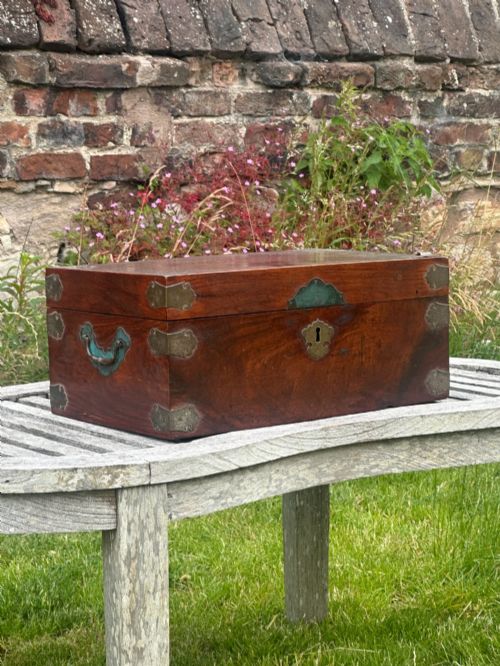
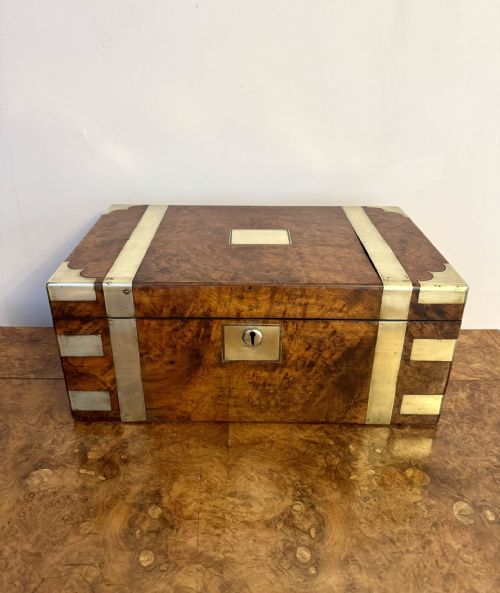
Cabinetmakers constructed these boxes from dense hardwoods such as mahogany, walnut, burr walnut, rosewood and padouk, often selecting figured veneers for the exterior surfaces. Brass banding, corner mounts and flush handles were applied to reinforce the edges against the rigours of travel.
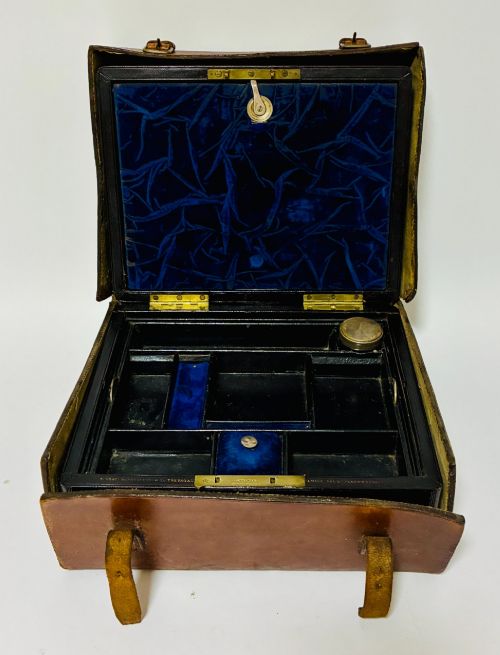
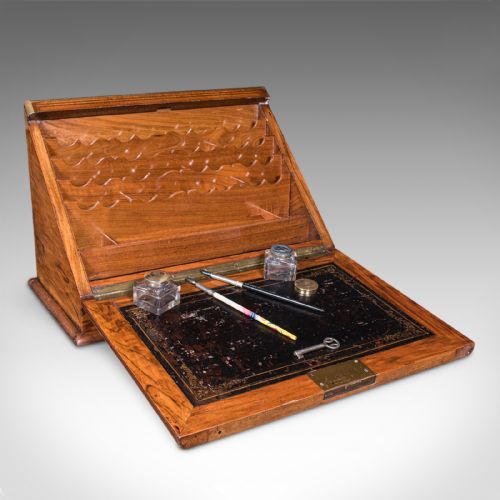
Interiors were lined with leather for writing surfaces, while compartments were fitted with glass inkwells, pen trays and secret drawers accessed through hidden mechanisms. Locks by makers such as Bramah secured the contents, combining fine carpentry with functional security hardware.
Internal fittings range from simple leather surfaces to complex stationery cabinets with candle sconces and sovereign sections.
Judging Quality
The standard of a fitted writing slope box rests on the choice of timber and the precision of its joinery. Superior examples display carefully matched burr veneers and tightly fitted internal compartments that operate smoothly without binding.
Attention to detail in the hardware distinguishes finer pieces from ordinary ones. Solid brass mounts, original working locks, well-tooled leather writing surfaces and intact secret drawers indicate a higher grade of craftsmanship.
F. West
The Fitted Writing Slope Box Glossary
- Writing slope
- A portable box with a hinged lid that opens to form an inclined writing surface lined with leather or velvet. Inside, partitioned compartments organise paper, pens and inkwells.
- Campaign box
- A sturdy travelling chest or desk designed for military officers or colonial travellers, typically reinforced with brass corners and flush recessed carrying handles.
- Secret drawer
- A concealed compartment hidden behind removable panels or triggered by release pins, intended for valuables and confidential papers.
- Padouk
- A heavy, durable tropical hardwood with a reddish-brown colour, frequently utilised in Anglo-Indian campaign furniture.
- Bramah lock
- A high-security cylindrical lock patented in the eighteenth century, commonly fitted to superior quality boxes and desks of the period.
Fitted Writing Slope Box: Frequently Asked Questions
What is a fitted writing slope box?
A fitted writing slope box is a portable desk designed for correspondence and document storage. When opened, the hinged lid forms an inclined surface for writing.
Inside, these boxes contain dedicated compartments for inkwells, pens and stationery. Many also feature hidden drawers and secure locks.
How were campaign writing boxes used?
Campaign writing boxes were built for officers and travellers on the move. Their robust construction allowed them to withstand frequent journeys.
Brass binding and recessed handles protected the corners and edges from damage. These boxes provided a stable workspace away from home.
How do I find the secret drawers?
Secret drawers are typically concealed behind false partitions or triggered by sliding panels within the stationery well. Removing the internal pen tray often reveals the mechanism.
Cabinetmakers designed these hidden spaces to secure valuables, money and confidential letters during travel.
What woods were used for these boxes?
Cabinetmakers utilised dense hardwoods such as mahogany, walnut, burr walnut and rosewood. Exotic timbers like padouk and camphor wood also appear on campaign pieces.
Exteriors often featured figured grain patterns, while brass inlay or banding added structural reinforcement and decoration.