




Portable Wooden Chest
These portable wooden chest examples are practical travelling boxes designed to move belongings securely, offering robust construction and compartments suited to various trades and personal uses.
Portable Wooden Chest
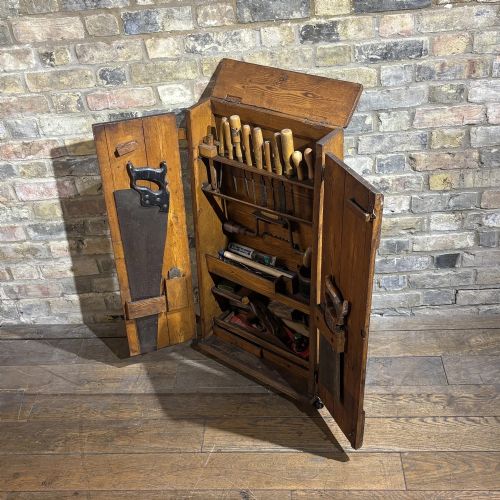
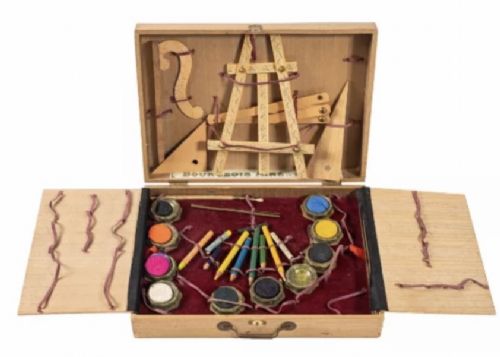
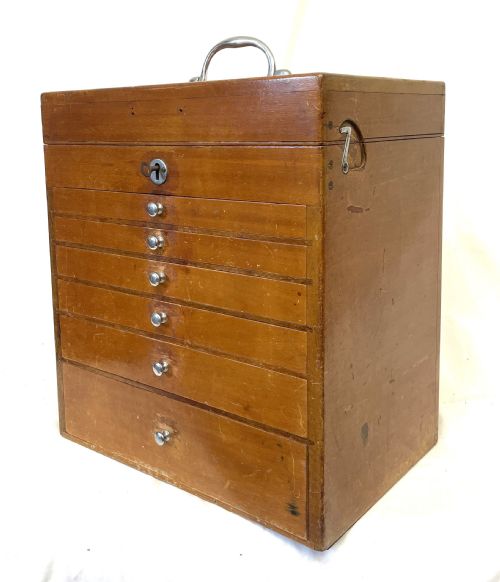
When you search for a portable wooden chest, you encounter items spanning the Georgian, Victorian, and 1920 periods alongside 19th-century examples. The forms include tool cabinets, artist boxes, collectors cabinets, washstands, tabletops, and storage cabinets.
You also meet apothecary boxes, medicine chests, writing slopes, and travelling boxes in styles such as Victorian, Georgian, Anglo-Indian, Industrial Utility, Traditional Japanese, and Qing Dynasty. The materials include mahogany, brass, iron, velvet, pine, pitch pine, beechwood, oak, ebony, camphor, and kiri wood.
How they were made
These items utilise solid timbers like mahogany, oak, beechwood, and pitch pine to withstand travel and daily handling. Metal fittings such as brass and iron reinforce corners, provide structural integrity, and secure lids and drawers.
Interiors often incorporate specialised compartments, velvet linings, and folding or swing-out mechanisms designed to hold medical instruments, art supplies, or writing materials securely.
Listings feature materials ranging from common pine and beechwood to dense camphor, ebony, and mahogany.
What varies in quality
The sophistication of the internal mechanics and specialised fittings distinguishes standard utility boxes from finer specimens. Well-engineered metamorphic actions, tidy compartmentalisation, and intact velvet linings indicate a higher grade of manufacture.
The selection of timber, ranging from standard pine and beechwood to dense mahogany, ebony, and camphor, shapes the durability and visual weight of each item.
BOURGEOISE AINE PARIS
The Portable Wooden Chest Glossary
- Campaign
- Furniture and boxes built for military officers and travellers, featuring recessed brass handles and reinforced corners for transit. These pieces dismantle or fold to save space.
- Apothecary box
- A fitted wooden chest designed to transport medicines, vials, and medical equipment safely. They usually contain multiple small drawers and secure latching systems.
- Writing slope
- A portable box with an angled lid that opens to reveal a writing surface and storage compartments for paper and ink. They often include secret drawers and locking mechanisms.
- Kiri wood
- A lightweight, durable Japanese hardwood traditionally used for storage boxes due to its resistance to moisture and fire. It protects contents from humidity shifts.
Portable Wooden Chest: Frequently Asked Questions
What is a portable wooden chest used for?
These chests served various professions and travellers by safely transporting tools, medical supplies, writing materials, and art equipment. Their internal compartments kept delicate instruments organised during transit.
Today, they function as decorative storage units or display pieces in homes and studies, housing collections or everyday items.
How do I date a portable wooden chest?
Dating relies on observing construction methods, timber choices, and hardware styles associated with periods like the Georgian era, the Victorian age, or the 1920s. Specific labels or stamps inside the box can also indicate the maker and decade of origin.
Stylistic cues, such as Anglo-Indian ebony work or Qing Dynasty influences, help place the piece within a specific regional and temporal context.
What materials are common in these chests?
Construction typically involves hardwoods and softwoods such as mahogany, oak, beechwood, pitch pine, and kiri wood. These are often paired with brass or iron brackets, hinges, and carrying handles.
Interiors may feature velvet linings and specialised wooden dividers tailored to the specific trade or purpose of the chest.
Are campaign chests different from standard boxes?
Campaign chests and boxes are specifically engineered for military use or travel, featuring flush brass hardware to prevent snagging and reinforced corners for durability. Many include clever folding mechanisms or metamorphic elements.
Standard storage boxes focus more on stationary organisation rather than rugged transit capability, though both share sturdy wooden construction.