



Portable Campaign Furniture
Portable campaign furniture brings practical officer equipment into domestic rooms through clever folding designs and sturdy woods built to travel.
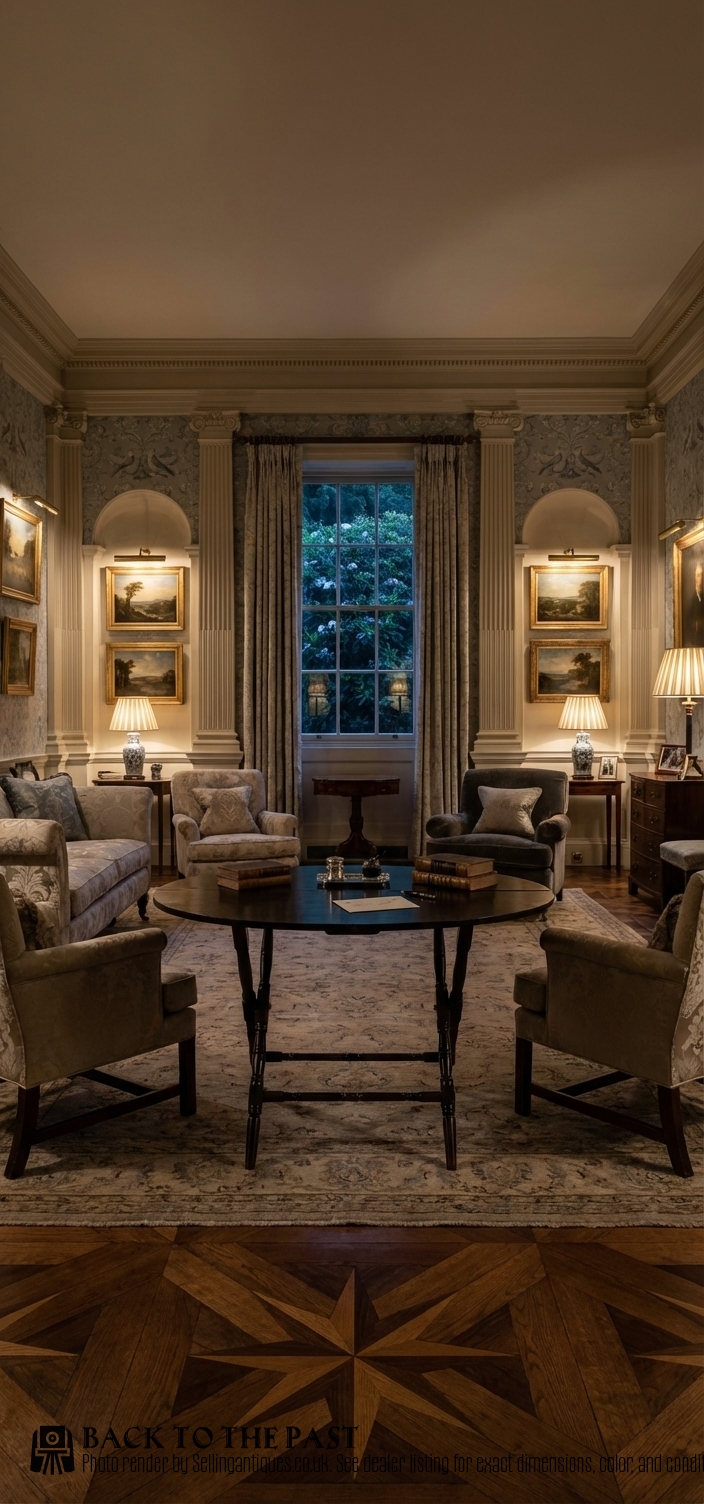
Portable Campaign Furniture
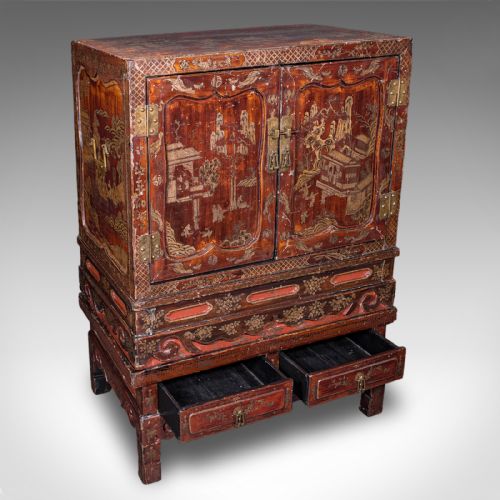
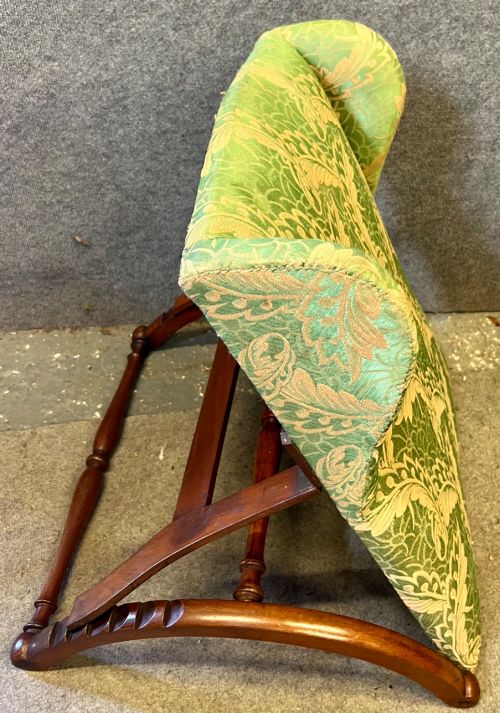
Portable campaign furniture encompasses items designed for military life on the move, including chests of drawers, writing slopes, folding chairs, and washstands. These pieces serve domestic spaces today by offering clever storage and surfaces that pack down compactly.
The pieces appearing most frequently on this page date from the Georgian and Victorian eras, alongside early twentieth-century examples. Mahogany remains the dominant wood, accompanied by teak, pollard oak, and beech.
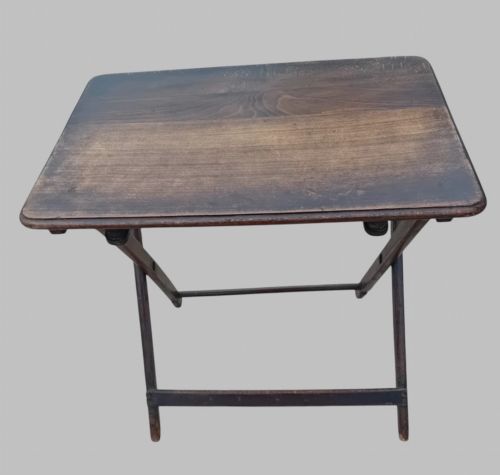
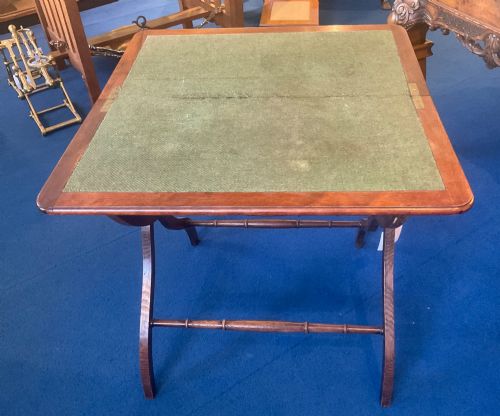
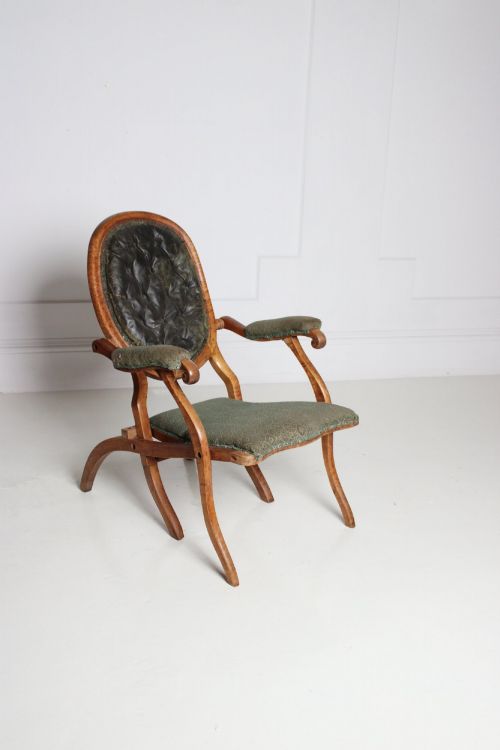
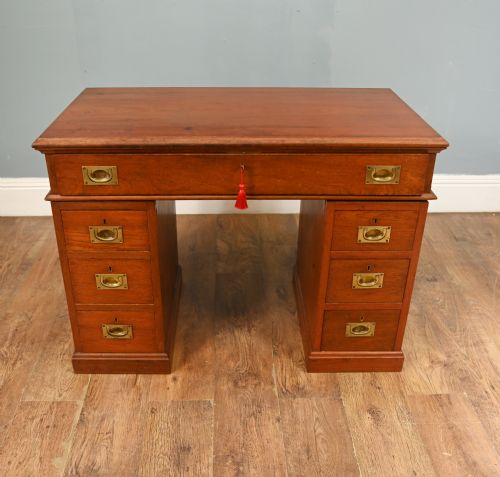
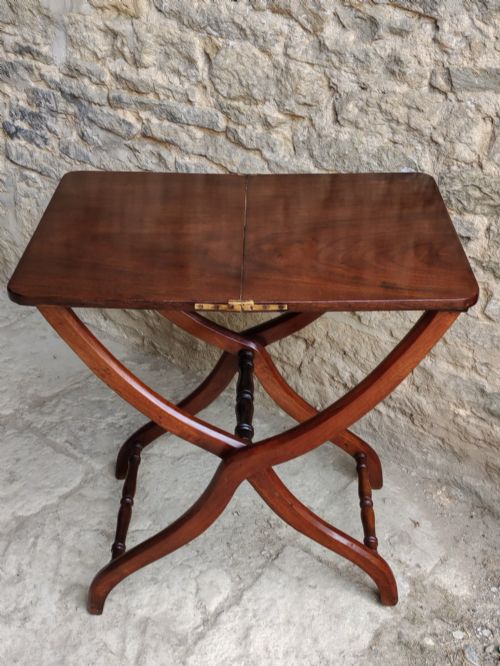
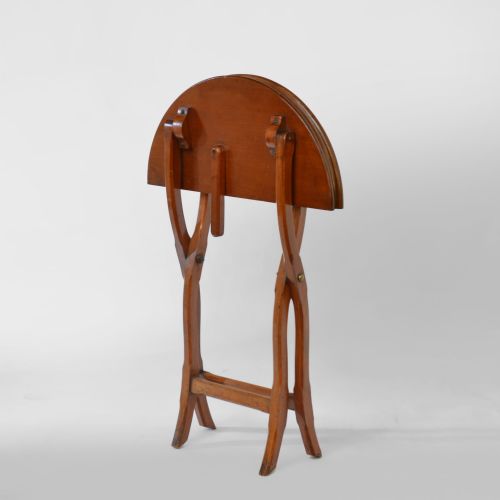
Forms range from compact desks and writing boxes to coaching tables and washstands. Many feature folding mechanisms or sectional builds intended originally for officers on active service.
Materials and construction methods
Craftsmen built these items primarily in mahogany, teak, and rosewood to withstand difficult climates and frequent transit. Brass fittings reinforce corners, protect edges, and secure joints against heavy handling.
Folding actions rely on clever hinges, removable legs, and slot-together sections that operate without modern tools. Leather, baize, and fabric line writing surfaces and interior compartments to cushion contents during travel.
Listings feature items spanning the eighteenth, nineteenth, and early twentieth centuries, dominated by mahogany and brass.
Factors that determine quality
Quality rests in the precision of the folding mechanisms and the tightness of the joinery. Pieces with smooth-acting brass hinges and flush fittings demonstrate superior workshop execution.
The choice of timber and the restraint of decorative carving distinguish finer items from simpler utilitarian versions. Well-figured mahogany and intact original brasswork elevate the standing of a piece.
The Portable Campaign Furniture Glossary
- Campaign chest
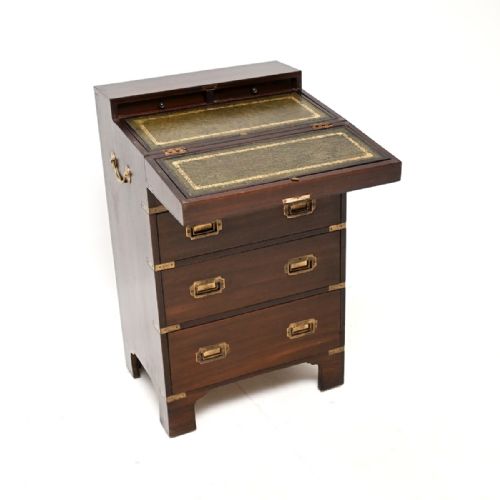
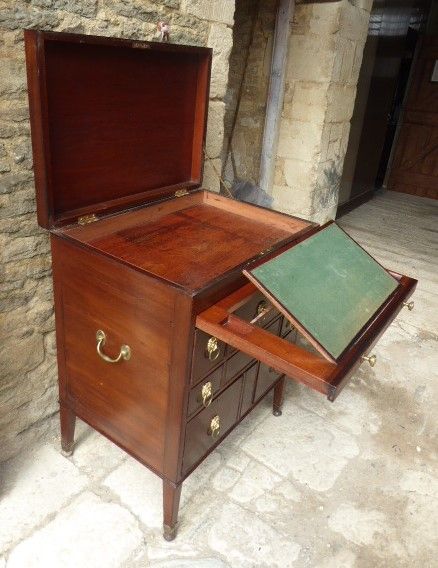
- A chest of drawers built in two or more separate sections with inset brass carrying handles designed for military transport.
- Writing slope
- A portable slant-topped box that opens to reveal a slanted writing surface, inkwells, and storage compartments for stationery.
- Coaching table
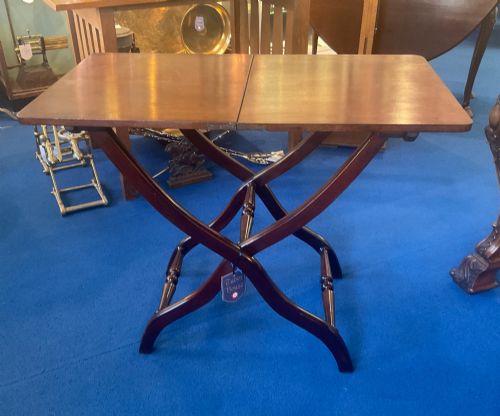
- A folding occasional table with an X-frame base and a removable top intended for easy packing during travel.
- Washstand
- A freestanding frame or cabinet designed to hold a basin and pitcher for personal washing, often incorporating folding sections.
- Secretaire
- A cabinet or chest featuring a pull-down writing drawer fitted with small compartments and pigeonholes.
Portable Campaign Furniture: Frequently Asked Questions
How do campaign chests come apart?
These chests typically separate into two distinct box sections that stack one upon the other for transit. Brass carrying handles on the sides allow officers to lift each module independently.
Removable feet or brackets often screw into the base to elevate the lower section off the ground. The joinery relies on tight tolerances rather than permanent fixings to hold the modular units securely together.
Were these pieces actually used in battle?
Many items served British officers on military campaigns across the globe during the Georgian and Victorian periods. Their collapsible design allowed commanders to maintain comfortable living quarters in temporary tents and field encampments.
Some surviving examples reflect later domestic manufacture inspired by military styling rather than active service abroad. Both utilitarian field gear and high-status officer pieces share the same space in the historical record.
What woods were used for campaign items?
Mahogany is the primary timber encountered across these listings, valued for its stability and resistance to warping in changing climates. Teak and rosewood appear frequently in Anglo-Indian pieces made overseas.
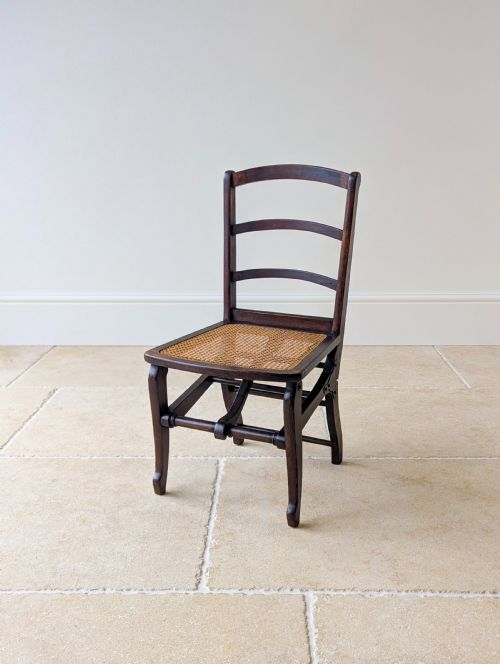
Secondary woods like beech and birds-eye maple support folding chairs and specialised storage boxes. Brass hardware accompanies almost every timber choice to reinforce structural stress points.
How do I care for a folding table?
Treat the folding mechanisms with care by supporting the weight evenly when opening and closing the frame. Keep brass fittings clean with gentle polishing products that do not stain the surrounding wood.
Protect surfaces from moisture and direct heat to preserve the original polish and leather or baize inserts. Periodic application of appropriate wax maintains the condition of the timber without building up heavy residues.