





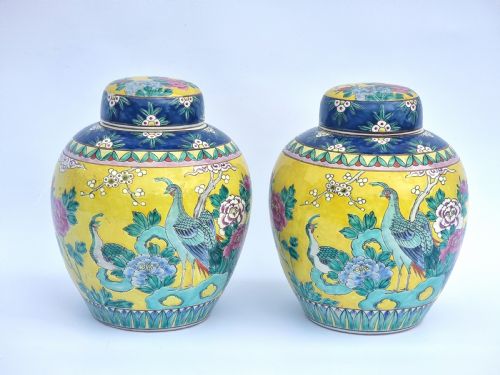


Porcelain Temple Jars
Porcelain temple jars are large ceramic vessels created for display, offering striking colour and historic forms to interior spaces.
Porcelain Temple Jars
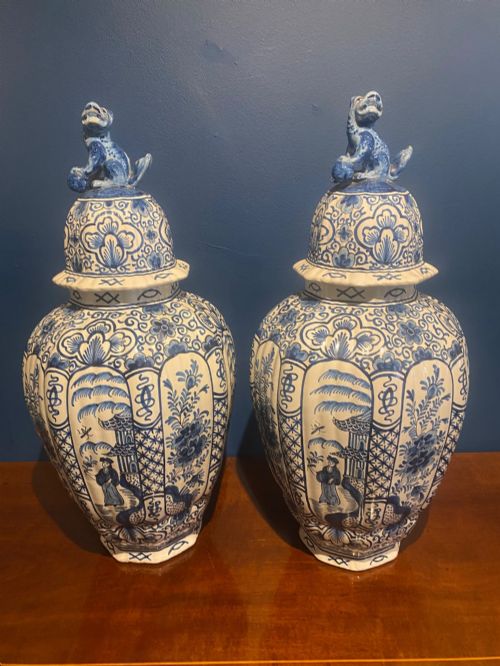
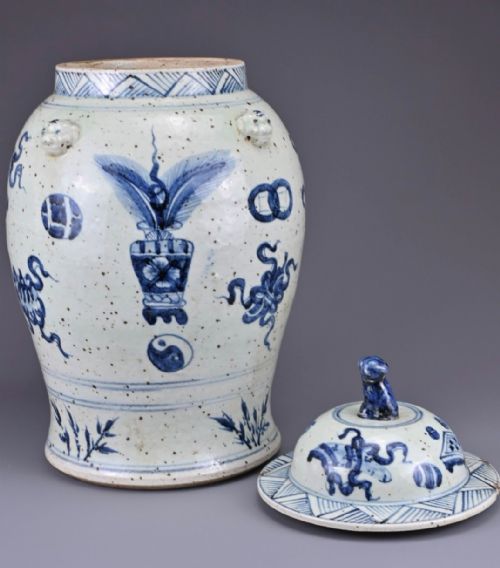
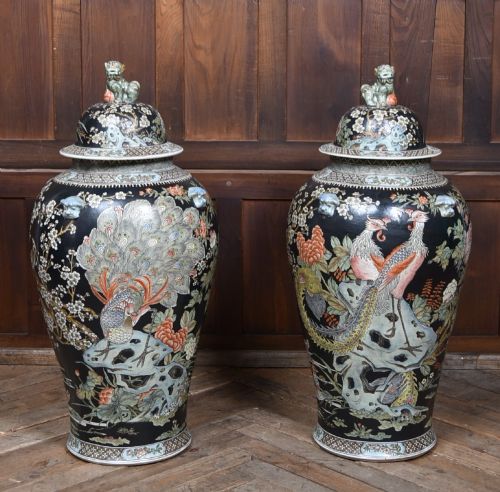
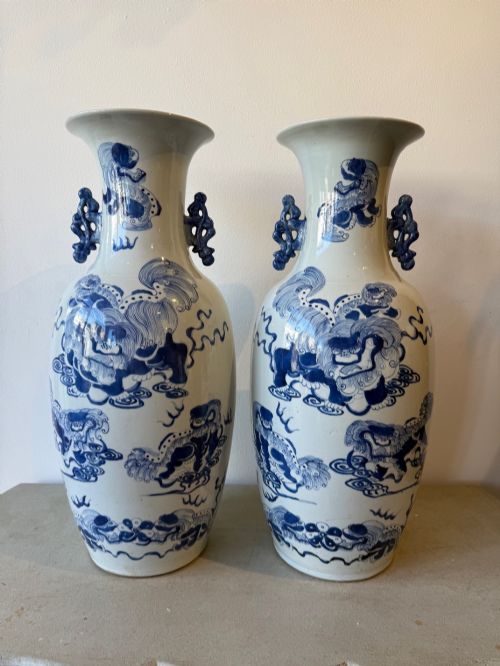
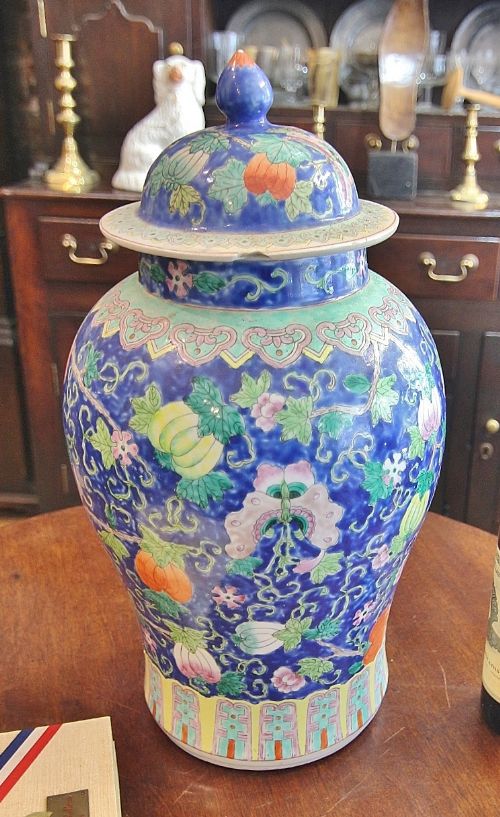
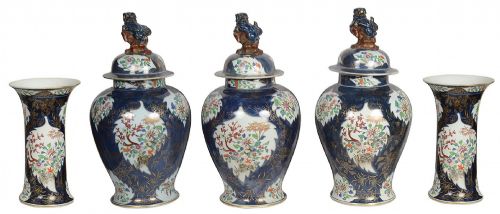
Porcelain temple jars encompass large lidded vessels, ginger jars, and floor vases originating from Chinese and Japanese traditions across several centuries. The pieces on this page appear predominantly from the nineteenth century, alongside examples from the seventeenth, eighteenth, and twentieth centuries. Makers utilise forms such as baluster and ovid shapes, often paired with matching covers or configured into garnitures.
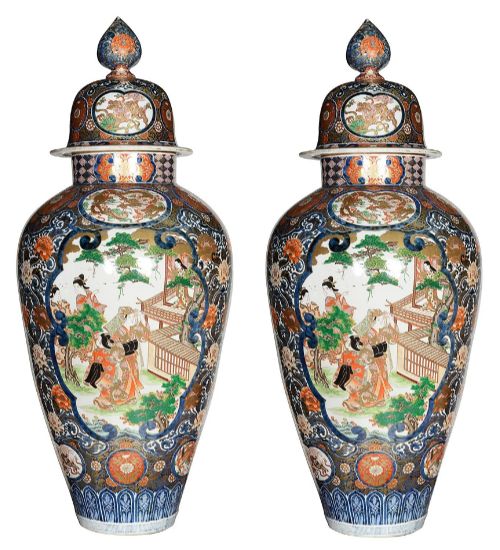
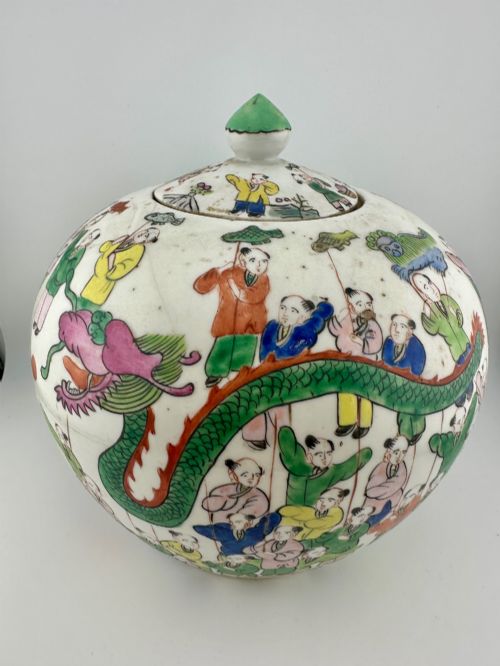
Japanese Imari and Arita wares feature heavily among these listings, alongside Chinese blue and white, Famille Rose, Cantonese Rose Mandarin, and Satsuma pieces. Buyers frequently encounter large pairs intended for symmetrical placement in grand rooms. Styles range from strict period production to later nineteenth-century interpretations of earlier Kangxi designs.
How they were made
Potters shaped high-fired porcelain clay into robust bodies, applying glaze to create smooth surfaces capable of holding intricate painted details. Artisans then decorated the vessels using cobalt blue pigments under the glaze, or applied enamel colours and gold leaf over the glaze.
Many Japanese and Chinese pieces incorporate hand-painted scenes involving figures, landscapes, and floral motifs. Selected nineteenth-century European adaptations introduce cast ormolu mounts to complement the imported ceramic bodies.
Object types recorded across the inventory include ginger jars, floor vases, table lamps, and decorative lidded urns.
What varies in quality
Quality rests upon the crispness of the hand-painted brushwork and the complexity of the palette across the porcelain body. Superior examples exhibit precise control in cobalt blue underglaze or rich, well-preserved overglaze enamels combined with gilding.
The architectural balance of the vessel, the proportion of the cover to the base, and the depth of the porcelain glaze distinguish exceptional items from standard decorative wares.
The Porcelain Temple Jars Glossary
- Imari
- A style of Japanese porcelain featuring a palette of cobalt blue, iron red, and gold. This decorative scheme originated in Arita and became popular across Europe.
- Garniture
- A set of matching vases or jars designed to be displayed together on a mantelpiece or cabinet. These sets typically comprise three or five pieces.
- Famille Rose
- A palette of Chinese porcelain decoration dominated by opaque pink enamel introduced during the Qing Dynasty. Artisans used this shade alongside other soft enamel colours to render figures and flowers.
- Baluster
- A vase shape with a rounded lower body that tapers towards the neck. This silhouette provides stability for large display jars.
- Satsuma
- Japanese earthenware or stoneware with a crackle-glaze ivory surface, typically decorated with elaborate polychrome and gilt designs. Production flourished during the Meiji period.
- Kangxi
- A period of the Qing Dynasty associated with refined blue and white porcelain production. Later makers frequently referenced these seventeenth-century designs.
Porcelain Temple Jars: Frequently Asked Questions
What were temple jars used for?
These vessels originally served practical storage functions for spices, oils, or tea in Asian households before evolving into decorative display objects exported to the West.
Over time, larger lidded pieces became architectural ornaments placed in reception rooms, halls, and mantelpiece garnitures.
How do I identify Imari porcelain?
Imari pieces typically show a distinctive tripartite palette combining underglaze cobalt blue with iron red and gilt highlights over the white porcelain glaze.
The designs often incorporate dense floral patterns, panels, and brocade motifs characteristic of Arita kilns.
Are these jars Chinese or Japanese?
The listings include both traditions, with Chinese pieces spanning blue and white, Famille Rose, and monochrome styles, and Japanese examples featuring Imari, Kutani, and Satsuma wares.
Asian export porcelain from the nineteenth century frequently adapts traditional motifs for Western interiors.
How should I display a large jar?
Large jars and floor vases suit placement on sturdy low tables, pedestals, or hearths where their scale and painted details remain visible.
Paired vessels work well displayed symmetrically on either side of a fireplace or entryway.