




Porcelain Portrait Painting
Porcelain portrait painting brings painted likenesses onto fired ceramic surfaces, offering collectors detailed figural art fused with kiln-fired permanence.
Porcelain Portrait Painting
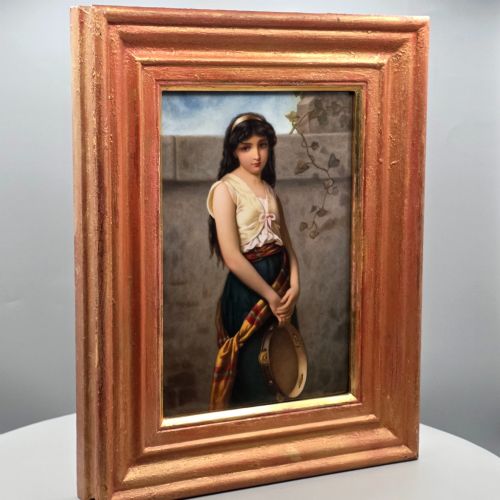
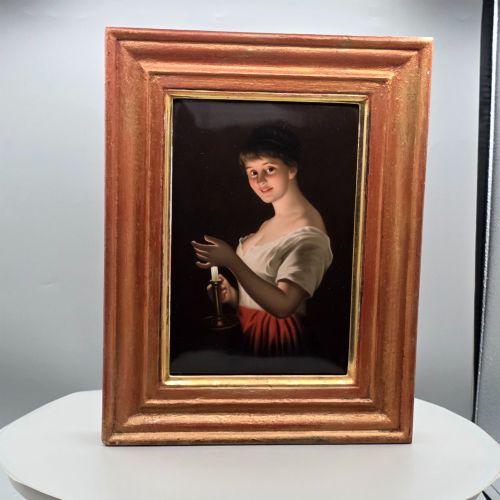
When you search for porcelain portrait painting, you encounter flat plaques, cabinet plates, and decorative vessels carrying finely rendered human faces. These works emerge predominantly from nineteenth-century European factories and studios, spanning Victorian, Rococo Revival, and Art Nouveau aesthetics.
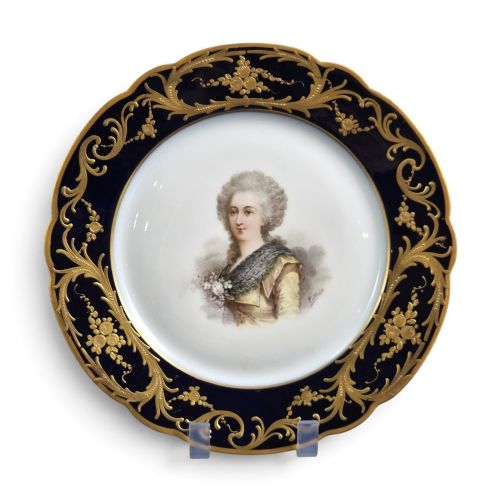
The most common formats on this page are rectangular plaques, often mounted in carved wooden or gilt frames, alongside round cabinet plates bearing historical or idealized figures. Makers ranged from major state manufactories to independent artists signing their finished surfaces.
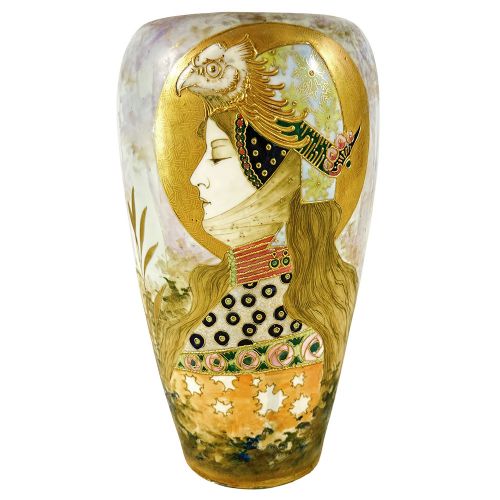
Subjects include literary heroines, royalty, religious figures, and classical personifications rendered with careful brushwork. Many examples preserve signatures of noted ceramic painters who specialised in miniature likenesses.
Materials and Technique
Artists painted directly onto white porcelain blanks using specialised ceramic enamels that vitrified during subsequent kiln firings. This process required multiple firings to fix delicate flesh tones and subtle shading beneath a protective glaze.
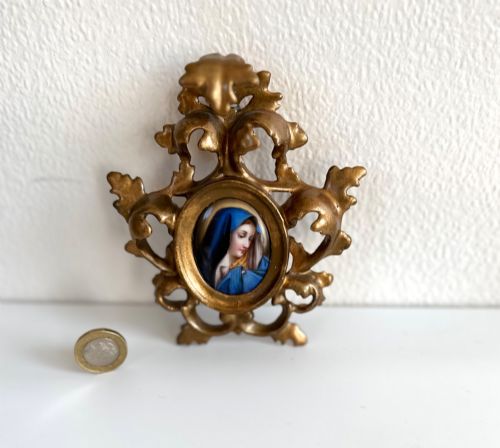
Some pieces incorporate glass or enamel elements within decorative mounts, combining ceramic portraiture with metalwork and framing traditions of the period.
Nineteenth-century ceramic artists frequently signed their miniature portraits in tiny script hidden near the subject's collar.
What Varies in Quality
The reputation of the porcelain body and the complexity of the kiln firing also dictate standard, alongside the presence of legible artist signatures or factory marks from Berlin, Vienna, or Sèvres. Original frames matching the period of the plaque add further distinction to survivals.
KPM Berlin·Sèvres·Royal Vienna·Coalport·Ernst Wahliss
The Porcelain Portrait Painting Glossary
- Cabinet plate
- A decorative ceramic plate intended for display in a cabinet or on a wall rather than for dining. These items often feature hand-painted scenes or portraits.
- KPM
- Königliche Porzellan-Manufaktur Berlin, the royal porcelain factory established in Prussia. Its plaques are known for fine figural painting.
- Royal Vienna
- The popular designation for porcelain produced by the Vienna porcelain manufactory, particularly pieces marked with the beehive stamp. These often carry classical painted subjects.
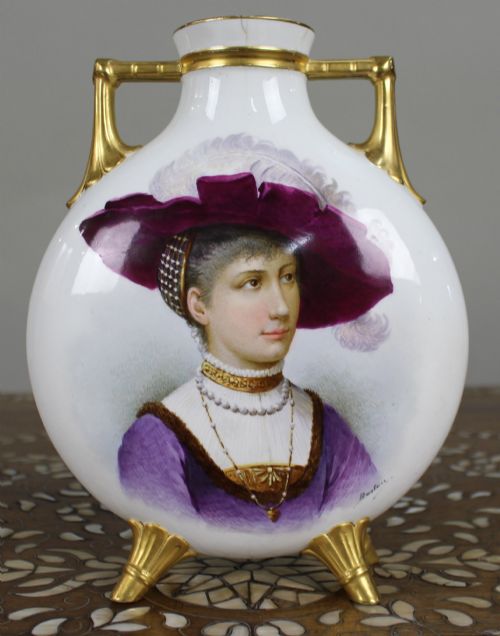
- Moon flask
- A flattened circular vase with a short neck and two handles, frequently used as a canvas for painted decoration.
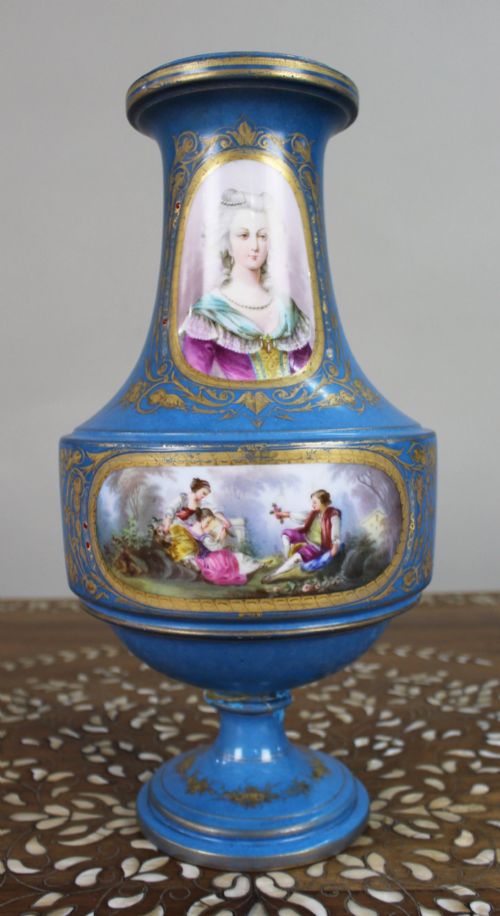
- Bleu céleste
- A bright turquoise blue ground colour developed at the Sèvres porcelain factory. It provides a striking contrast for gilt and painted panels.
Porcelain Portrait Painting: Frequently Asked Questions
How do I hang a porcelain plaque?
Most porcelain plaques arrive secured within dedicated wooden or metal frames equipped with hanging loops. Ensure the hanging wire and wall fixings match the combined weight of the ceramic and its heavy frame.
Avoid hanging plaques in areas subject to direct sunlight or moisture changes, which can affect the stability of antique gilt frames and adhesives.
Are these portraits hand painted?
The majority of pieces listed under this search feature hand-painted enamel details applied over a porcelain body. Skilled artists painted miniature likenesses before subjecting the pieces to high-temperature kiln firings.
Close inspection under magnification reveals individual brushstrokes and fine stippling used to build flesh tones, distinguishing them from printed transfers.
What is a porcelain plaque?
A porcelain plaque is a flat or slightly curved sheet of fired ceramic material designed specifically to serve as a canvas for artists. They were produced in various sizes for interior display.
Unlike utility wares, plaques existed solely for visual art, allowing painters to achieve the detail of canvas painting on a vitrified ceramic ground.