




Porcelain Pastoral Pair
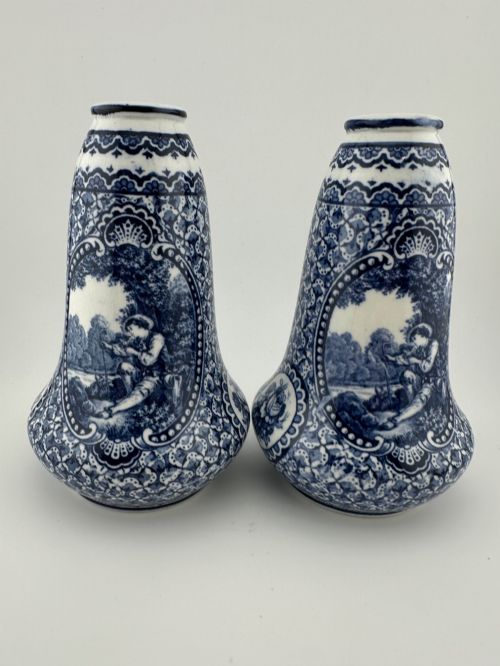
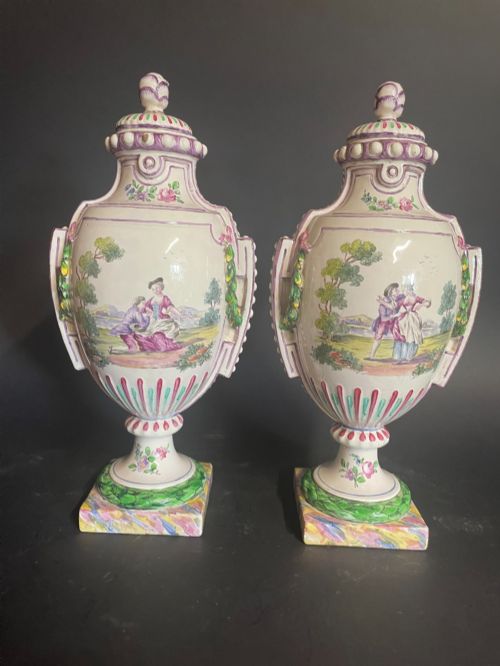
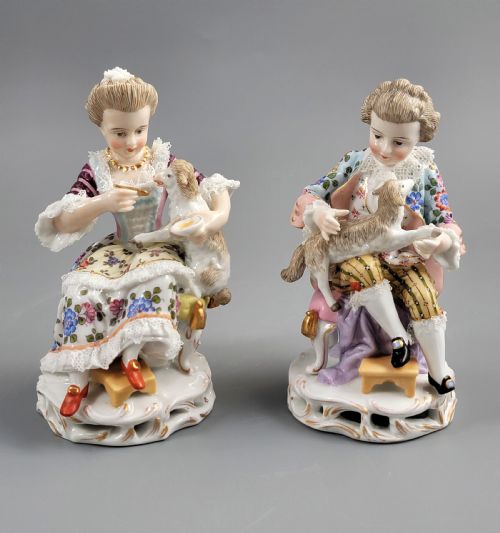
These porcelain pastoral pair objects bring rustic romance to any room, capturing idyllic scenes of shepherds, gardeners and musicians.
Porcelain Pastoral Pair
The subjects draw heavily on eighteenth century traditions, showing youths with lambs, grape harvesters and musicians in stylised countryside settings. These matching pieces were designed to sit symmetrically on mantelpieces or cabinets as balanced decorative elements.
Materials and methods
Makers shaped these pieces from hard paste porcelain and bisque porcelain, often combining glazed surfaces with unglazed matte finishes to highlight skin tones and fabrics. Hand painting applied enamels directly onto the porcelain body, frequently accented with gold leaf, gilt and ormolu mounts.
Fired in kilns, these objects relied on precise temperature control to set delicate details like foliage, garments and facial expressions. Skilled painters then added coloured glazes and metallic highlights before a final low temperature fix.
Materials recorded on this site include hard paste porcelain, bisque porcelain, enamel, gold leaf, ormolu and gilt.
Judging the work
The choice of base materials also elevates a piece, as seen in the contrast between standard glazed porcelain and finely detailed bisque porcelain sculptures. Superior examples maintain balance and proportion across both companion pieces without distortion from the kiln firing.
Franz Anton Mehlem·Sceaux Faience·Darte Brothers·Meissen·Sitzendorf·Bloor Derby·Vion et Baury·Samson·Carl Thieme·Royal Dux
The Porcelain Pastoral Pair Glossary
- Bisque porcelain
- Unglaved white porcelain with a matte, marble-like texture. It was frequently used for nineteenth century figures to create soft, realistic skin tones.
- Hard-paste porcelain
- A dense, durable ceramic material composed of kaolin and petuntse fired at high temperatures. It forms the robust body of many European figures and vases.
- Bleu celeste
- A bright sky-blue enamel colour popular on French decorative urns and vases. It provides a striking backdrop for hand painted gilt details.
- Ormolu
- Gilded bronze mounts and decorative accents applied to porcelain bases or urns. This technique adds structural weight and metallic contrast to the ceramic body.
- Glaze
- A glassy coating applied to pottery and fired to seal the porous porcelain body. It creates a smooth, reflective surface that protects the painted enamels underneath.
Porcelain Pastoral Pair: Frequently Asked Questions
How were these figures used?
These pieces served primarily as decorative ornaments for the home, adding colour and refined taste to nineteenth century drawing rooms and parlours. Vases and urns held seasonal blooms while candlesticks provided functional illumination alongside decorative charm.
Cabinet plates and figural groups were displayed in glass fronted cabinets or on open shelves to demonstrate the owner's appreciation for fine craftsmanship and classical themes.
How do I clean my porcelain?
Dust your porcelain gently with a soft, dry brush or a feather duster to remove surface particles without risking abrasion. Avoid using harsh chemical cleaners or submerging painted pieces in water, as this can damage delicate enamels and gold leaf.
For more stubborn dust, a slightly damp cloth can be used very carefully on glazed areas, ensuring the piece is dried immediately afterwards.
How do I date these figures?
Dating relies on examining the paste, the painting style, and any factory marks stamped or painted on the base. Stylistic clues like Rococo Revival curves or Victorian aesthetic choices help narrow down the manufacturing decade.
Comparing the modelling quality and materials against known periods such as the mid nineteenth or early twentieth century provides further chronological context.