

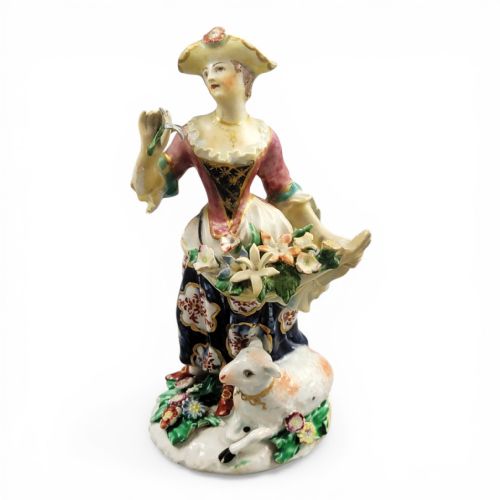


Antique Shepherdess Ornament
An antique shepherdess ornament captures pastoral charm in porcelain or bronze, bringing eighteenth-century rustic ideals straight to a mantelpiece.
Antique Shepherdess Ornament
An antique shepherdess ornament depicts female figures tending sheep or lambs, frequently accompanied by flowers and pastoral equipment. These sculptures embody the romanticised rural life popularised during the Georgian and Victorian eras. Pieces on this page span from eighteenth-century soft-paste porcelain to nineteenth-century continental reproductions.
Moulded porcelain figures dominate the selection, often appearing as pairs of shepherds and shepherdesses or individual seated ladies. Origins range from early English factories such as Derby and Bow to continental workshops in Dresden, Paris and Germany. A solitary bronze sculpture introduces a metal variation into the mostly ceramic grouping.
How they were made
Early examples utilise soft-paste or hard-paste porcelain shaped in multi-part moulds, then hand-modelled with delicate details like applied flower petals. Artisans applied polychrome enamels and gold leaf highlights before firing the figures in kilns to fix the colours and gloss. Later nineteenth-century pieces from factories such as Samson and Dresden replicated these earlier Georgian modelling techniques.
Every shepherdess comes equipped with woolly companions, floral garlands and occasionally a very patient lamb.
What varies in quality
The crispness of the modelled details dictates much of the visual success, separating sharp, early factory output from later, softer derivative castings. Hand-painting precision in the facial expressions, sheep coats and floral garlands distinguishes master modellers from routine factory output. The vibrancy and preservation of the enamel colours and gold leaf accents also influence the overall refinement of the sculpture.
Derby porcelain·Bow Porcelain·Samson·Bloor Derby·Leon Pilet
The Antique Shepherdess Ornament Glossary
- Soft-paste porcelain
- A vitreous ceramic body composed of clay and glass frit, fired at lower temperatures than hard-paste porcelain. This material has a warm, slightly creamy appearance common in early English figures.
- Rococo
- An ornate artistic style characterised by asymmetric scrolls, C-curves and naturalistic motifs. It heavily influences the swirling bases and lush foliage seen on these pastoral ornaments.
- Gilding
- The application of gold leaf or powdered gold paint to ceramic or bronze surfaces. It highlights decorative drapery and rococo scrollwork.
- Enamel
- A glassy, coloured pigment fused to the surface of porcelain during firing. It provides the bright hues found on garments and sheep.
- Patch mark
- A small unglazed scar on the underside of early porcelain figures left by kiln props during the firing process. This technical marker helps date eighteenth-century English pieces.
Antique Shepherdess Ornament: Frequently Asked Questions
Are these figures English or continental?
The selection includes both eighteenth-century English works from factories like Derby and Bow, alongside nineteenth-century continental interpretations from France and Germany. Makers such as Samson explicitly copied earlier English styles.
Examining the paste type and bottom marks helps determine the exact geographic origin of each individual pastoral sculpture.
How do I identify a reproduction?
Nineteenth-century pieces often imitate eighteenth-century models, such as Samson creating Chelsea-style figures in Paris. Closer inspection of the enamel brightness, paste density and base treatment reveals whether a piece is an early original or a later homage.
Continental factories frequently marked their output to show they were working in the manner of earlier historic periods.
What is the patch period?
The patch period refers to an eighteenth-century manufacturing phase at Derby identified by small unglazed marks on the base. These spots show where the piece rested on fireclay props inside the kiln.
Finding these specific scars assists in dating early figures to the mid-eighteenth century.
Where should I display porcelain figures?
These delicate ornaments suit protected mantelpieces, cabinets or side tables away from direct sunlight and heavy foot traffic. Their detailed enamel and gold leaf elements require stable environments to prevent surface dust accumulation.
Pairing a shepherd with a shepherdess recreates the traditional decorative arrangements intended by the original factories.