

Porcelain Mounted Table
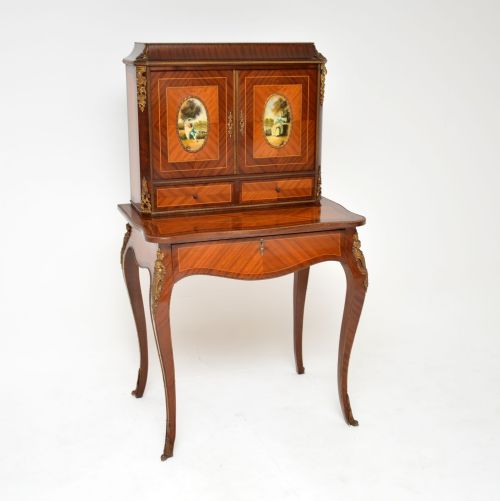
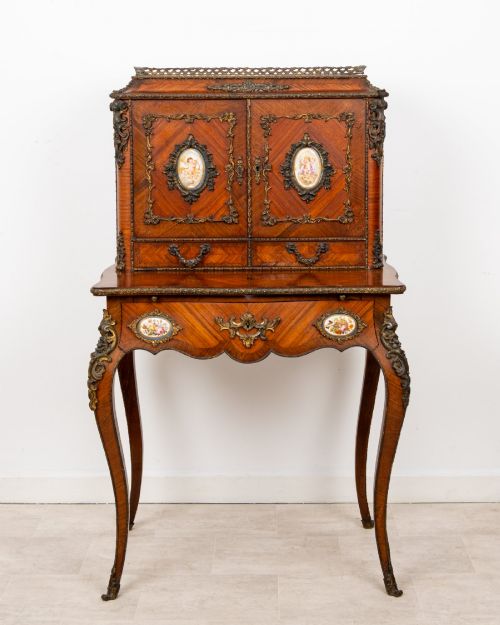
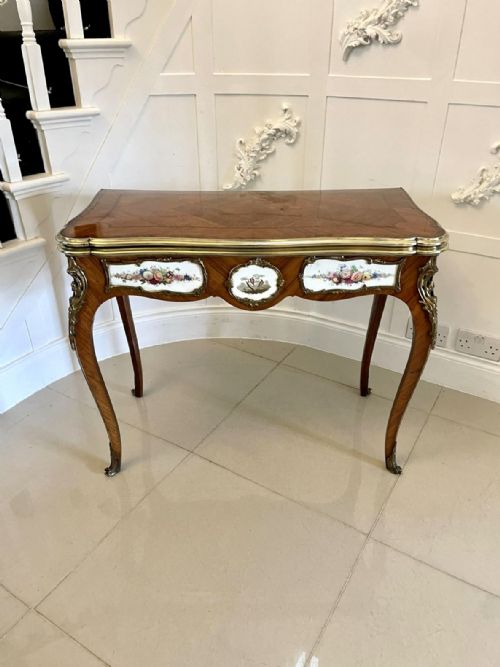
Porcelain mounted table designs unite ceramic plaques and gilt bronze mounts upon fine timber frames.
Porcelain Mounted Table
A porcelain mounted table combines ceramic artistry with functional furniture forms, frequently emerging from nineteenth century French and Victorian workshops. Buyers exploring this category encounter occasional tables, writing desks, and card tables featuring inset porcelain plaques.
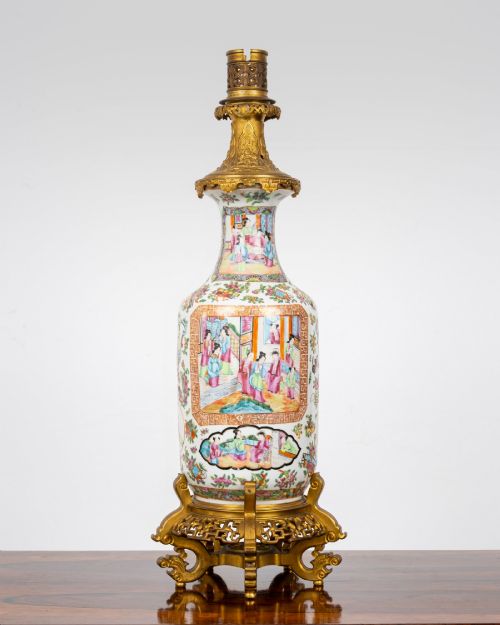
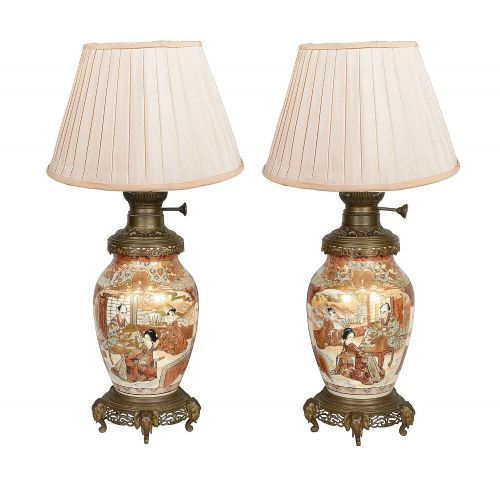
The aesthetic draws heavily from revival styles, incorporating French Rococo, Louis XV, and Neoclassical motifs alongside Chinese export and Japanese Satsuma ceramics. These items serve as decorative centrepieces that display both cabinetmaking skill and ceramic craftsmanship.
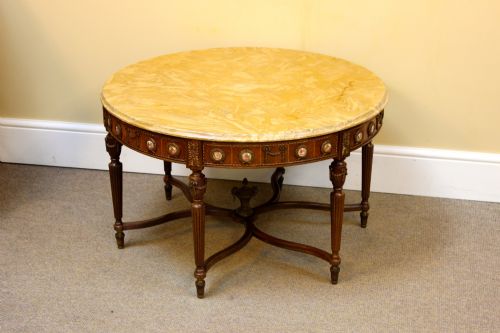
Most examples rely on wooden carcasses built from kingwood, walnut, or mahogany, enriched with metallic framing that secures the porcelain elements. Surviving pieces range from compact writing desks to larger console and coffee tables.
Materials and construction methods
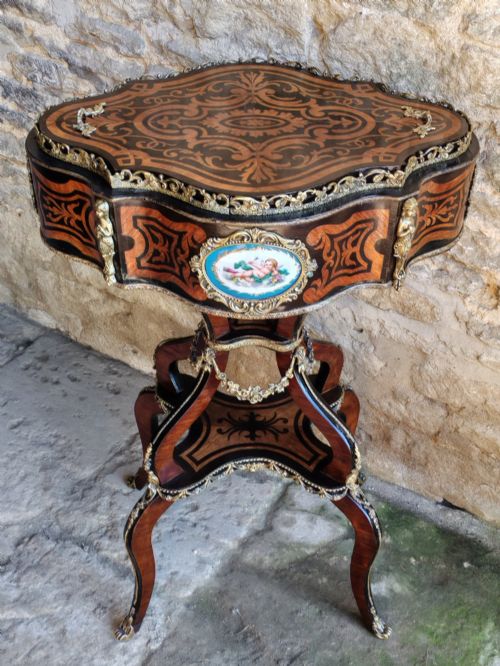
Cabinetmakers utilised dense hardwoods such as kingwood, rosewood, and walnut for the structural framework, often applying marquetry or inlay. Ormolu and gilt bronze mounts were cast and chased to frame the ceramic components precisely.
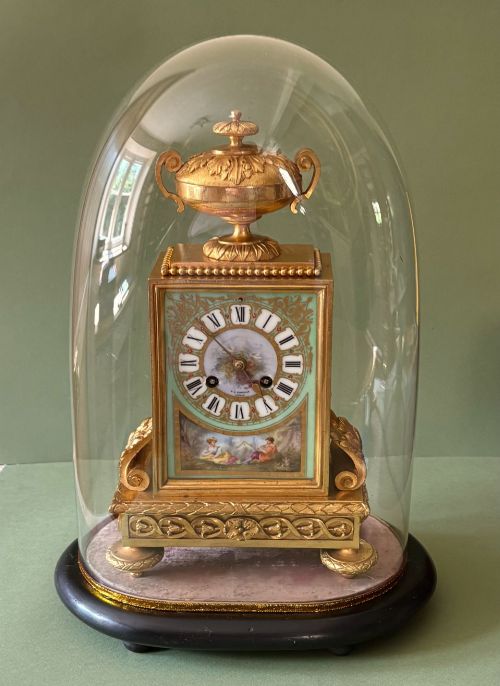
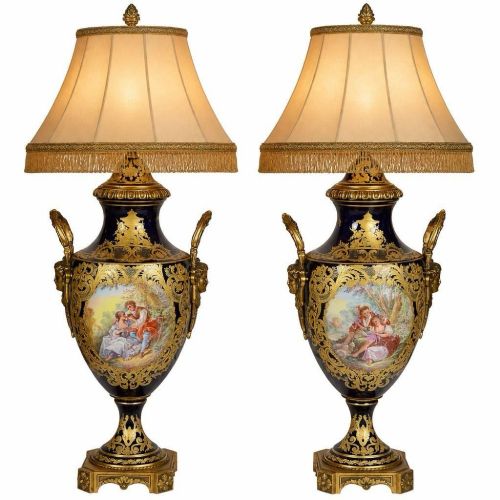
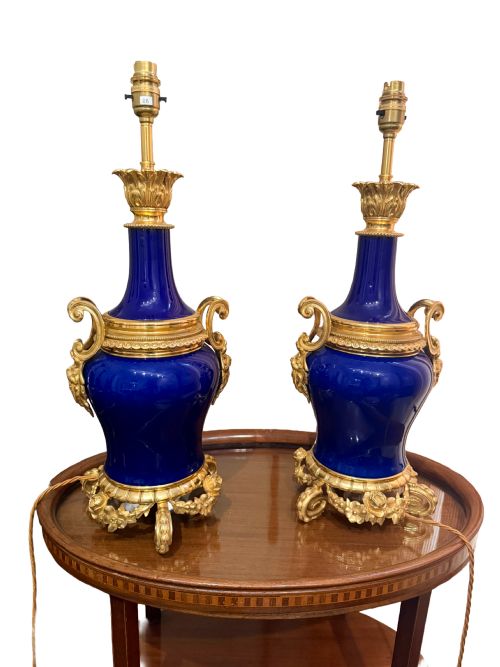
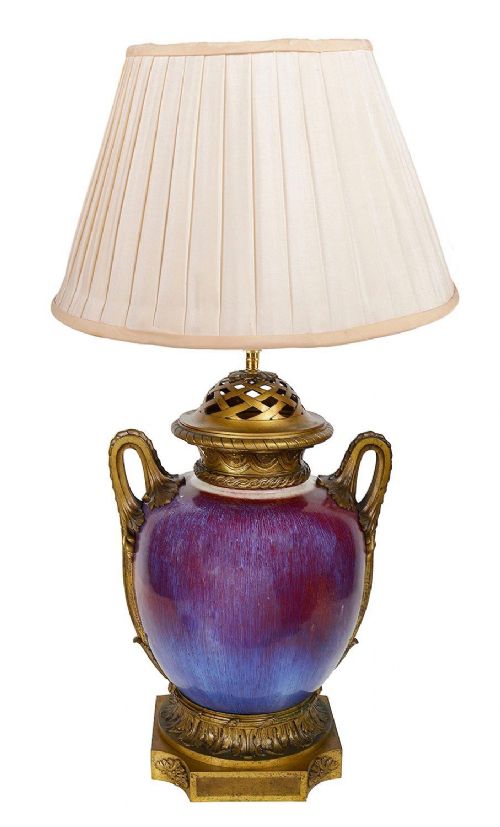
Porcelain plaques and vases, including Sevres style works and pate sur pate panels, were integrated directly into the timber surfaces or held securely by metal bezels. Brass and glass elements occasionally supplemented the primary ceramic and bronze assemblies.
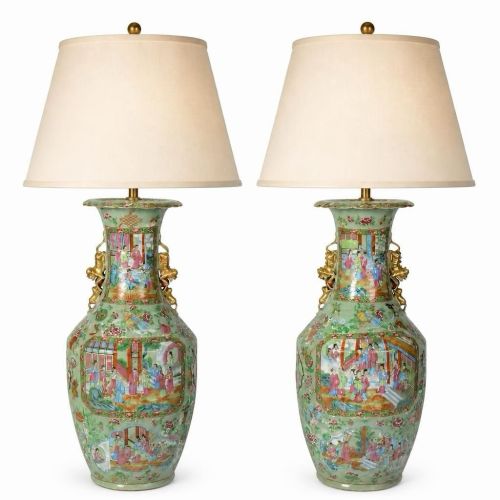
The inventory records pieces spanning the eighteenth century through the Edwardian era, including Japanese Satsuma and Chinese Celadon ceramics.
Distinctions in craftsmanship
Quality rests upon the crispness of the ormolu chasing and the artistic merit of the painted porcelain plaques. Finer specimens display deeply chiselled bronze mounts and hand-painted ceramic details rather than mass-produced transfers.
The precision of the cabinetwork defines the upper tier, seen in tight joinery, matched wood veneers, and sturdy internal framing that securely holds heavy ceramic components.
G T Morant, London·Etienne Lenoir
The Porcelain Mounted Table Glossary
- Ormolu
- Gilt bronze mounts applied to furniture and decorative objects. This technique involves gilding a mercury and bronze base with fine gold leaf.
- Pate-sur-pate
- A ceramic decoration method where liquid white porcelain clay is painted in successive layers onto a coloured background. This builds a low relief design with translucent qualities.
- Bonheur du jour
- A small ladies writing desk featuring a raised cabinet or tier with drawers and pigeonholes above the main writing surface. These desks often incorporate porcelain plaques and ormolu mounts.
- Jardiniere
- A decorative container or stand designed to hold plants and flowers. Examples in this category frequently incorporate ceramic inserts and metal mounts.
Porcelain Mounted Table: Frequently Asked Questions
How do I identify a porcelain mounted table?
Look for ceramic plaques, Sevres style panels, or mounted vases integrated directly into the wooden structure of desks, cabinets, and occasional tables. These ceramic elements are typically framed by cast ormolu or gilt bronze mounts.
Examine the secondary woods and the quality of the metalwork to determine the period and origin. Most authentic examples date from the nineteenth century and reflect French or Victorian revival styles.
Where were porcelain mounted tables placed?
These decorative items occupied formal reception rooms, drawing rooms, and boudoirs where their artistic ornamentation could be admired by guests. Writing desks and card tables served functional daily roles while displaying wealth and taste.
Smaller occasional pieces and jardiniere stands held plants or display items, acting as focal points within nineteenth century interiors.
How should I care for a porcelain mounted table?
Maintain stable room humidity and temperature to protect the underlying timber veneers and prevent the wood from shrinking or cracking around the rigid ceramic plaques. Dust the surfaces gently with a dry, soft cloth.
Avoid harsh chemical polishes on the ormolu mounts and porcelain elements to preserve the original gilding and painted decoration. Consult a professional restorer for any structural repairs.
What styles influence these tables?
The aesthetic draws primarily from French Rococo Revival, Louis XV style, and Neoclassical designs popular throughout the nineteenth century. Makers also incorporated Asian ceramics, including Chinese export wares and Japanese Satsuma porcelain.
Cabinetmakers blended these diverse traditions into cohesive furniture forms that highlighted imported porcelain alongside European gilt bronze craftsmanship.