
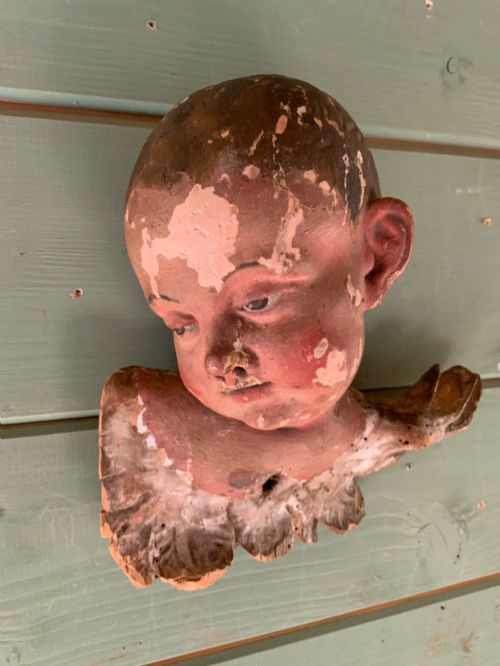
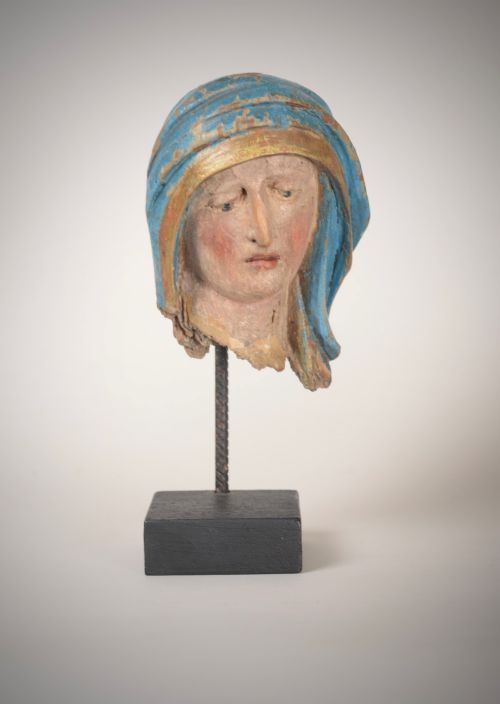
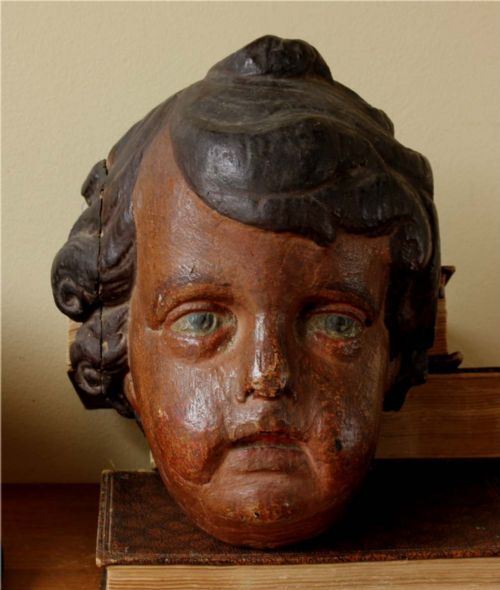
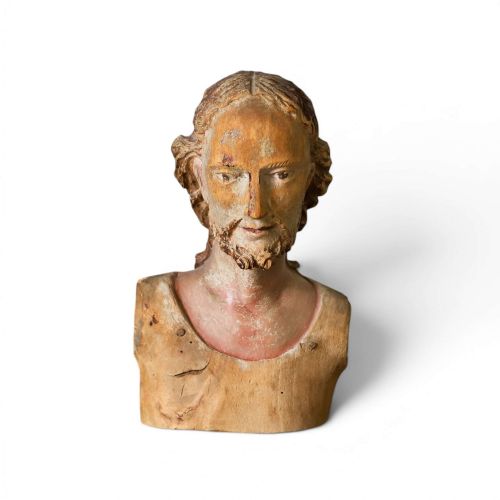
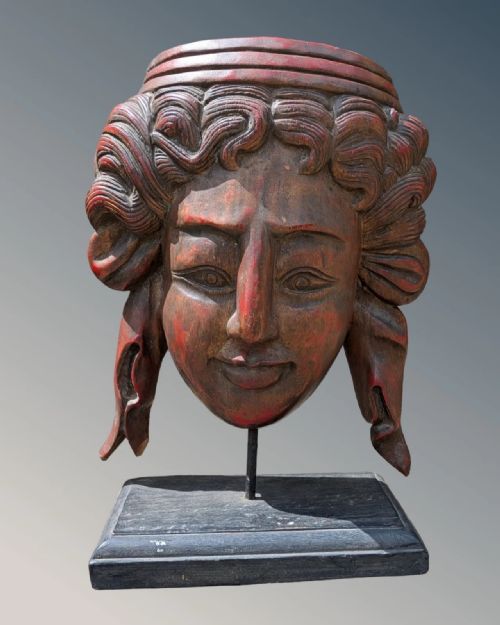


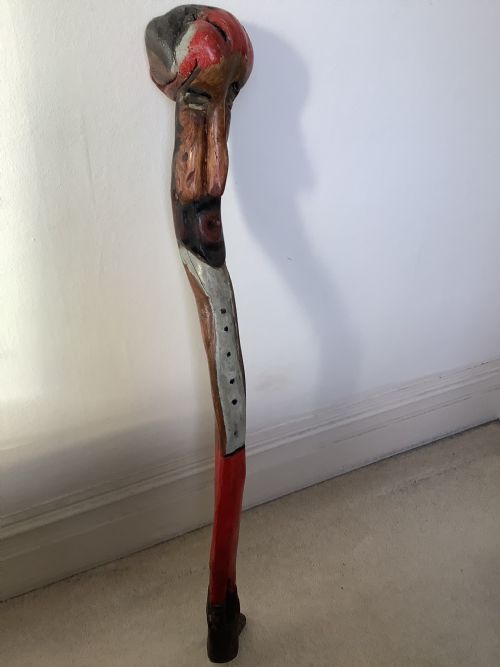
Polychrome Wooden Head
A polychrome wooden head is a carved sculptural fragment bearing historical paint, offering buyers an immediate focal point of traditional craftsmanship and devotional or decorative art.
Polychrome Wooden Head
When you search for a polychrome wooden head, you encounter sculptural fragments and standalone carvings originating from various periods including the seventeenth, eighteenth, and nineteenth centuries. These pieces encompass religious subjects, folk art, and decorative panels produced across European, Asian, and Russian traditions.
You are most likely to meet devotional figures and architectural remnants on this page, such as cherubs, putti, saints, and character busts. The selection includes Italian Baroque panels, French putti statues, and Victorian folk art items like puppet heads and walking sticks.
The forms range from wall plaques and architectural wall panels to substantial freestanding busts and sculptural fragments. Each object demonstrates specific regional styles, from Spanish and Italian Baroque to South East Asian and Victorian folk traditions.
How they were made
Carvers shaped these pieces primarily from woods such as olive wood and thorn wood using hand chisels and gouges. Artisans then prepared the wooden surfaces by applying gesso layers to smooth the grain before painting.
Listings feature woods like olive wood and thorn wood alongside applied gesso, gold leaf, and polychrome paint across periods spanning the seventeenth century to the Victorian era.
What varies in quality
The preservation and application of the original painted surface dictate the visual impact of each piece. Surviving historic gesso and polychrome pigment retain historical integrity better than later overpainting or heavy restoration.
The Polychrome Wooden Head Glossary
- Polychrome
- Decorated in multiple colours, typically referring to painted or tinted wooden and gesso surfaces. This finish defines the colourful appearance of historic religious carvings and decorative masks.
- Gesso
- A white paint mixture consisting of a binder mixed with chalk, gypsum, or pigment. Artisans applied this substance to wooden carvings to create a smooth surface for gilding and polychrome painting.
- Putto
- A representation of a plump, naked child, often winged, appearing frequently in Renaissance and Baroque art. These figures decorate architectural panels and religious sculptures.
- Baroque
- An ornate artistic style prevalent from the seventeenth to the mid-eighteenth century characterised by drama, tension, and grandeur. Italian and French Baroque pieces showcase this theatrical approach.
- Folk art
- Art produced from an indigenous culture or by peasant labourers and craftspeople without formal academic training. This category includes traditional puppet heads, walking sticks, and vernacular carvings.
Polychrome Wooden Head: Frequently Asked Questions
How were polychrome wooden heads used historically?
These carved heads served primarily as devotional objects in churches, domestic shrines, and processional figures. Many formed part of larger religious altarpieces, architectural wall panels, or sculptural groups.
Other examples functioned as decorative elements in elite interiors, theatrical props, or folk items like walking sticks and fairground figures. Their purpose shifted depending on whether they originated from a ecclesiastical workshop or a folk tradition.
How do I tell seventeenth-century pieces from nineteenth-century ones?
Seventeenth-century items often reflect strict Baroque or religious devotional styles with heavy gesso preparation and refined facial carving. Italian and Spanish examples from this period typically depict saints or cherubs with dramatic expressions.
Nineteenth-century pieces frequently lean towards Victorian folk art, fairground figures, or specific cultural carvings like Japanese Daruma plaques. Tool marks, wood type, and the ageing of the polychrome paint help distinguish earlier devotional work from later folk creations.
Where should I display a wooden head at home?
These sculptural heads suit display on mantelpieces, bookshelves, or dedicated display stands where their three-dimensional form remains visible. Wall plaques and panels mount securely on flat interior surfaces to highlight architectural details.
Keep pieces away from direct sunlight, radiators, and damp areas to protect the historic wood and delicate polychrome paint layers from cracking or fading.