





Polychrome Carved Busts
Polychrome carved busts are painted and sculpted sculptural heads spanning centuries of religious devotion, folk tradition, and classical portraiture.
Polychrome Carved Busts
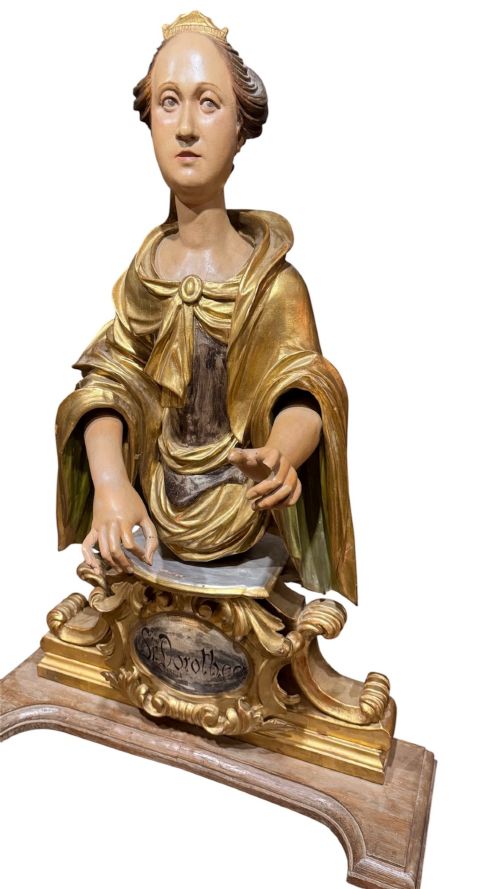
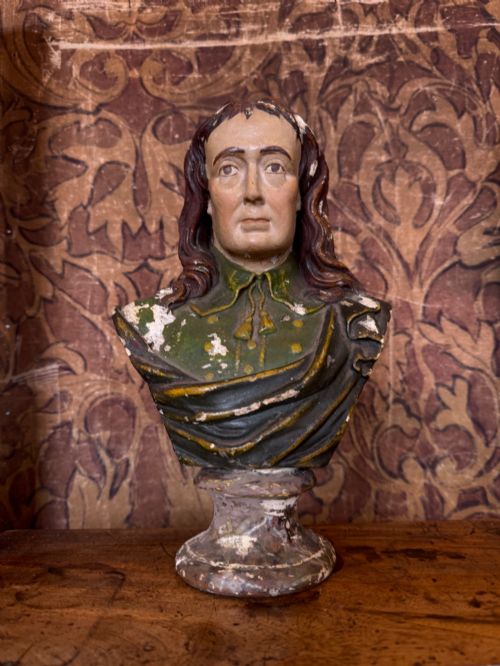
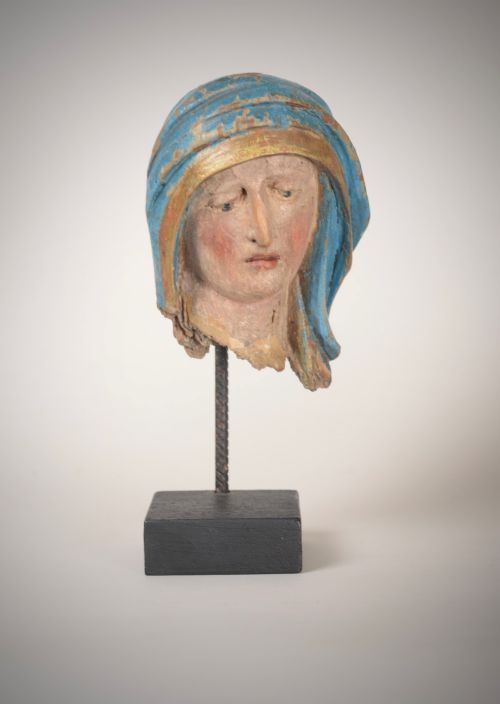
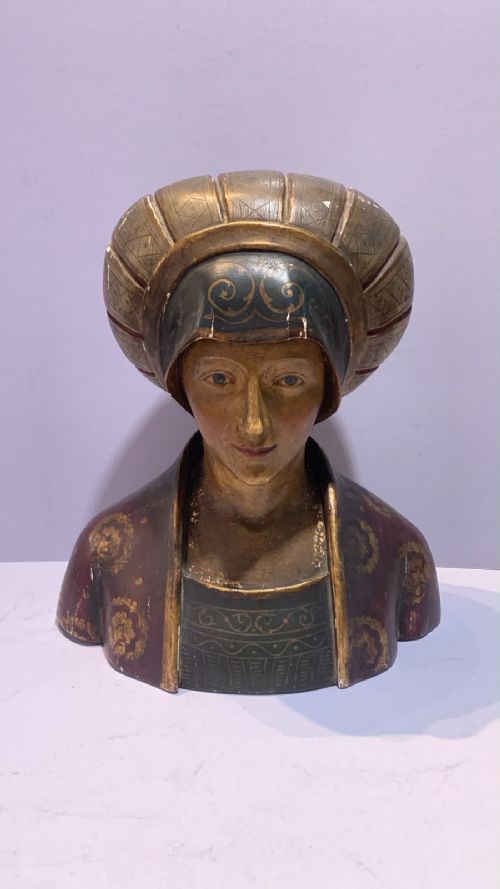
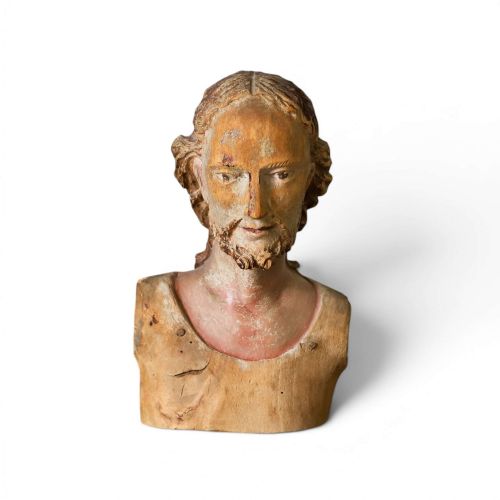
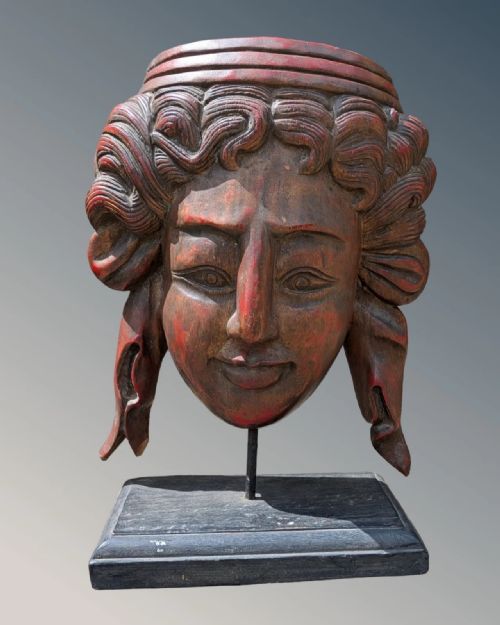
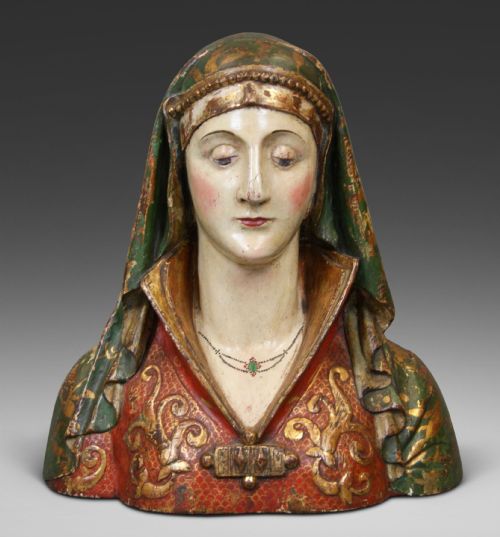
Polychrome carved busts bring together sculpture and pigment, presenting figures that range from solemn saints to noble ladies. When exploring polychrome carved busts, the visitor encounters works stretching from sixteenth-century ecclesiastical carvings to nineteenth-century folk art and grand tour pieces.
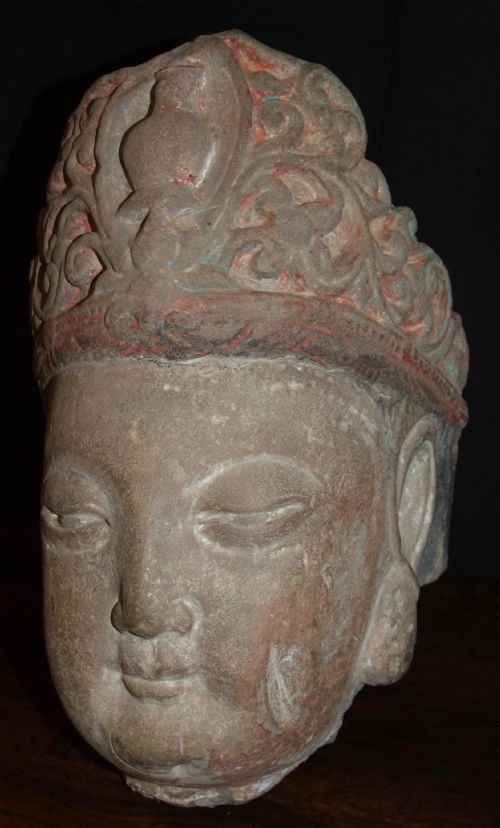
The assortment on this page spans Italian religious sculptures, South East Asian masks, Russian noble figures, and British fairground items. Materials run from olive wood and gesso to sandstone and terracotta, reflecting diverse regional workshops.
Religious figures, particularly saints and representations of Christ, dominate the earlier periods, while secular portraits and character heads emerge in the nineteenth century. Every piece carries traces of historic paint, gold leaf, or surface gesso applied by hand.
How they were made
Once carved, the surfaces received a preparation layer of gesso or chalk ground to smooth the grain before pigment application. Artisans then applied polychrome paint, occasionally enriching the garments and halos with gold leaf for devotional impact.
One character head started life as a marionette before retiring from the stage to become a stationary sculpture.
What varies in quality
Quality rests in the anatomical precision of the carving and the expressive depth given to the countenance. Master carvers captured lifelike bone structure and subtle emotional nuances, whereas simpler folk items rely on bold, rustic simplification.
The preservation of the original polychrome surface dictates much of the visual character. Pieces retaining their initial layers of pigment and gilding offer a truer historical testimony than those heavily restored or stripped down to bare wood.
The Polychrome Carved Busts Glossary
- Polychrome
- The practice of decorating sculptural surfaces in multiple colours. This technique brings depth and realism to carved wooden figures.
- Gesso
- A plaster-like mixture applied to wood as a smooth base for paint or gold leaf. It provides a stable ground for historic decoration.
- Gold Leaf
- Very thin sheets of beaten gold applied to surfaces for ornamentation. It frequently highlights the robes or halos of religious sculptures.
- Grand Tour
- A cultural journey of Europe undertaken by wealthy young men in the eighteenth and nineteenth centuries. Souvenirs included classical sculptural busts.
- Folk Art
- Utilitarian or decorative items created by self-taught or provincial artisans. These carvings possess a direct, unpretentious charm distinct from court art.
Polychrome Carved Busts: Frequently Asked Questions
Are these busts heavy?
Most pieces are carved from solid blocks of hardwood or formed from denser materials like sandstone, giving them a substantial weight. Smaller folk art heads or puppet fragments remain lighter and easier to place on standard shelves.
Heavier ecclesiastical or architectural examples require secure placement on sturdy furniture or dedicated mounts to ensure stability.
How do I clean a painted wooden bust?
Dusting requires only a very soft, dry brush used with a light touch to protect vulnerable historic pigment. Avoid all water, chemical sprays, and abrasive cloths, which lift fragile gesso and nineteenth-century oil paint.
Professional conservators should handle any deeper cleaning or consolidation of flaking surfaces to preserve the integrity of the object.
Where were these pieces displayed originally?
Religious sculptures stood in private chapels, monastic churches, and domestic shrines as focal points for daily prayer and contemplation. Secular portraits and fairground figures served decorative, educational, or commercial purposes in public spaces.
Today, collectors place them on mantelpieces, desks, or specialist stands where side lighting enhances the carved contours.
How do I tell an old piece from a modern copy?
Genuine age shows in the natural shrinkage cracks of the wood, tool marks left by hand chisels, and stable, oxidised layers of historic paint. Modern reproductions often display artificial distressing and synthetic adhesives that lack centuries of tactile wear.
Examining the underside or back reveals the grain structure and construction methods typical of specific historic periods.