
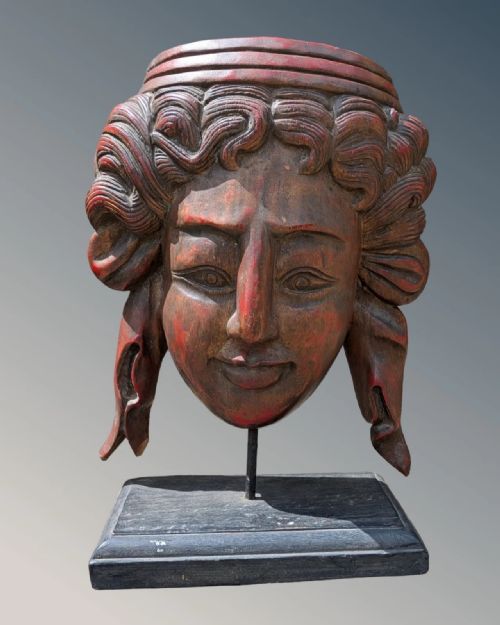


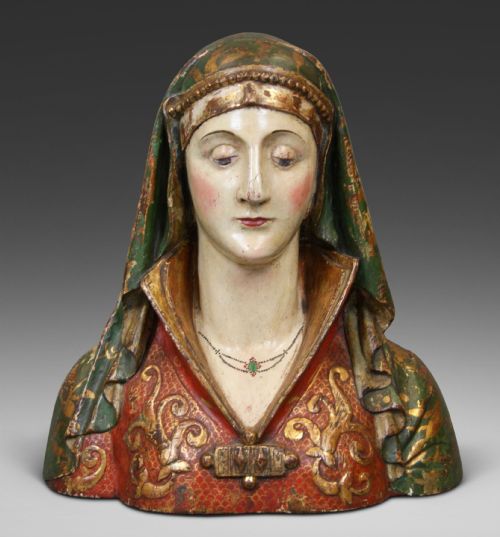

Polychrome Wood Bust
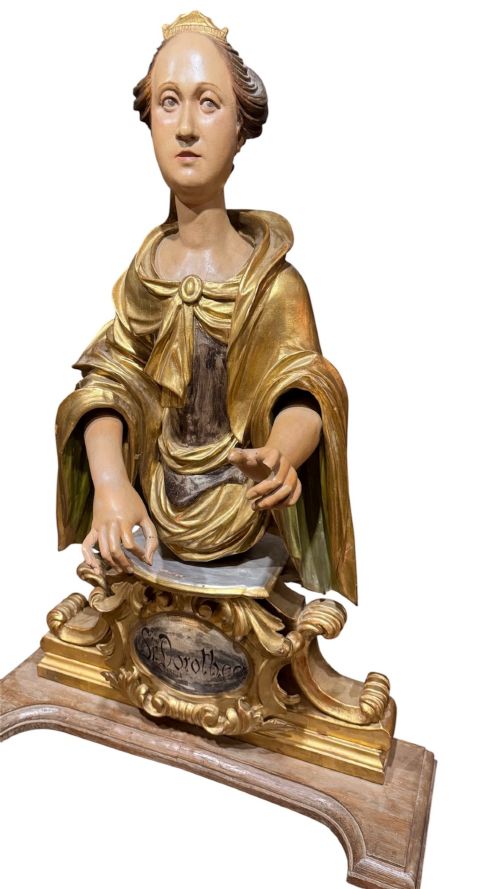
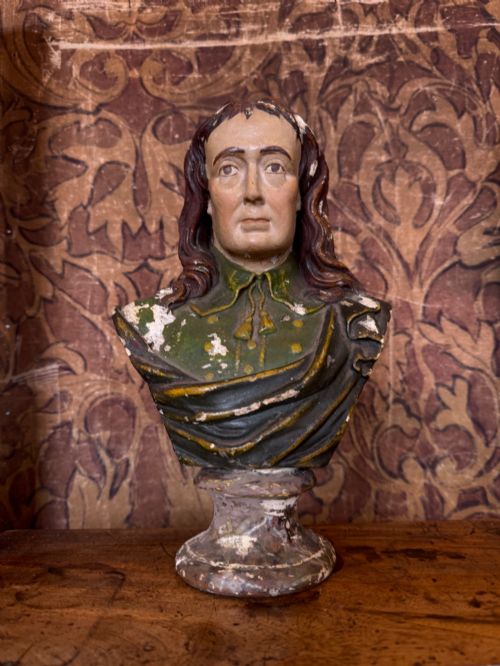
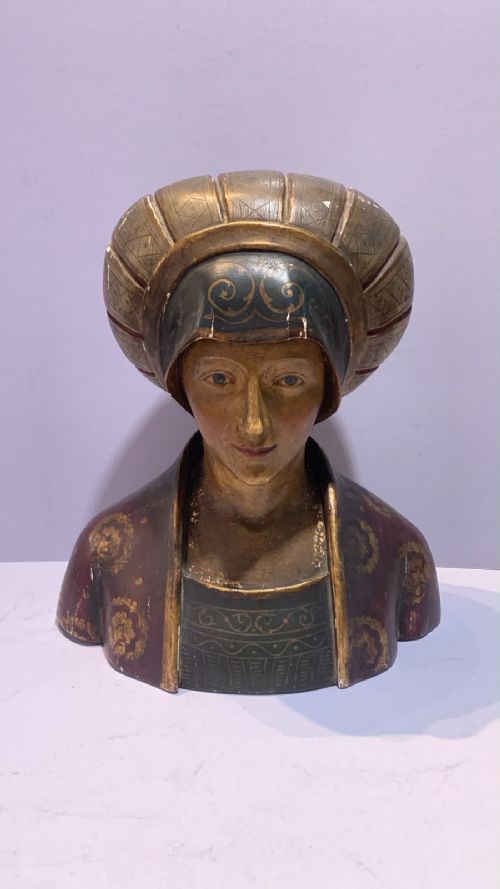
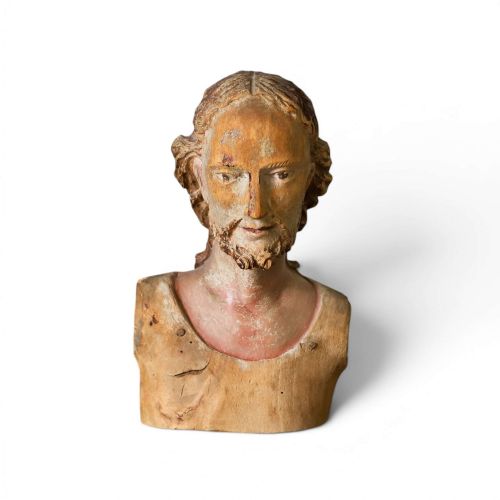
These polychrome wood bust carvings bring centuries of devotion, portraiture, and character to a room.
Polychrome Wood Bust
A polychrome wood bust captures the human likeness through carved timber embellished with painted surfaces and gilding. When exploring this category, a buyer encounters pieces spanning the sixteenth century through to the nineteenth century, reflecting diverse cultural traditions.
Religious figures dominate the earlier centuries, featuring Spanish Baroque and Italian styles that depict saints and sacred personages. Secular portraiture also appears, ranging from Grand Tour representations of noblewomen to later folk art carvings.
Origins stretch across Europe and South East Asia, encompassing Italian, Sicilian, Russian, and Spanish workshops. Pieces take the form of dedicated religious busts, character heads, and sculptural fragments.
Materials and construction
Artisans carved these sculptures from solid timbers such as olive wood and general hardwoods before applying surface decoration. Gesso was frequently laid down as a smooth preparatory ground to receive subsequent layers of paint and gold leaf.
A saint gazes eternally from a block of olive wood, watched over by fairground figures and noble ladies alike.
Assessing quality and execution
The refinement of the initial wood carving dictates the baseline quality, separating spirited folk art interpretations from highly trained academic portraiture. Facial expression, anatomical proportion, and the depth of undercut details reveal the hand of a master sculptor.
The preservation of the original polychrome paint and gold leaf surface determines the visual impact of a piece. Finer examples retain their historic layered pigments with minimal later intervention, allowing the original coloration to define the character.
The Polychrome Wood Bust Glossary
- Polychrome
- Decorated in multiple colours, referring here to the painted surfaces applied over carved wood.
- Gesso
- A plaster-like mixture applied to wood as a smooth base for paint and gold leaf gilding.
- Giltwood
- Timber that has been coated with thin gold leaf or gold powder.
- Grand Tour
- A cultural journey undertaken by wealthy Europeans that often resulted in the acquisition of art and antiquities.
- Baroque
- An ornate artistic style prevalent from the seventeenth century, characterised by drama and rich detail.
Polychrome Wood Bust: Frequently Asked Questions
What periods do these busts come from?
The available selection spans from the sixteenth century through the nineteenth century, including notable examples from the seventeenth and eighteenth centuries.
Buyers encounter various regional interpretations, from Renaissance and Baroque religious works to later nineteenth-century folk art and Grand Tour souvenirs.
How were polychrome busts originally used?
Many early examples served devotional purposes in churches and private chapels, depicting saints and biblical figures to inspire prayer.
Secular pieces functioned as interior ornament, portraiture, or decorative character studies within wealthy homes.
What woods were used for carving?
Artisans utilised various local timbers suited to detailed carving, including olive wood and general hardwoods.
These woods provided a stable substrate for the gesso ground and subsequent paint layers.
How should I care for a painted wooden bust?
Keep the sculpture away from direct sunlight and fluctuating humidity to protect the historic wood and delicate paint layers.
Dust gently with a soft, dry brush and avoid applying liquid cleaners or polishes to the polychrome surface.