


Polychrome Tin Glaze Dish
These polychrome tin glaze dish examples bring vibrant hand-painted colour and centuries of ceramic history straight to your walls and tables.
Polychrome Tin Glaze Dish
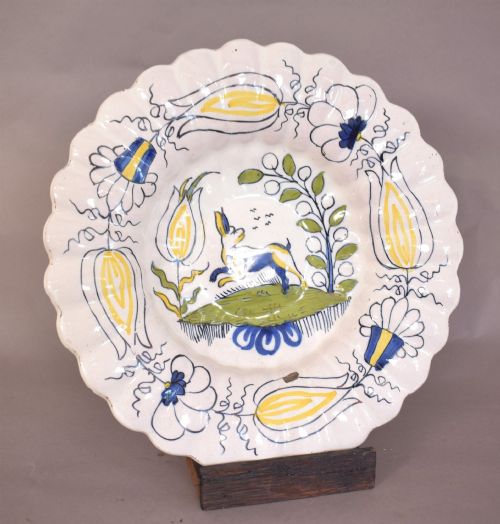
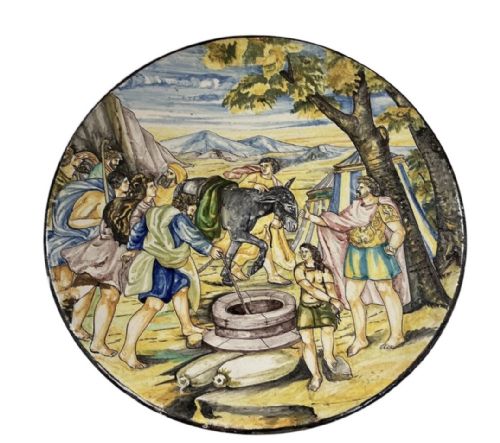
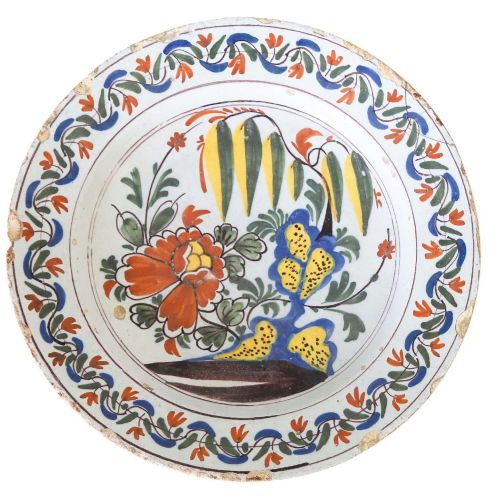
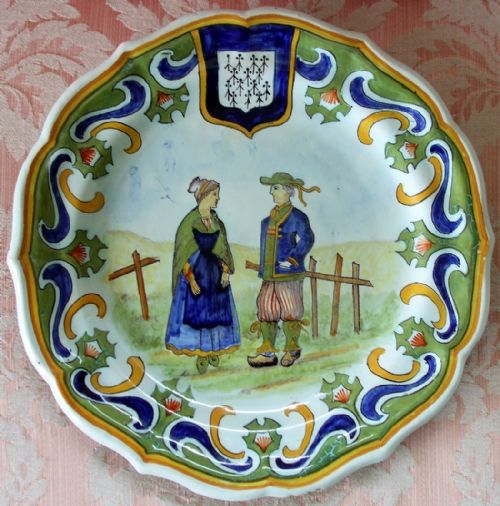
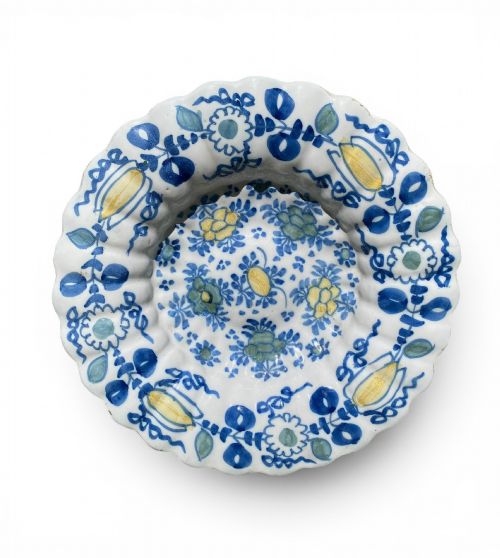
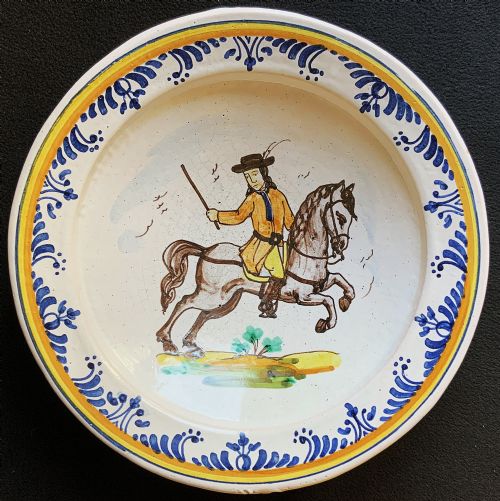
A polychrome tin glaze dish covers a broad sweep of European earthenware, most frequently seen here as large chargers, decorative plates, and lobed dishes from the seventeenth and eighteenth centuries. These pieces display tin-glazed surfaces painted in multiple pigments, often featuring floral motifs, geometric designs, or Chinoiserie scenes.
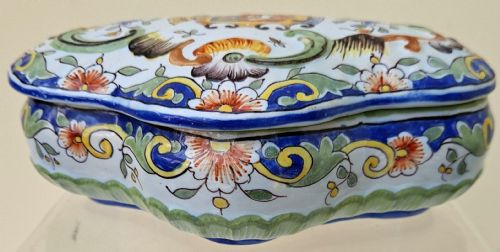
The selection extends across English Delftware, Dutch Delft, French faience, and Italian maiolica, alongside Spanish and German iterations spanning several centuries. Chargers and decorative dishes dominate the forms, though trinket boxes, sweetmeat presentiers, and wall plaques also appear within the ceramic groupings.
Materials and construction
The foundation rests on earthenware clay, shaped into plates, chargers, and bowls before receiving an opaque white tin glaze that provides a smooth canvas for decoration. Artisans then applied mineral pigments directly onto this absorbent glaze layer before the final firing fixed the colours.
Hand-painted brushwork defines the surface ornamentation across English, Dutch, and French workshops, capturing floral arrangements, figurative scenes, and geometric patterns in varied hues.
Listings feature pieces spanning the seventeenth, eighteenth, and nineteenth centuries, executed in tin-glazed earthenware, pigment, and ceramic.
Judging quality in tin-glazed ceramics
Quality reveals itself in the crispness of the hand-painted brushwork and the complexity of the polychrome palette across the tin-glazed surface. Finer examples display confident pigment application and well-balanced pictorial or floral compositions that sit harmoniously on the charger or dish.
The stability of the earthenware body and the preservation of the glaze layer distinguish superior pieces from heavier, more utilitarian wares. Greater refinement in the potting and richer pigment depth elevate certain English, Dutch, and French items above standard production.
The Polychrome Tin Glaze Dish Glossary
- Tin-glazed earthenware
- Pottery coated with a glaze containing tin oxide to create an opaque white surface suitable for painted decoration. This technique forms the foundation of Delftware and faience.
- Charger
- A large decorative plate or dish, typically measuring over thirty centimetres, designed for display on walls or sideboards rather than dining use. These pieces often showcase the most ambitious polychrome painting.
- Faience
- The French and continental term for tin-glazed earthenware, encompassing works from workshops in Rouen, Desvres, Quimper, and Lille. The tradition mirrors English Delftware in technique.
- Maiolica
- Italian tin-glazed earthenware decorated with metallic pigments, often produced in styles echoing Renaissance traditions or regional centres like Urbino. These items frequently feature narrative scenes or intricate ornamentation.
- Chinoiserie
- European decorative motifs inspired by Chinese art and porcelain design, rendered in Western media. This style appears frequently on eighteenth-century English and Dutch plates.
Polychrome Tin Glaze Dish: Frequently Asked Questions
Can I hang my charger on the wall?
Most large chargers and decorative dishes were produced with display in mind, often featuring deep profiles suited to cabinet or wall placement.
Secure wire hangers designed for heavy earthenware ensure safe mounting without stressing the antique ceramic body.
How do I clean an old tin glaze dish?
Dusting with a dry, soft cloth remains the safest method for routine maintenance of porous earthenware surfaces.
Moisture can penetrate historic glaze cracks over time, so immersion in water and harsh chemical cleaners must be avoided entirely.
What is the difference between Delft and faience?
Delft generally refers to tin-glazed earthenware produced in England and the Netherlands, taking its name from the primary Dutch pottery centre.
Faience describes the exact same technical tradition originating from French kilns, while maiolica designates the Italian equivalent.
How do I date a polychrome tin glazed dish?
Dating relies on examining the specific clay body, the tone of the tin glaze, and the stylistic conventions of the painted motifs. Seventeenth-century examples often display heavier potting and distinct palette choices compared to eighteenth-century creations.
Regional painting styles from English centres like Bristol and Lambeth, or continental hubs like Rouen, provide further clues for chronological placement.