







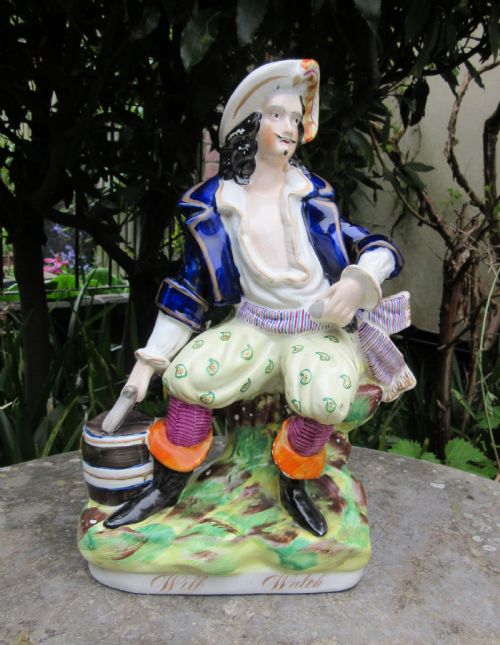

Polychrome Ceramic Flatback
A polychrome ceramic flatback brings Victorian mantelpieces alive through brightly painted figures designed to be viewed from the front only.
Polychrome Ceramic Flatback
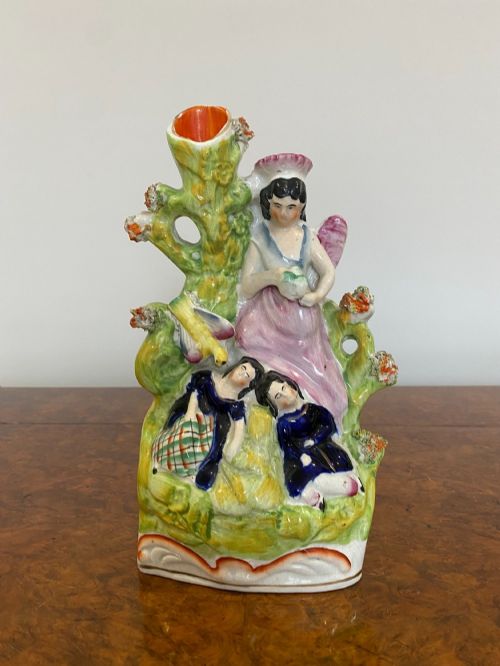
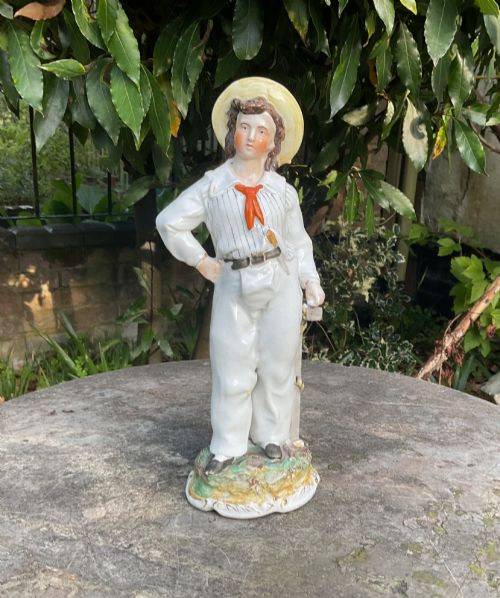
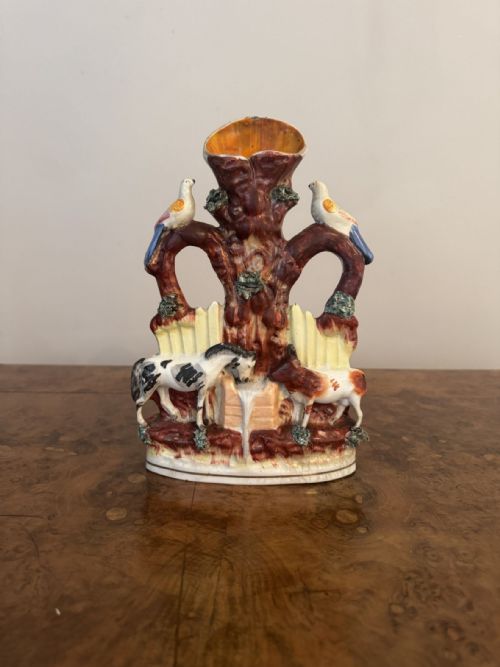
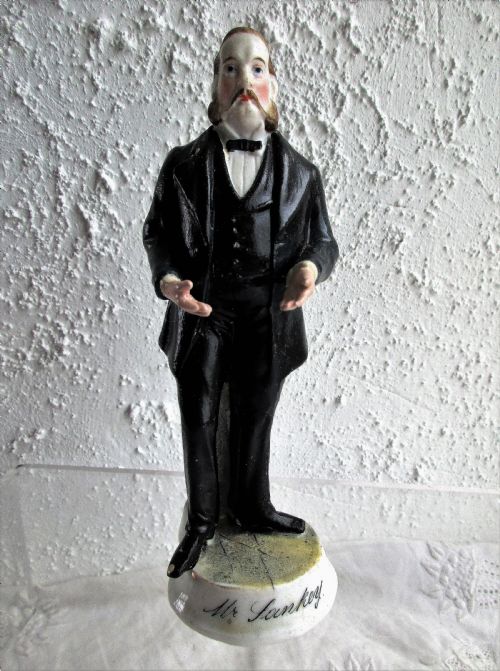
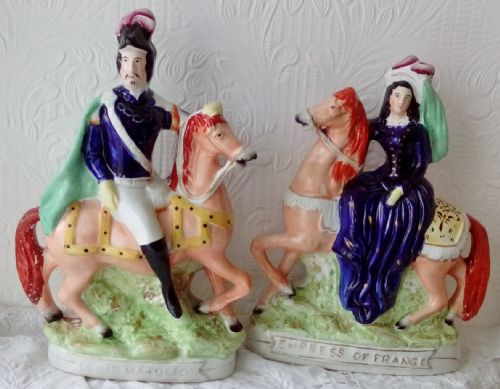
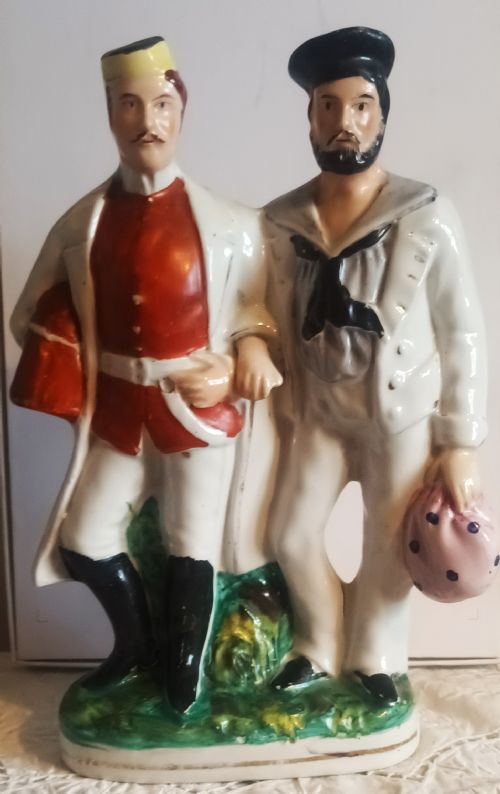
When you search for a polychrome ceramic flatback, you are looking at nineteenth-century figures designed specifically for display against a wall rather than in the round. The versions you are most likely to meet on this page take the form of Victorian pottery figures, decorative ornaments, and spill vases depicting royalty, military figures, literary characters, and country folk.
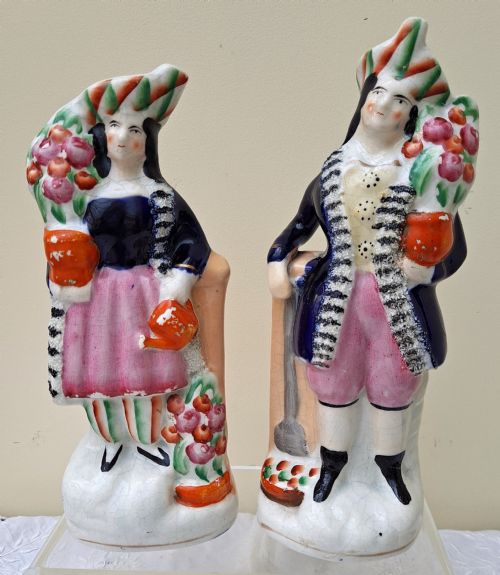
These ceramic pieces originate predominantly from the nineteenth century, spanning decades such as eighteen fifty, eighteen sixty, eighteen seventy, and eighteen eighty. They appear both as single figures and in matched pairs, sometimes incorporating functional elements like watch holders or spill vases alongside the modelled personages.
How they were made
Potters shaped these figures from earthenware using slip-casting or pressing methods before applying a smooth glaze to the clay body. Lead glaze often provided the glossy protective coating that sealed the surface and enhanced the underlying colours.
Polychrome Ceramic Flatback Retail Price Guide 2026
Typical asking prices for polychrome ceramic flatback among the pieces listed under this phrase on Sellingantiques today, from the lower quarter to the upper quarter. They describe what is for sale here now, not the wider market.
Victorian mantelpieces gained extra drama from these colourful figures glaring out at visitors with very rosy cheeks.
What varies in quality
Painting execution also separates ordinary pieces from finer works, with careful brushwork on the enamel paint and precise application of gold leaf creating a more convincing portrait or scene. Scale influences the range too, as unusually large figures or miniature sets demand greater technical skill from the potter.
Staffordshire potteries
The Polychrome Ceramic Flatback Glossary
- Flatback
- A ceramic figure modelled in three dimensions at the front and sides while the rear remains flat so it can sit flush against a wall or mantelpiece. This style became standard for Victorian shelf ornaments.
- Spill vase
- A hollow vertical cylinder incorporated into a ceramic figure, designed to hold taper candles or wooden spills used for lighting pipes and fires. These functional elements often feature matching rustic or theatrical subjects.
- Earthenware
- A porous pottery body fired at lower temperatures than stoneware or porcelain, requiring a glaze to become waterproof. It formed the standard structural base for nineteenth-century Staffordshire figures.
- Lead glaze
- A traditional glass-like coating containing lead oxide applied to pottery to create a shiny, smooth surface finish upon firing. It gives these nineteenth-century pieces their characteristic glossy sheen.
Polychrome Ceramic Flatback: Frequently Asked Questions
What are polychrome ceramic flatbacks?
These pieces are nineteenth-century earthenware figures designed with unadorned flat backs so they could sit neatly on mantelpieces and shelves.
Potters painted them with bright enamel colours to depict historical personalities, royalty, literary characters, and everyday rural scenes.
How were these figures displayed?
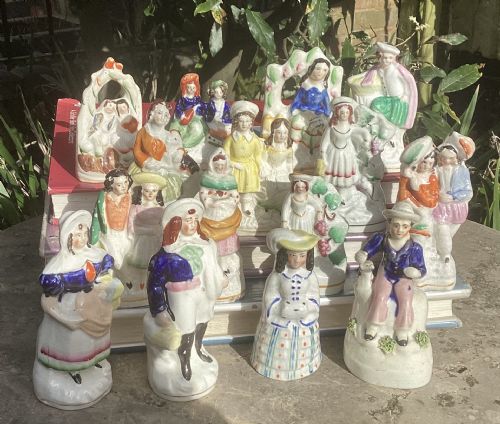
Victorian homes placed them along mantelpieces, often arranged in pairs or grouped with related figures to tell a visual story or commemorate national events.
Some examples doubled as functional objects by incorporating small vases for wooden fireplace spills or hollow compartments to hold pocket watches.
How do you date a flatback figure?
Dating relies on identifying the subject matter, such as specific military campaigns, royal weddings, or political figures active during the nineteenth century.
Stylistic markers like the vibrancy of the enamel paint, the type of earthenware body, and the presence of lead glaze also point to particular decades.
Are these pieces always found as pairs?
Many subjects were produced as matched pairs, particularly portraits of political leaders, gardeners, harvesters, and theatrical performers intended to balance each other on a shelf.
However, numerous figures were also made as individual pieces or larger sets depending on the specific commemorative or decorative theme.