


Polished Brass Log Bucket
A polished brass log bucket brings warmth to a hearth, offering a sturdy and handsome vessel to store fuel beside an open fire.

Polished Brass Log Bucket
A polished brass log bucket is a functional hearth accessory designed to hold firewood and coal cleanly by the fireplace. These vessels emerge across the Georgian, Regency, Victorian, and Edwardian periods, carrying the domestic utility of the nineteenth and early twentieth centuries into modern rooms.
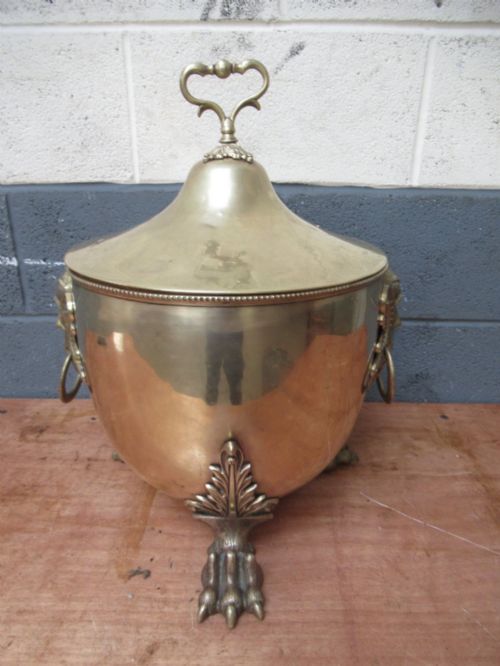
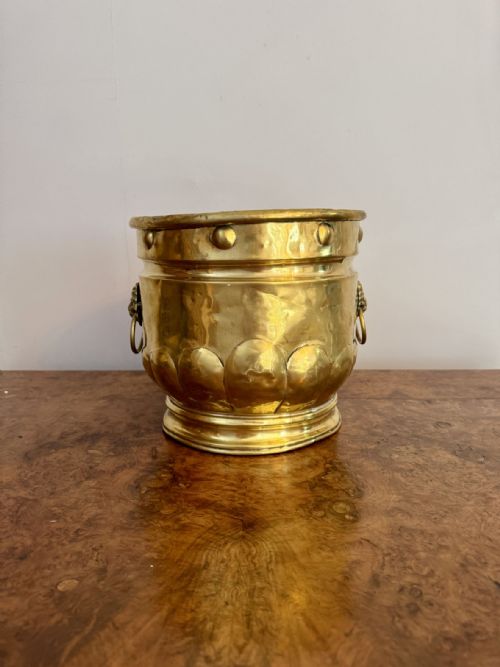
The versions most frequently met on this page take the form of helmet-shaped coal scuttles, heavy pails, and large planters repurposed for fuel storage. Many examples combine bright brass bodies with contrasting copper details, iron elements, or wooden handles, reflecting the diverse material choices of Victorian and Edwardian metalworkers.
Beyond standard coal scuttles, buyers encounter related fireside vessels including jardinieres, coal receivers, and lidded bins in styles ranging from Neoclassical Revival to Art Nouveau. These pieces frequently double as decorative cachepots or plant holders when not stationed by the hearth.
How they were made
Makers constructed these vessels primarily from sheet brass and copper, often joining the metal plates with visible rivets for structural strength. Handles and mounts were frequently cast separately and attached firmly to the main body to bear the heavy weight of logs and coal.
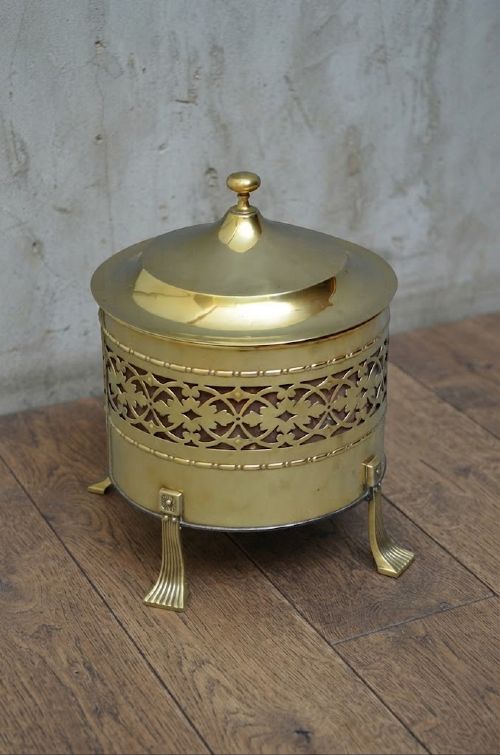
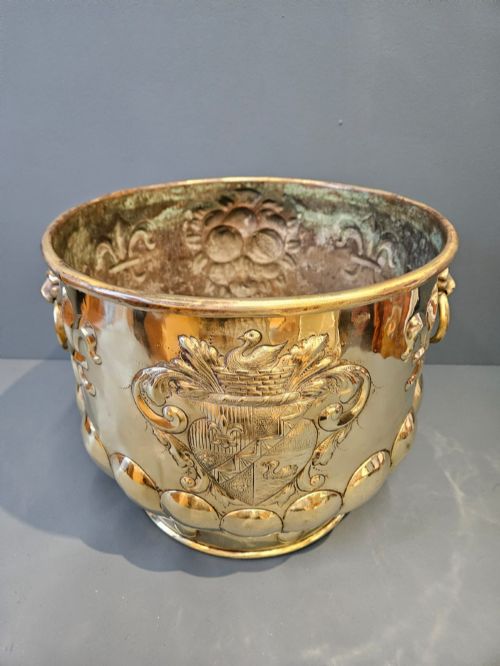
Surface finish played a central role in their production, utilising thorough polishing to achieve a bright, reflective sheen on the brass exterior. Decoration involved techniques such as fretwork cutting, applied crests, and hand-beating, creating texture across the metal panels.
Listings span multiple eras, with Victorian and Edwardian examples forming the largest share alongside occasional Regency and Georgian pieces.
What varies in quality
Quality rests heavily on the thickness of the metal gauge and the rigidity of the construction. Heavier brass and well-riveted copper structures maintain their shape under the daily strain of heavy logs better than thin, flexible sheets.
The refinement of decorative details distinguishes finer examples from ordinary utility items. Crisp fretwork, cleanly cast handles, and well-fitted internal liners indicate a higher standard of original craftsmanship.
William Soutter & Sons
The Polished Brass Log Bucket Glossary
- Helmet Scuttle
- A coal container featuring a high, sloping back and a flared mouth resembling a traditional helmet, designed for easy pouring. This shape became particularly popular during the Georgian and Victorian eras.
- Jardinere
- An ornamental pot or stand designed to hold plants, frequently utilised by makers and later owners as a spacious log bin. These items are often heavy and feature decorative handles.
- Dinanderie
- A term for various types of medieval and later brass or copper wares, originating from the Belgian town of Dinant. Pieces described thus often show hand-beated decorative surfaces.
- Fretwork
- An ornamental design created by piercing or perforating sheet metal in intricate patterns. Edwardian examples frequently employ this technique around the rim or body.
- Cachepot
- An outer pot, typically decorative, used to conceal a plain flowerpot inside. Many large brass vessels listed under this heading serve double duty as log holders.
Polished Brass Log Bucket: Frequently Asked Questions
Can I actually burn logs from these buckets?
These vessels were originally designed to hold coal, peat, or firewood close to the fire for daily burning. Their robust metal construction makes them entirely practical for storing and carrying logs today.
Buyers should note that older pieces may require a protective inner liner if damp wood is stored inside, protecting the historic base from moisture and residue.
How do I clean polished brass?
Maintaining a bright finish requires a gentle metal cleaner suited to brass, applied sparingly to avoid removing antiqued patination in recessed areas. Soft cloths prevent scratching the polished surface during regular upkeep.
Many collectors prefer to let the metal age naturally, developing a deeper tone over the decades rather than maintaining a mirror shine.
Are these buckets waterproof?
While metal vessels naturally contain dry materials effectively, riveted seams on nineteenth-century pieces can sometimes weep moisture over time. Examining whether an interior liner is present helps determine if the bucket holds damp items safely.
Pieces originally made as jardinieres or planters often feature sealed bases, making them more suitable for holding damp contents than standard coal scuttles.
How do I date a brass bucket?
Dating relies on observing manufacturing techniques, such as hand-riveting versus machine stamping, alongside stylistic clues from periods like Regency, Victorian, or Edwardian. Heavy cast brass handles and specific shapes like the helmet scuttle often point towards the nineteenth century.
Comparing the decorative motifs, such as Art Nouveau curves or Neoclassical Revival crests, provides further context for the decade of manufacture.