

Antique Brass Fireside
Antique brass fireside accessories bring functional warmth to a hearth through coal buckets, log bins, and fender curbs crafted across the Georgian and Victorian periods.

Antique Brass Fireside
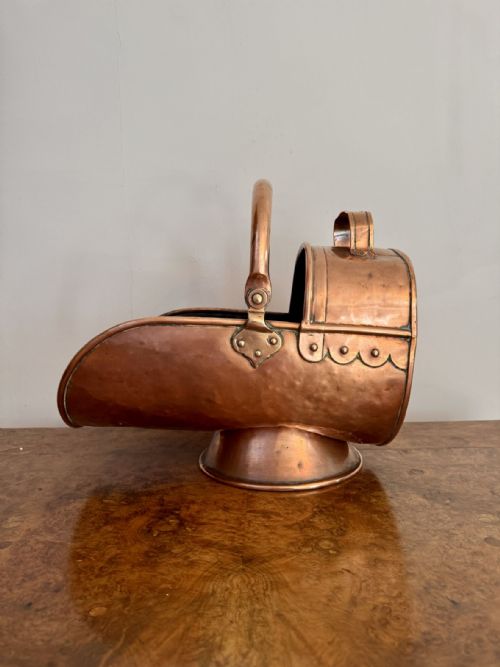
Antique brass fireside equipment encompasses utility items designed for solid fuel management and hearth decoration. Buyers encounter containers such as coal scuttles, helmet buckets, and log bins alongside protective fire fenders and companion tool sets.
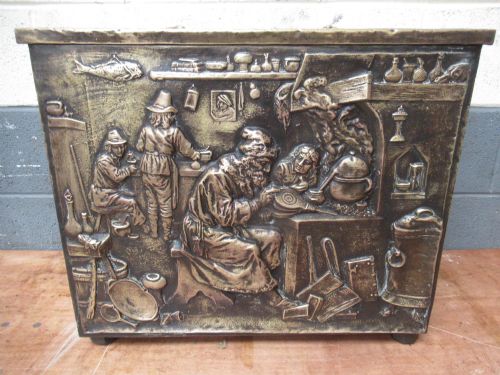
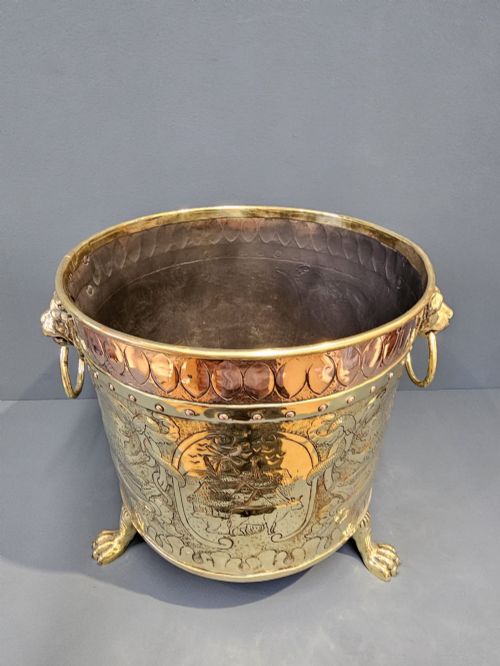
The selection ranges from simple Georgian cast brass trivets to ornate Victorian embossed log bins featuring copper banding. Pieces frequently incorporate secondary materials including mahogany, oak, and wrought iron alongside the dominant brass construction.
Originating predominantly from English and Scottish workshops, these objects served daily domestic duties in country houses and urban residences alike. Surviving examples reflect the shifting utility of the hearth from primary heating source to decorative focal point.
How they were made
Construction relies heavily on sheet brass and copper joined with rivets, or heavy cast brass components utilised for trivets and tool rests. Makers combined polished brass bodies with contrasting metal bands, cast iron internals, and turned wooden handles.
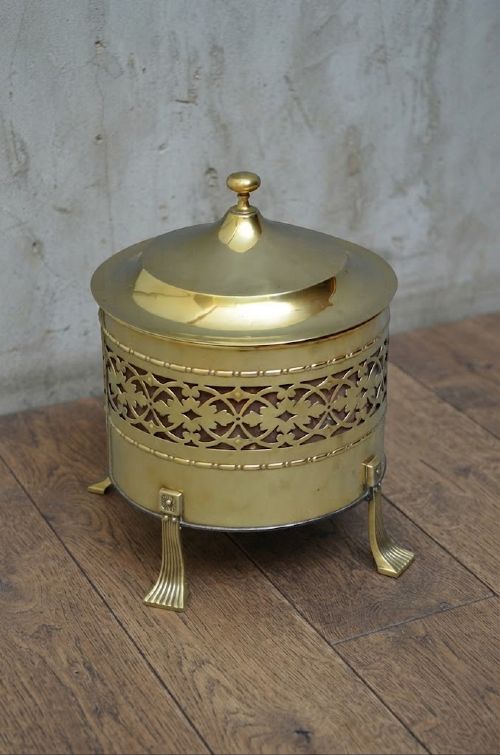
Decorative detailing employs embossing, fretwork piercing, and repoussé techniques, particularly on Victorian coal scuttles and Arts and Crafts log boxes. Hand-finished surfaces display the hammer marks and tool signatures characteristic of nineteenth-century metalwork.
Keepers and sword pokers remind us that nineteenth-century hearth maintenance required genuine weaponry alongside the usual shovel and tongs.
What varies in quality
Quality rests upon the gauge of the metal, the crispness of any embossed or pierced decoration, and the integrity of structural joints. Substantial gauge brass and copper resist denting and maintain structural stability across decades of domestic use.
Artisanal execution distinguishes standard utility vessels from pieces bearing distinct workshop traits or refined stylistic flourishes. Superior examples exhibit balanced proportions, intact original handles, and harmonious combinations of brass bodies with iron or wooden fittings.
Henry Loveridge·Howard and Sons·Gillows·SF Cullen
The Antique Brass Fireside Glossary
- Coal scuttle
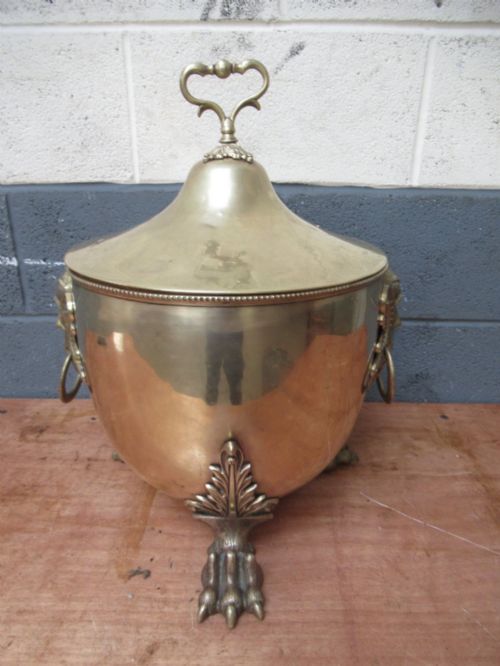
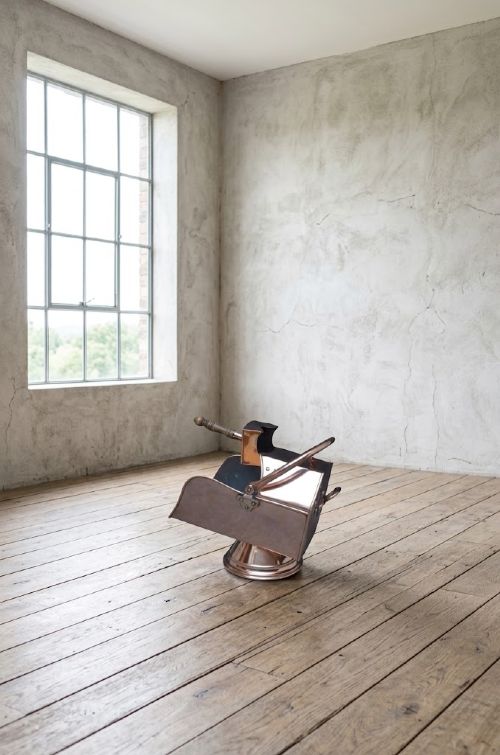
- A bucket or container designed for holding and transporting solid fuel to a fireplace. These items often feature a hinged lid, a fixed handle, and a flat base for standing.
- Fire fender
- A low metal barrier placed around the hearth to contain embers and protect the room. They appear in straight and curved configurations formed from brass, steel, or iron.
- Log bin
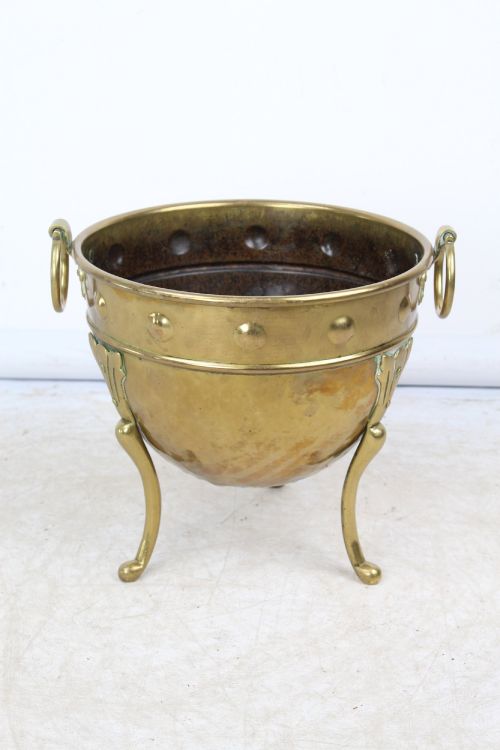
- A large storage vessel intended for firewood logs near the hearth. Many surviving examples pair brass bodies with copper bands or oak panels.
- Purdonium
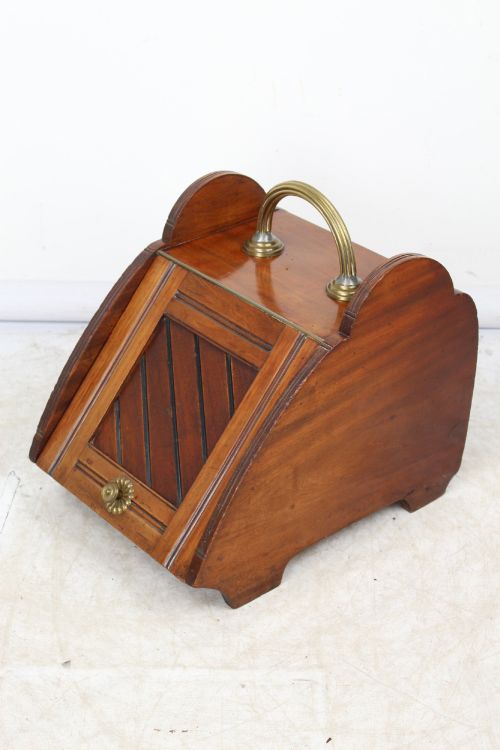
- A specialised Victorian coal box featuring a sloping front drop-down door and an internal metal liner. They frequently incorporate a dedicated compartment for a small shovel.
- Companion set
- A matched collection of fireplace maintenance tools usually comprising a poker, shovel, and tongs. These implements often hang from a dedicated stand or rest on a fender.
Antique Brass Fireside: Frequently Asked Questions
What is an antique coal scuttle?
A coal scuttle is a dedicated vessel built to hold and carry solid fuel for an open fire. They were essential daily implements positioned near the hearth.
Most period examples utilise brass or copper construction, often featuring hinged lids and sturdy handles for practical transport.
How do you date brass fireside pieces?
Dating relies on observing stylistic markers, manufacturing techniques, and material combinations across different eras. Georgian items tend toward heavier cast brass and restrained classical lines.
Victorian and Edwardian pieces frequently display more exuberant decoration, such as embossed patterns, fretwork piercing, and mixed metals like copper and iron.
Where were these pieces made?
The majority of these hearth accessories originate from British workshops, spanning English and Scottish production centres. Country houses and urban townhouses alike utilised these domestic metalwares.
Regional metalworking traditions influenced the choice of forms, from London cabinetmaker collaborations to provincial foundry work.
How do I care for antique brass?
Maintenance involves gentle cleaning to preserve the natural patina accumulated over decades or centuries of use. Harsh chemical abrasives should be avoided to protect the underlying metal surface and any hand-finished details.
Regular dusting and occasional soft cloth polishing maintain the appearance without stripping historical character.