


Polished Brass Bedstead
A polished brass bedstead brings warmth and commanding presence to a bedroom, anchoring the space with substantial metalwork from the nineteenth and early twentieth centuries.
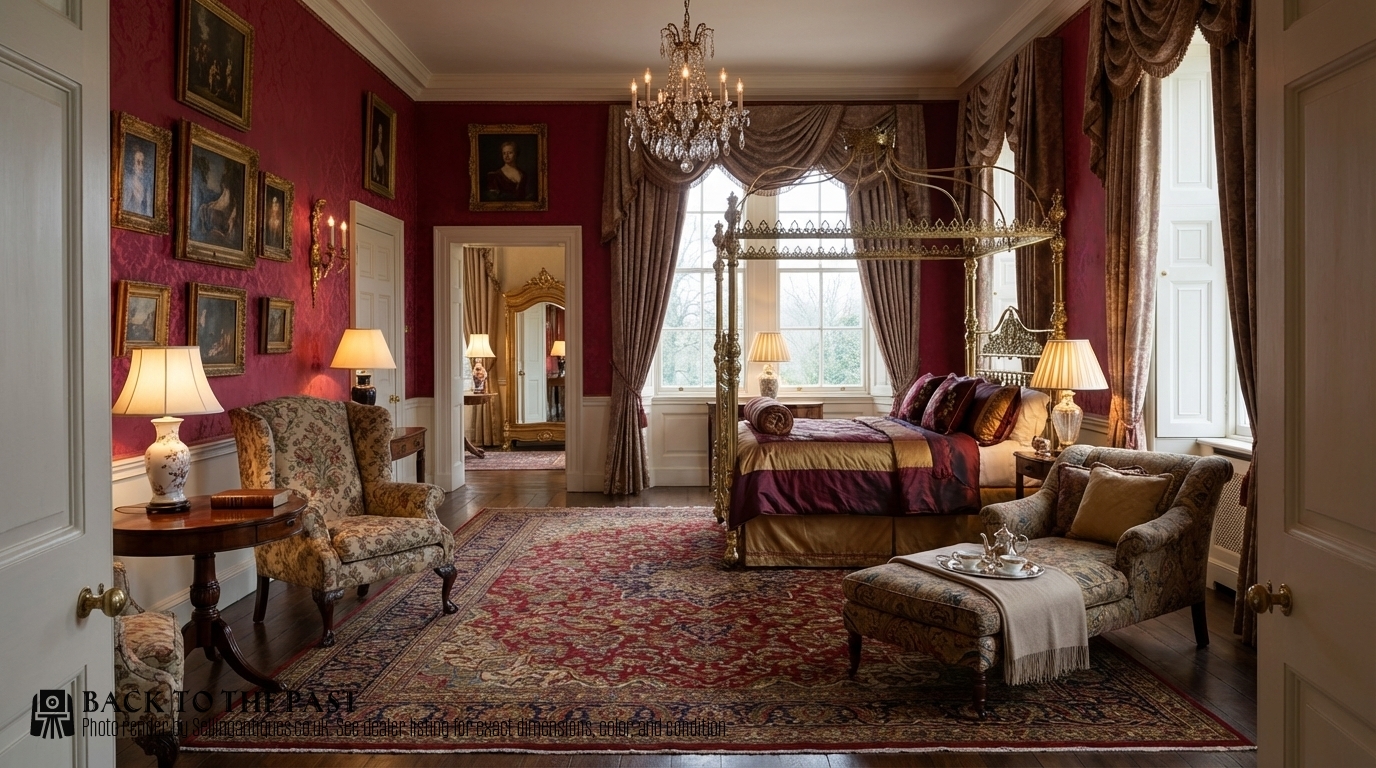
Polished Brass Bedstead
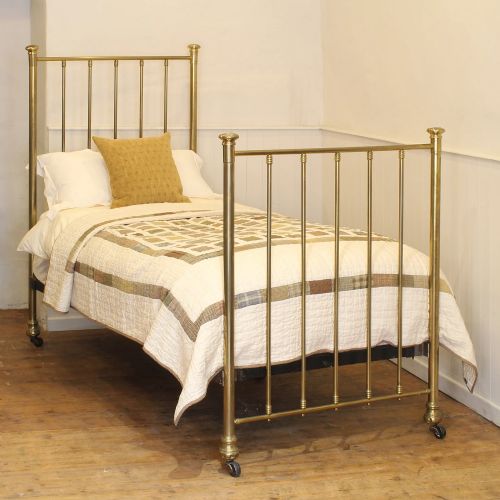
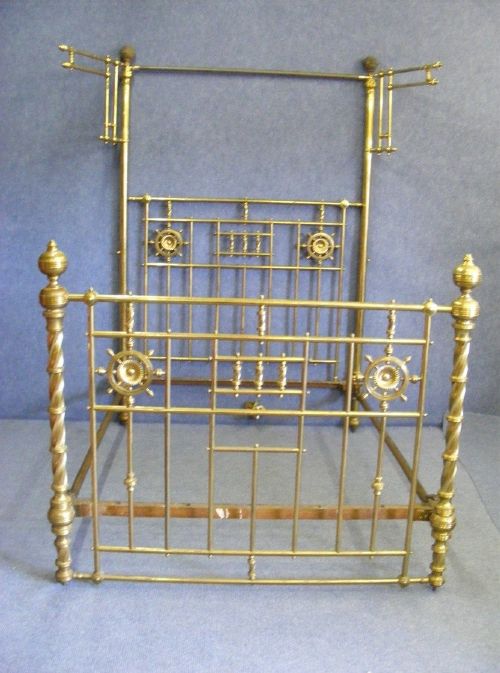
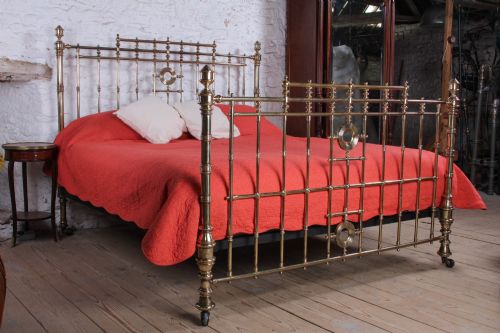
A polished brass bedstead is a sturdy sleeping frame constructed primarily from brass or combined with iron, dating from Victorian and Edwardian eras. These pieces span single sizes up to grand super king dimensions, incorporating half tester and four poster configurations.
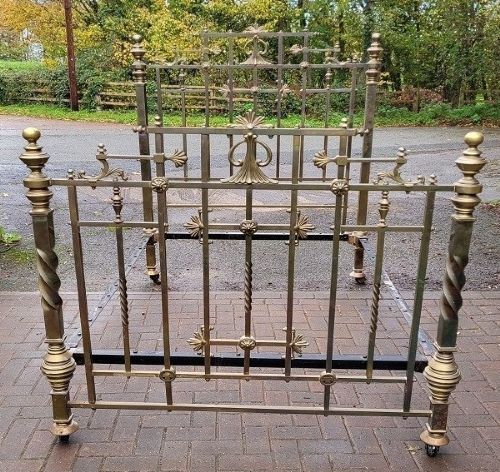
Most examples encountered on this page originate from the Victorian period, frequently featuring distinct decorative styles such as Art Nouveau curves or Gothic influences. Makers ranged from prominent retailers like Maple and Co to specialised manufacturers.
Buyers will find varying proportions designed to accommodate modern mattresses while retaining original side irons and structural integrity. The combination of polished metal surfaces provides both functional support and striking visual weight.
How they were made
Construction relies heavily on heavy-gauge brass tubing and cast brass components joined to robust iron frames for structural stability. Tapered posts and decorative finials were cast separately and attached using traditional mechanical fasteners.
Surfaces were meticulously polished to achieve a bright golden sheen, whilst certain alternative examples incorporated nickel-plated metal finishes for a contrasting silver appearance. Ceramic elements occasionally appeared as decorative inserts or castors.
Polished Brass Bedstead Retail Price Guide 2026
Typical asking prices for polished brass bedstead among the pieces listed under this phrase on Sellingantiques today, from the lower quarter to the upper quarter. They describe what is for sale here now, not the wider market.
Listings feature periods spanning from eighteen fifty through the Edwardian era, incorporating materials such as cast iron, ceramic, and nickel-plated metal.
What varies in quality
Quality in a polished brass bedstead rests upon the weight of the metal components and the complexity of the cast ornamentation. Heavier casting and intricate detailing distinguish finer workshops from simpler commercial production.
The integrity of the original side irons and the precision of the joints determine how securely the bed assembles. Superior examples maintain crisp casting details and substantial brass tubing that resists denting and flexing.
Maple and Co·RW Winfield
The Polished Brass Bedstead Glossary
- Bedstead
- The framework of a bed consisting of headboard, footboard, and side rails, designed to hold mattress supports independently. This term specifically refers to the complete structural structure without bedding.
- Half tester
- A canopy bed style featuring a partial roof or tester extending only partway over the head of the bed from the headboard. It traditionally supported draperies or curtains for warmth and privacy.
- Four poster
- A bed featuring four vertical columns supporting an upper canopy frame, creating a commanding architectural presence. In brass examples, these posts are constructed from heavy metal tubing and decorative castings.
- Side irons
- The longitudinal metal rails that connect the headboard to the footboard and support the mattress base. Original irons ensure proper alignment and historical authenticity.
- Nickel-plated
- A metal finish where a thin layer of nickel is applied over a base metal to provide a bright silver-coloured protective coating. This technique offers an alternative aesthetic to traditional yellow brass.
Polished Brass Bedstead: Frequently Asked Questions
Will a vintage brass bed fit modern mattresses?
Many of these larger bedsteads accommodate standard modern mattress sizes, though exact dimensions can vary across nineteenth-century pieces. It is wise to verify the internal length and width between the side irons before purchasing.
Custom mattress makers can also supply bespoke bases or mattresses tailored to fit the exact historical proportions of these frames.
How do I care for polished brass?
Polished brass benefits from regular dusting with a soft, dry cloth to prevent the accumulation of airborne particles. Avoid harsh chemical cleaners that can strip protective lacquers or damage the metal surface.
Gentle application of a specialised brass cleaner will maintain the bright golden lustre if the finish begins to dull over time.
How do I distinguish Victorian from Edwardian pieces?
Victorian bedsteads often feature heavier proportions, ornate castings, and occasionally Gothic or robust classical details. They date from an era spanning much of the nineteenth century.
Edwardian examples, emerging after nineteen hundred, frequently exhibit lighter scaling and embrace flowing Art Nouveau motifs or simpler geometric lines.
Are iron and brass combined in these beds?
Numerous bedsteads utilise hidden iron interior frames or structural components combined with external brass elements for added strength. This hybrid construction provided the necessary rigidity to support heavy weight while maintaining a decorative appearance.
Listing details will typically note the presence of iron components alongside the primary brass structure.