
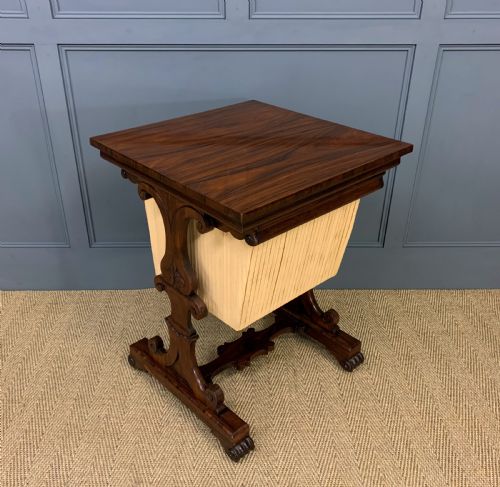
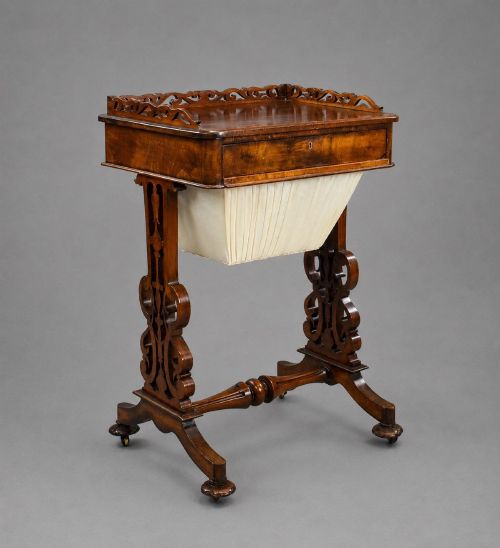
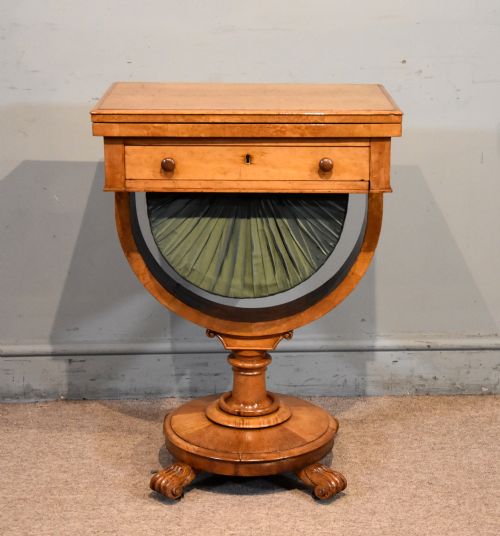


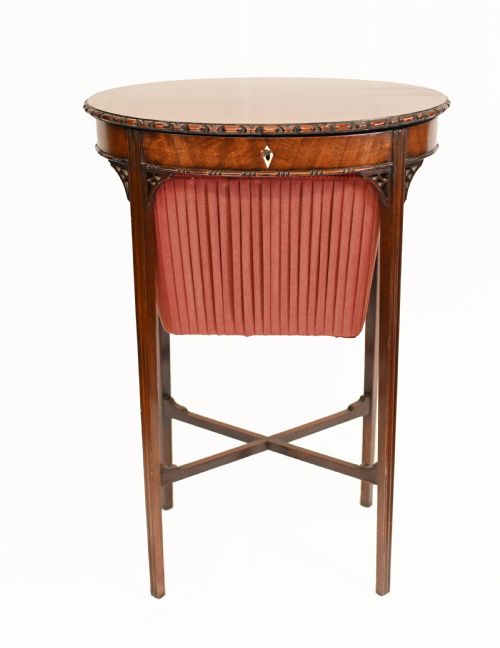


Pleated Basket Table
A pleated basket table is a fitted sewing stand designed to hold textiles, combining practicality with fine nineteenth-century cabinet work.
Pleated Basket Table
A pleated basket table, commonly catalogued as a work table or sewing table, is a small occasional piece designed for domestic needlework. These tables incorporate a suspended fabric bag or basket below the top to store sewing materials, wools, and ongoing projects.
The examples seen here span the Regency, William IV, Victorian, and Edwardian periods, demonstrating how the form evolved through the nineteenth century. Most pieces adopt compact side table proportions suitable for sitting beside a chair or sofa.
Makers utilised various native and exotic timbers, with mahogany and rosewood appearing frequently alongside burr walnut, maple, and satinwood. Many designs combine the primary work surface with specialised compartments, drawers, or drop flaps.
How they were made
Cabinet makers built these tables using solid woods and carefully selected veneers such as mahogany, rosewood, and burr walnut over secondary framing. Surfaces often display figured grains, inlay work, and drop-flap mechanisms that extend the top surface when needed.
The distinctive basket component relies on gathered fabric or silk suspended from a rigid frame beneath the main body of the table. Interior fittings typically feature small compartments, lidded boxes, and fitted trays designed to organise needles, threads, and implements.
Current listings demonstrate a strong representation of nineteenth-century pieces, with mahogany, rosewood, and burr walnut prevailing as the primary cabinet timbers.
What varies in quality
Quality in these tables rests upon the selection of timber veneers and the precision of the cabinet work in the drawers and internal compartments. Finer pieces demonstrate careful attention to grain matching, stability in the drop-flap joints, and well-executed inlay.
The integrity of the original fabric or silk basket and its supporting structure distinguishes a well-preserved example from one requiring restoration. Proportion and decorative restraint also separate standard production pieces from the more ambitious workshops of the Regency and Victorian eras.
The Pleated Basket Table Glossary
- Work table
- A small domestic table fitted with drawers and a fabric bag specifically designed for holding sewing and needlework implements.
- Drop flap
- A hinged leaf on the side of a table that can be raised to increase surface area or lowered when space is limited.
- Burr walnut
- A decorative wood veneer taken from the growth excrescences of a walnut tree, prized for its swirling grain patterns.
- Regency
- A British design period spanning the early nineteenth century characterised by classical restraint and refined proportions.
- Satinwood
- A pale, hard timber imported from the tropics, often used for fine inlay and banding on late eighteenth and nineteenth-century furniture.
Pleated Basket Table: Frequently Asked Questions
What was a pleated basket table used for?
These tables served as functional furniture for ladies undertaking needlework, embroidery, and mending in the nineteenth-century parlour. The top provided a surface for work while the suspended bag kept materials close at hand.
Interior trays and compartments organised small tools such as thimbles, pins, and thread spools, keeping the room tidy when work was set aside.
How do I date a sewing table?
Dating relies on observing the prevailing wood choices, structural forms, and decorative details characteristic of periods like Regency, Victorian, or Edwardian. Regency pieces often show classical restraint and Pollard oak or mahogany, while Victorian examples lean towards burr walnut and heavier proportions.
Turned legs, brass fittings, and the presence of specific inlay styles also help align a piece with its manufacturing era.
Are the fabric baskets usually original?
Fabric and silk components subjected to daily use rarely survive in pristine condition across two centuries. Many tables have had their pleated baskets relined or replaced using traditional textiles that match historical precedents.
Examining the internal mounting frame helps determine whether the textile element retains its original configuration or represents a later renewal.
Where should I place one in a modern home?
Their compact dimensions make these tables versatile as side tables beside armchairs, occasional tables in a study, or display surfaces in a hallway. The fitted top and lower compartment offer discreet storage for small household items.
Positioning them away from direct sunlight and excessive heat protects the polished wood veneers and delicate textile baskets from fading or drying out.