
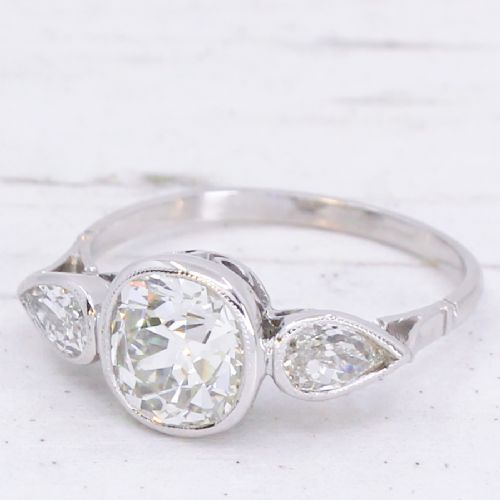
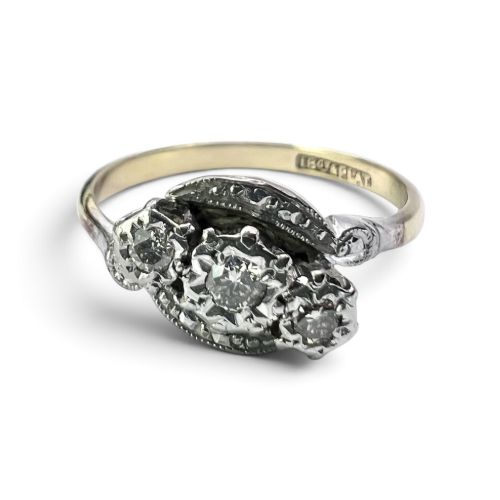
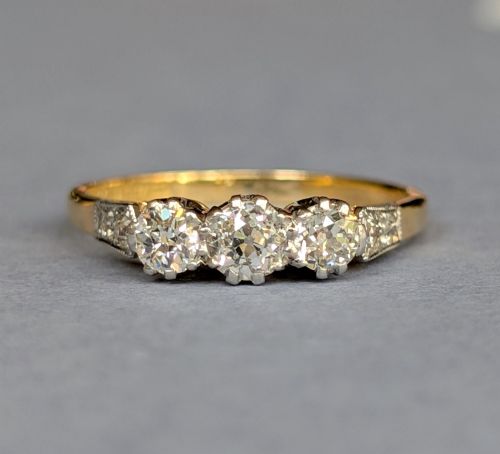
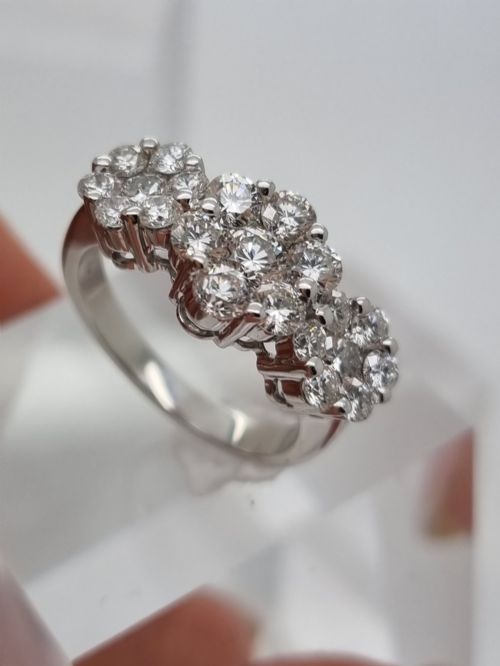


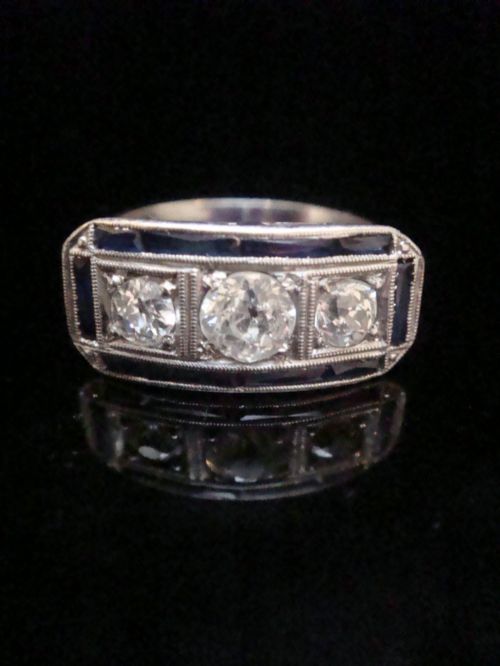


Platinum Three Stone Ring
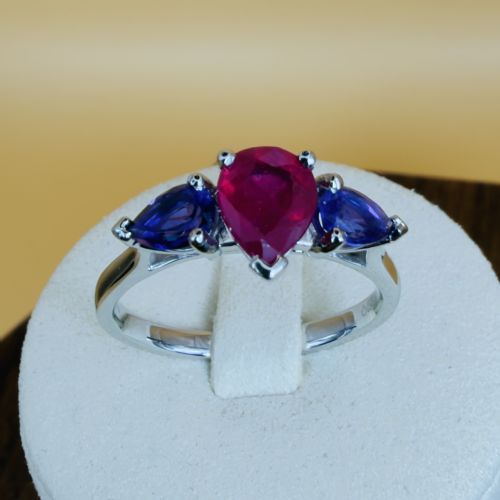
A platinum three stone ring unites three gems in a single mounting, often chosen to symbolise a past, present, and future.
How they were made
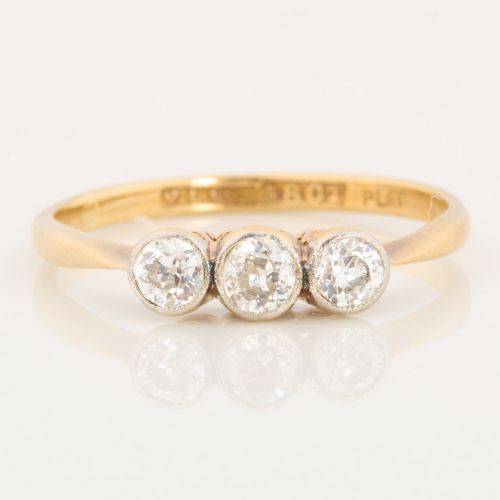
Metals are worked to secure the stones using platinum for durable settings alongside 18ct yellow gold for bands. Platinum gains favour during the Edwardian and Art Deco periods for its strength, allowing fine claw and bezel settings that maximise light exposure.
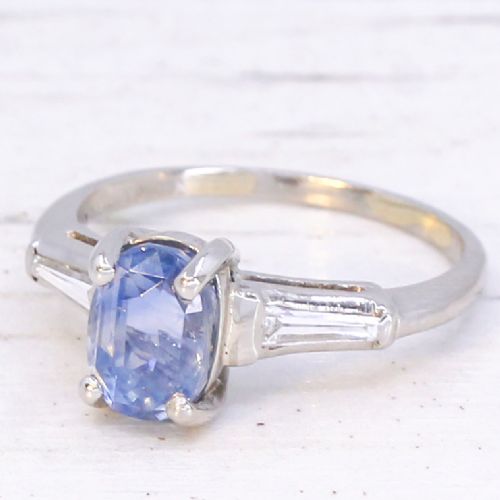
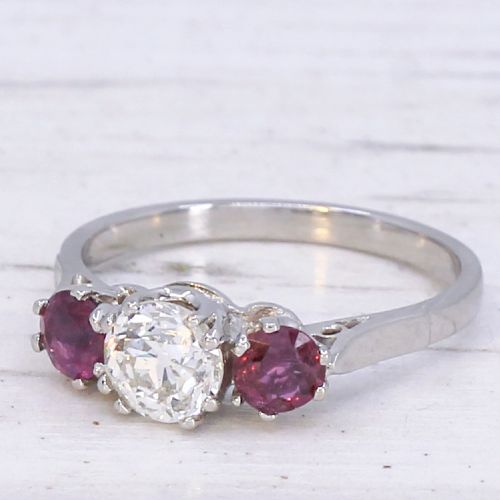
Gemstones are shaped in cuts characteristic of their period, including old cushion cuts, old cut diamonds, baguette cuts, and pear cuts. Stones such as sapphires, rubies, and emeralds are matched with diamonds in trilogy and twist arrangements.
What varies in quality
Quality rests on the selection and matching of the stones, particularly the clarity, colour, and origin of central gems like unheated sapphires or old cut diamonds. Proportion between the centre stone and the side stones dictates the visual balance of the ring.
The precision of metalwork distinguishes fine examples, visible in the delicacy of platinum claw settings and the integration of shoulder stones or engraved details along the band.
Many a Victorian gentleman hid a spring in his pocket watch, just in case he needed to check the time twice.
Bravingtons·Birks
The Platinum Three Stone Ring Glossary
- Trilogy ring
- A ring set with three stones, often representing a past, present, and future timeline. This term is frequently used interchangeably with a three stone ring.
- Old cut diamond
- A diamond cut by hand before modern machinery standardised facets, typically featuring a small table and high crown that catch candlelight warmly. These stones define pieces from the Edwardian and Art Deco eras.
- Platinum
- A dense, white metal valued in antique jewellery for its strength and resistance to tarnish. It permits delicate claw work that secures gemstones safely.
- Baguette cut
- A step-cut diamond or gemstone shaped in a narrow rectangle. They appear beside central stones in Art Deco settings.
- Unheated sapphire
- A sapphire that has not undergone thermal enhancement to improve its colour or clarity. These natural stones are noted in vintage records for their organic depth.
Platinum Three Stone Ring: Frequently Asked Questions
What do the three stones mean?
The three stones traditionally represent a couple's past, present, and future together. This design became a popular choice for engagement rings during the Edwardian and Art Deco periods.
Makers arranged diamonds or a central coloured gemstone flanked by two smaller stones to tell this story. The symbolism remains a primary reason buyers seek out these vintage rings today.
How do I identify an Art Deco ring?
Art Deco rings display geometric lines, symmetrical patterns, and a heavy reliance on platinum settings paired with 18ct gold bands. You will often see baguette cut diamonds or calibre-cut coloured stones framing the centre.
These pieces emerged in the 1920s and 1930s, moving away from the flowing floral motifs of the preceding Edwardian era. The overall geometry provides a distinct architectural aesthetic.
Are these rings suitable for daily wear?
Platinum provides a robust and secure setting for diamonds and sapphires, making these rings durable enough for everyday use. The density of the metal protects the stone settings from routine wear.
However, softer stones like emeralds require more mindful care during daily activities. Regular inspection of the platinum claws ensures the gems remain secure over time.
How do I know the period of a ring?
Dating relies on the combination of cut styles, metal choices, and manufacturing techniques recorded across the piece. Edwardian examples often feature lacy platinum work, while Art Deco pieces favour stark geometry.
Examining the shank markings and the specific diamond cuts, such as old cuts versus modern round brilliants, helps narrow down the decade of creation.