


Platinum Brooch Pin
A platinum brooch pin brings together the strength of precious metal and the fine sparkle of period stones in wearable forms.
Platinum Brooch Pin
A platinum brooch pin is a fastened ornament worn upon garments, drawing primarily from the Art Deco, Edwardian and Victorian periods. These jewels take many forms, appearing as geometric bar brooches, crescent shapes, intricate bows and figural designs like owls and ducks.
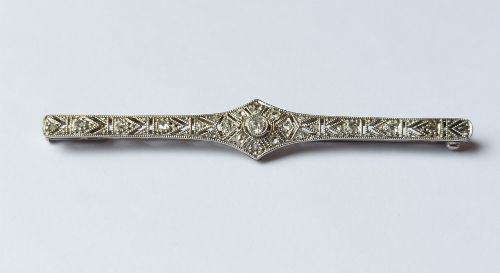
The version most commonly met on this page is the Art Deco platinum and diamond bar brooch from the 1920s. These pieces often feature pavé-set stones and sharp linear mounts designed to sit cleanly against heavy wool or silk lapels.
Beyond standard dress pins, buyers encounter versatile hybrid pieces that double as pendants or function as fob watches and jabot pins. Early twentieth-century examples dominate the selection, though occasional late Victorian and mid-century items also appear.
How they were made
Makers utilised platinum for its density and tensile strength, allowing workshops to fashion knife-edge settings and delicate wirework that could securely hold heavy concentrations of diamonds without thick bezels. This white metal is frequently combined with yellow gold, white gold or silver in hybrid mounts typical of the transition from Edwardian grace to Art Deco geometry.
Gems including rubies, sapphires, emeralds, aquamarines and onyx are hand-set alongside old cut diamonds, natural pearls and pink pearls. Jewellers employed millegrain borders - tiny raised beads of metal along the edges of settings - to soften the transition between the platinum mount and the stones.
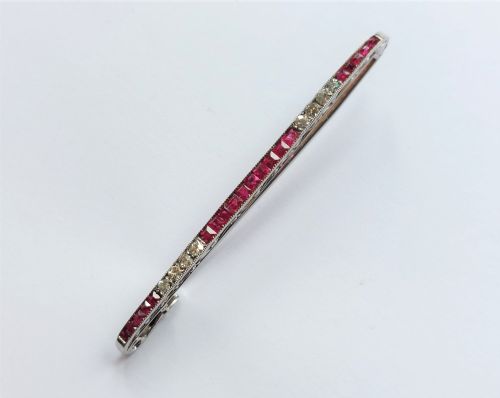
Structural framing often incorporates openwork piercing and calibré-cut coloured stones laid flush against the metal framework. Artisans built these pieces by hand, balancing substantial stone carats within light, airy geometric frameworks.
Among the geometric lines and sparkling diamonds, a few adventurous birds - including an owl and a flying duck - manage to hold their ground.
What varies in quality
Quality separates along the ambition of the design and the integration of the materials. A superior platinum brooch pin demonstrates crisp geometric transitions in Art Deco work or fluid, organic symmetry in Edwardian pieces, avoiding clumsy proportions or heavy, unrefined metal casting.
The selection and matching of the gemstones dictate the upper tier of the range. Uniformity in diamond cut and colour, alongside well-matched natural pearls or deeply saturated rubies and sapphires, marks out superior workshops.
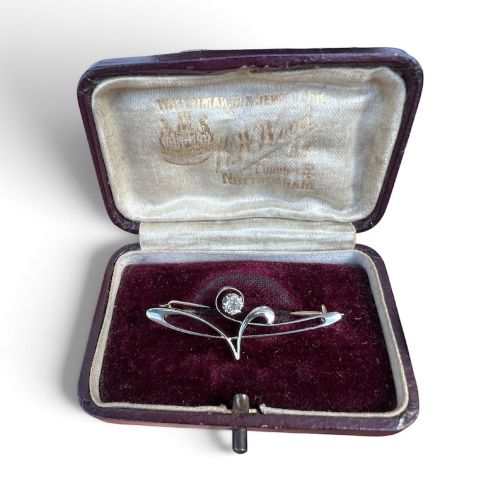
Maker attribution and box retention elevate certain pieces further. Signed works by houses like Cartier or retailers like Liberty carry distinct archival provenance that sets them apart from unsigned contemporaries.
Cartier Paris·Liberty London
The Platinum Brooch Pin Glossary
- Bar brooch
- A horizontal pin featuring gems or metalwork arranged in a linear fashion. This form was widely produced during the Edwardian and Art Deco eras.
- Old cut diamond
- A diamond cut by hand before modern machinery standardised facets, typically characterised by a small table, high crown and open culet. These stones display a softer, candlelit sparkle under low light.
- Millegrain
- A decorative technique featuring a row of tiny raised metal beads along the edge of a setting. It adds a refined texture typical of Edwardian and Belle Epoque jewellery.
- Calibré-cut
- Coloured gemstones cut specifically to fit a precise geometric channel or pattern within a mount. This technique requires expert lapidary skill to maintain unbroken lines of colour.
- Jabot pin
- A decorative pin originally designed to secure the jabot frill on a shirt or cravat. They often feature ornamental terminals at both ends of a long pin.
Platinum Brooch Pin: Frequently Asked Questions
How do I wear a platinum brooch pin today?
These pieces pin securely onto heavy coats, thick knit cardigans, jacket lapels or silk scarves. The weight of the platinum helps the brooch hang straight without pulling the fabric.
For a modern look, position a bar brooch vertically on a lapel or gather a scarf fold with a smaller diamond pin.
What is the difference between Edwardian and Art Deco brooches?
Edwardian pieces rely on platinum and gold wirework, garlands, bows and soft organic motifs reflecting Belle Epoque elegance. They frequently utilise millegrain borders and pearls.
Art Deco brooches favour strict geometry, symmetry, strong lines and contrasting onyx or calibrated rubies and sapphires.
Are these brooches convertible into pendants?
Many period pieces feature hidden loops, fold-down bails or detachable fittings that allow a brooch to double as a pendant on a chain. This versatility was common in the early twentieth century.
Checking the reverse of the piece reveals whether a hinged loop is present for suspension.