



Yellow Sapphire Brooch
A yellow sapphire brooch brings a flash of bright, sunny colour to the lapel, combining fine gemstones with the intricate metalwork of past centuries.
Yellow Sapphire Brooch
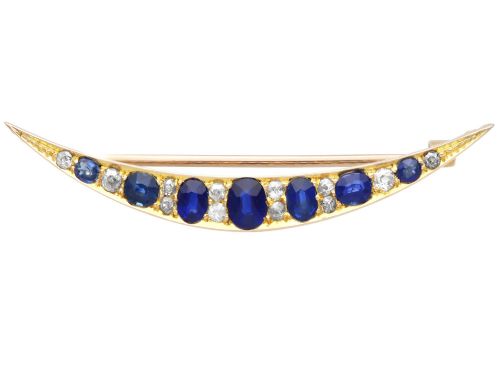
A yellow sapphire brooch is a wearable piece of jewellery designed to fasten garments, featuring prominent yellow or golden sapphires as the central stone. When buyers search this phrase, they encounter a range of forms including bar brooches, crescent pins, crown motifs, and butterfly designs.
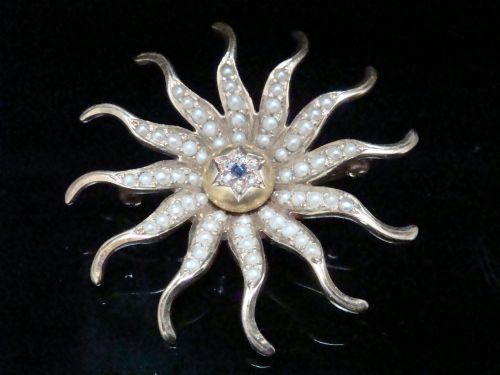
The selections span distinct historical eras, most notably the Victorian period, Edwardian era, Art Deco period, and Mid-Century designs. Pieces often combine the yellow sapphire with supporting gems such as diamonds, pearls, or turquoise.
Many examples double as pendants, offering dual functionality as seen in combination pendant and brooch pieces. Origins stretch across British workshops and continental makers such as Swedish and French ateliers.
How they were made
Goldsmiths set yellow sapphires alongside diamonds into metals including yellow gold of various carats, platinum, and silver-topped gold. Stones are secured in claw settings or flush mounts depending on the period's prevailing style.
Early pieces utilise traditional hand-working techniques for gold wire and sheet, whilst later items incorporate platinum to achieve finer, stronger wirework and intricate geometric arrangements.
Yellow Sapphire Brooch Retail Price Guide 2026
Typical asking prices for yellow sapphire brooch among the pieces listed under this phrase on Sellingantiques today, from the lower quarter to the upper quarter. They describe what is for sale here now, not the wider market.
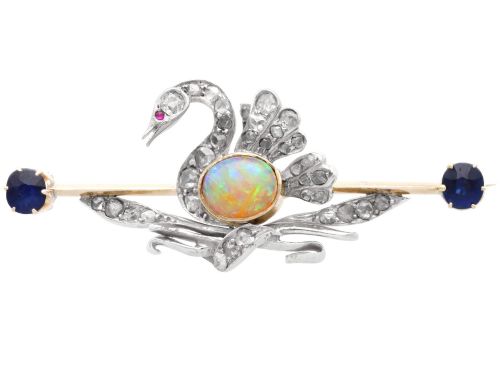
Butterflies caught in precious metal flutter alongside crowns and crescent moons, proving that antique jewellers loved a miniature menagerie.
What varies in quality
The distinction between tiers rests on the saturation and clarity of the central sapphire, alongside the weight and brilliance of accompanying diamonds. Natural unheated stones and large carat weights elevate a piece significantly.
The finesse of the metalwork, from delicate millegrain edges to complex three-dimensional forms like butterflies or crowns, separates standard workshop output from exceptional master jewellery.
The Yellow Sapphire Brooch Glossary
- Bar brooch
- A horizontal pin featuring gemstones set along a narrow metal bar. This linear style was particularly popular during the late nineteenth and early twentieth centuries.
- Crescent brooch
- A piece shaped in the form of a crescent moon, frequently studded with pearls, diamonds, or coloured sapphires. They were staple accessories throughout the Victorian and Edwardian eras.
- Millegrain
- A decorative jewellery technique involving a line of tiny metal beads along the edges of a setting. It softens the appearance of platinum or white gold and frames the stones.
- Unheated sapphire
- A gemstone that has undergone no thermal enhancement to improve its natural colour or clarity. These untreated stones hold particular appeal for collectors.
Yellow Sapphire Brooch: Frequently Asked Questions
How do I wear an antique brooch today?
Pin the piece securely to the lapel of a heavy coat, a chunky knit jumper, or even fastened at the collar of a blouse. The substantial weight of Victorian and Edwardian designs requires a sturdy fabric to support the pin without sagging.
For a modern twist, use a bar brooch to fasten a silk scarf or secure a wrap dress. Ensure the safety catch is fully engaged before venturing out.
Are these sapphires treated?
Many historical stones remain in their natural, untreated state, whilst others may have traditional enhancements. Documentation and expert appraisal help determine the exact thermal history of the sapphire.
Checking certificate details provided with specific items reveals whether a stone is unheated. Natural unheated varieties are especially prized by connoisseurs.
How do I date a sapphire brooch?
Examine the metal combinations, pin fixings, and overall design motifs to determine the era. Victorian pieces often use lower carat yellow gold with organic motifs, whilst Edwardian designs favour platinum and delicate lace-like geometry.
Later Mid-Century items showcase bolder, abstract forms or heavier gold settings. Hallmarks stamped on the reverse also provide precise clues to the year and place of creation.