
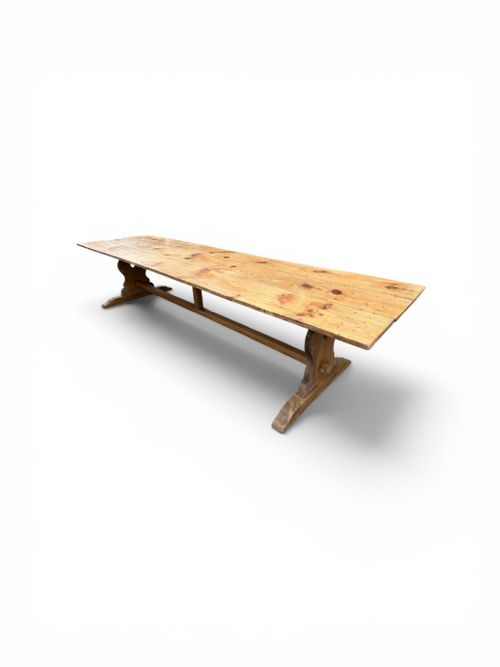
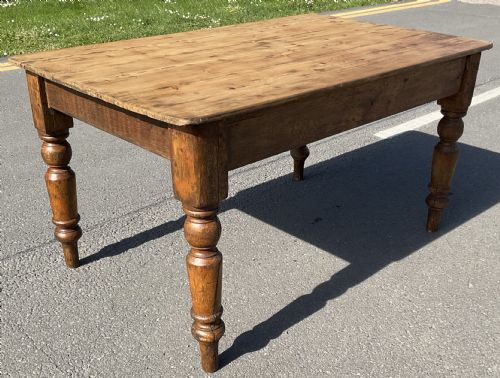


Plank Top Pine Table
A plank top pine table brings honest working utility and tactile warmth to a room, built from timber designed for daily service.
Plank Top Pine Table
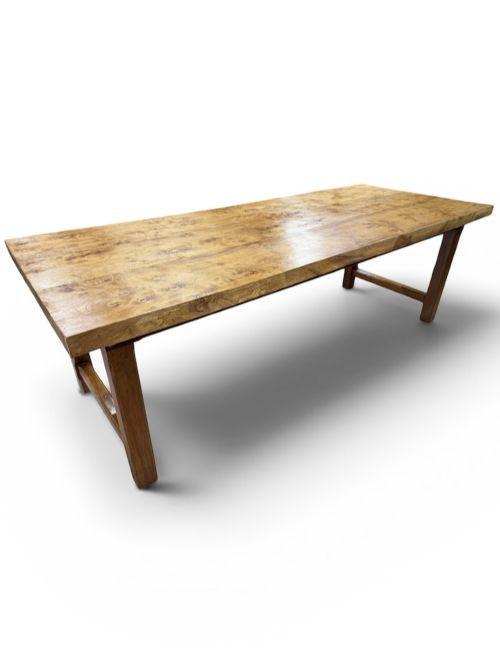
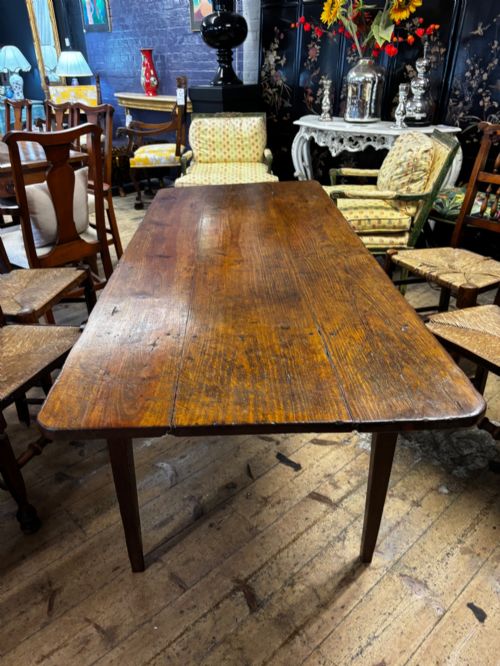
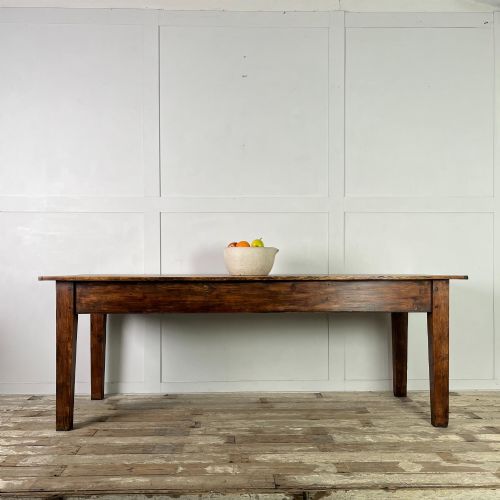
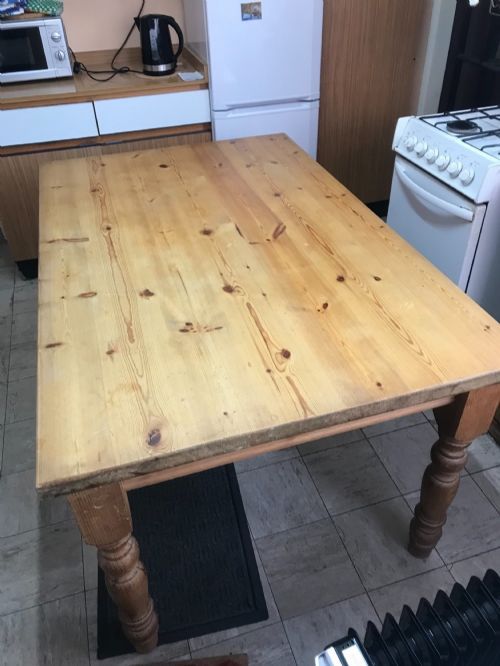
A plank top pine table serves as the central workhorse of the country kitchen or dining room, built from thick boards joined together to form a broad surface. These pieces emerge predominantly from the nineteenth century and the Victorian era, carrying the honest marks of domestic or tavern use.
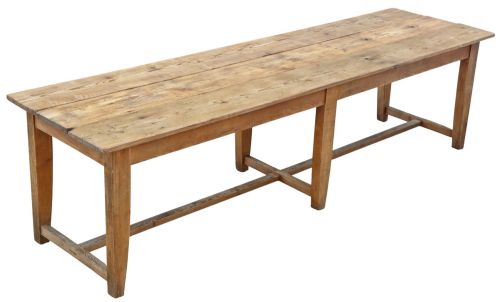
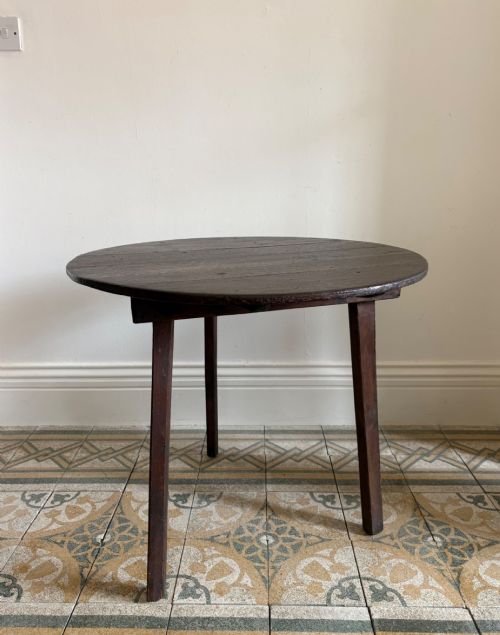
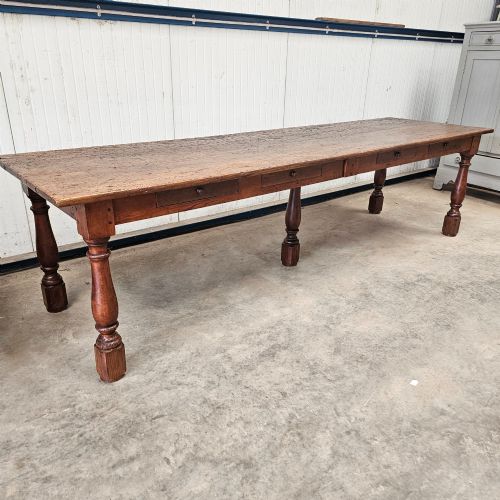
The inventory on this page ranges from compact cricket tables and low coffee tables to long refectory and farmhouse dining tables seating six to eight people. Buyers encounter robust timbers supported by painted pine bases, turned legs, or trestle ends.
Origins span English country houses and Welsh farmhouses alongside French provincial workshops, offering rectangular and circular formats tailored for daily gatherings.
How they were made
Construction relies heavily on solid pine timber, frequently paired with alternative woods such as oak, fruitwood, chestnut, or elm for specific structural elements or secondary surfaces. Carpenters joined wide boards to create the distinctive plank top, often securing the ends with cleats to manage natural timber movement.
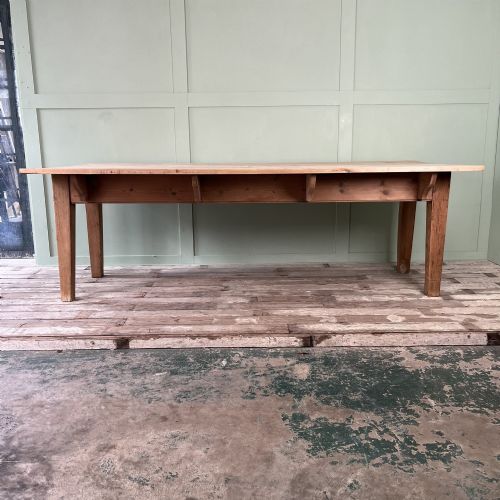
Bases range from turned legs mounted with castors to X-framed trestles and painted pine frames, sometimes incorporating functional drawers beneath the surface for domestic storage.
Several tables retain the faint ink stains and knife marks left by busy nineteenth-century kitchens.
What varies in quality
Quality rests in the structural integrity of the timber joints and the thickness of the boards forming the plank top. Tables retain greater integrity when the original scrub top or surface finish survives without excessive timber loss from past centuries of hard service.
Proportion and scale dictate the upper end of the range, where balanced turned legs, integrated drawers, and substantial refectory lengths separate utilitarian workshop benches from finer country house dining furniture.
The Plank Top Pine Table Glossary
- Plank top
- A table surface constructed from multiple individual boards joined side by side. This method allowed makers to utilise wide timber sections for robust dining and kitchen use.
- Cleated ends
- Wooden battens fixed across the short ends of a plank top. This technique helps keep the boards flat and stable over decades of environmental changes.
- Refectory table
- A long, narrow dining table originally designed for communal eating halls. Examples in this inventory stretch to accommodate large groups in kitchens and dining spaces.
- Scrub top
- A bare timber tabletop repeatedly scoured clean with water and sand. This process leaves a pale, smooth finish characteristic of nineteenth-century kitchen tables.
- Cricket table
- A small, lightweight three-legged table originating in early vernacular homes. The three-legged design ensured stability on uneven flagstone floors.
Plank Top Pine Table: Frequently Asked Questions
How do I clean a pine table?
Wipe the surface gently with a damp cloth and mild soap, avoiding harsh chemical sprays that strip the timber. Dry the wood immediately to prevent moisture rings.
Apply occasional natural wax to nourish the dry pine and protect the historic grain from daily wear.
Were these tables used in kitchens?
Many examples served as primary work surfaces for food preparation, laundry, and daily family meals in nineteenth-century homes. The thick timber tops endured heavy domestic labour before moving into modern dining rooms.
Drawers built into the aprons held cutlery, linens, and small kitchen tools close at hand.
How do I spot a Victorian table?
Victorian pieces frequently feature turned legs, sometimes mounted on original castors, supporting a substantial two-plank or multi-plank top. Look for structural clues like hand-cut joinery and signs of deep domestic use.
Constructed mainly between eighteen thirty and nineteen hundred, these tables display the characteristic patina of nineteenth-century pine.
Can I use a coffee table version daily?
Low pine tables handle daily living room service easily, provided you use coasters for hot drinks and sharp items. The sturdy timber construction accommodates books and everyday objects without issue.
Allow the wood to breathe and develop its own character alongside your living space.