




Plaid Upholstered Chairs
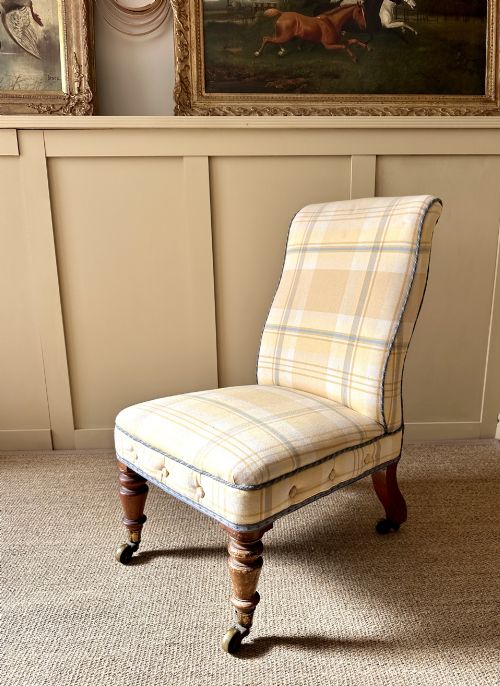
Plaid upholstered chairs bring warmth and pattern to a room, offering sturdy seating clad in patterned wool and textile.
Plaid Upholstered Chairs
When you search for plaid upholstered chairs, you encounter seating solutions that combine traditional wooden frames with patterned textile coverings. These pieces bridge centuries of design, spanning the Georgian era, the Victorian period, and the early twentieth century.
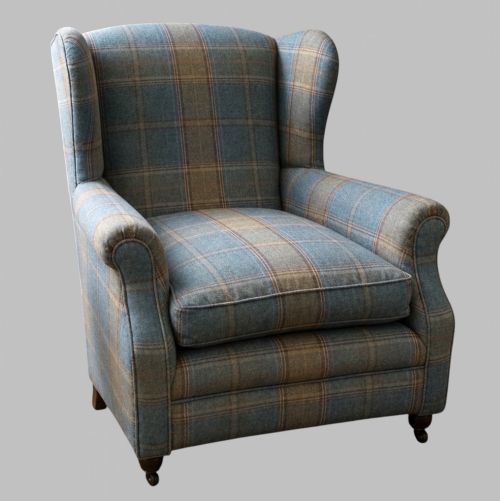
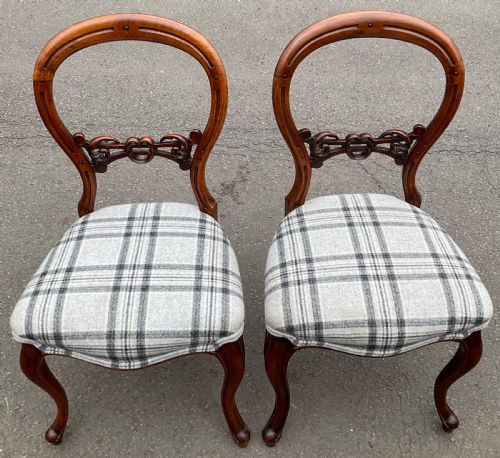
Armchairs, side chairs, dining chairs, and rocking chairs form the core of what appears on this page. You are most likely to meet twentieth-century wingback armchairs, Arts and Crafts oak tub chairs, and Victorian walnut seating.
The frames reflect historical cabinet-making traditions using oak, mahogany, walnut, fruitwood, and general wood structures. Upholstery introduces textiles and wool into the design, giving each chair its distinct patterned finish.
Materials and construction methods
Makers built these frames using hardwoods like oak, walnut, and mahogany, alongside softer fruitwoods for specific seating forms. Joinery methods relied on traditional wood-working techniques to ensure structural longevity across centuries of use.
Upholstery techniques combined supportive internal webbing and stuffing with outer layers of wool and patterned fabric. Brass details occasionally appeared as hardware components or castors on nineteenth-century examples.
One child's rocking chair was built small enough to give a nursery pet the best seat in the house.
Distinguishing quality in older seating
The distinction between ordinary and superior pieces rests on the integrity of the wooden frame and the precision of the carving. Carved walnut ladies chairs and detailed mahogany carvers display a higher degree of artisan skill than plain utility seating.
The harmony between the underlying frame and the chosen textile covering dictates visual success. Cohesion of style, whether following Arts and Crafts principles or George III proportions, elevates the standing of the chair.
The Plaid Upholstered Chairs Glossary
- Wingback armchair
- A large seat featuring characteristic protective side panels designed to shield the sitter from draughts. These often appear upholstered in wool and heavy fabrics.
- Tub armchair
- A comfortable seat featuring a continuous curved back and armrest structure. This form frequently appears in Arts and Crafts contexts.
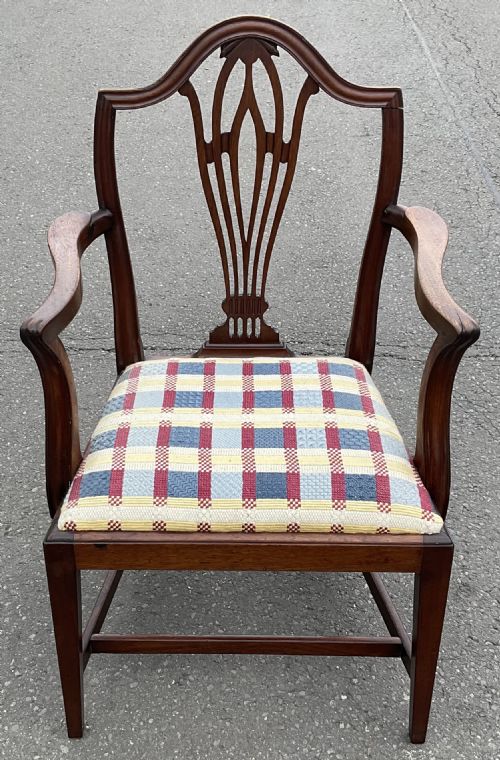
- Carver armchair
- An arm-chair designed traditionally to sit at the head of a dining table or function as a standalone seat. They showcase prominent wooden arms attached to upholstered or wooden bodies.
- Fruitwood
- Timber derived from fruit-bearing trees such as pear or apple, used by makers for smaller or more specialised seating forms. It provides a distinct grain pattern compared to standard oak or mahogany.
Plaid Upholstered Chairs: Frequently Asked Questions
How do I date an oak armchair?
Dating relies on examining the construction marks, timber selection, and stylistic details of the frame. Pieces from the Georgian era differ distinctly in proportion from twentieth-century Arts and Crafts examples.
Secondary indicators include the fastening methods and the wear patterns on the wood. Comparing the overall silhouette against documented period designs clarifies the decade of origin.
Are these chairs suitable for daily use?
Many of these wooden chairs were built for functional domestic environments, utilising durable hardwoods like oak and mahogany. Their robust frames handle regular sitting when properly maintained.
Upholstered sections can be renewed over time while preserving the historic wooden structure underneath. This allows older seating to integrate into modern living spaces.
What is an Arts and Crafts chair?
Arts and Crafts seating emphasises honest construction, exposed timber grains, and functional simplicity. These pieces often feature oak frames and straightforward joinery.
Originating in the late nineteenth and early twentieth centuries, the style rejected excessive ornamentation in favour of honest craftsmanship.