






Oak Club Armchairs
Oak club armchairs are substantial timber seats built for deep comfort, bringing character and solid grounding to a room.
Oak Club Armchairs
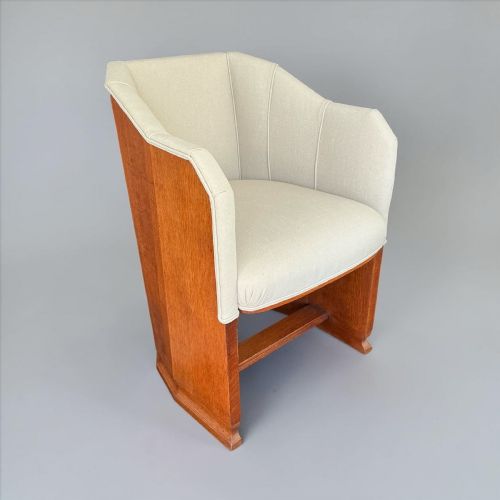
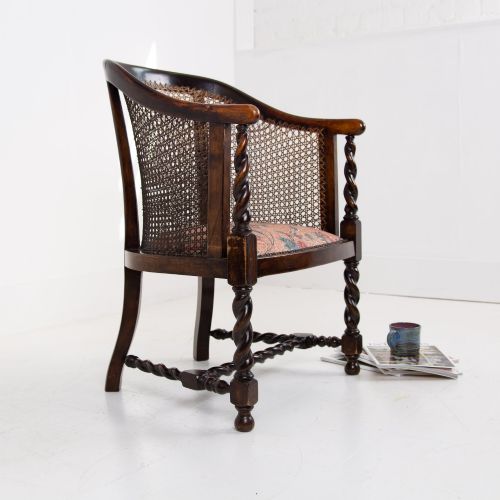
Oak club armchairs span from early Victorian library pieces to later Arts and Crafts and Art Deco designs. The forms on this page include generous fireside models, wing backs, and heavy library chairs with sturdy timber frames.
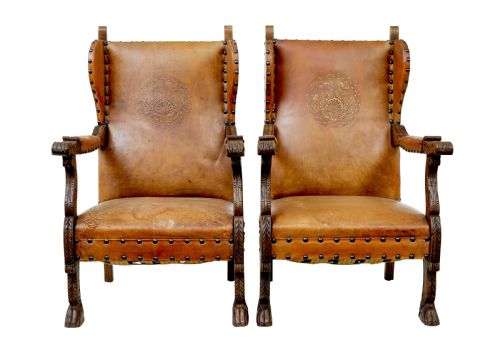
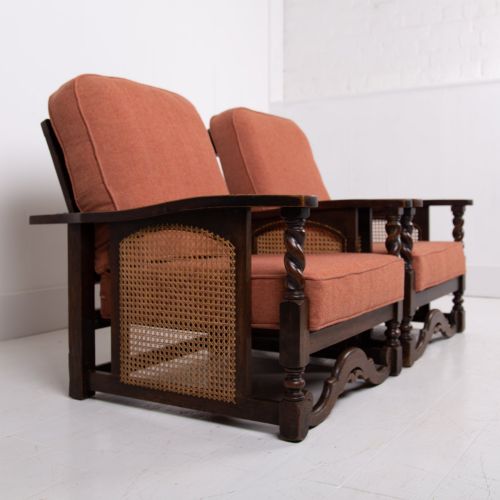
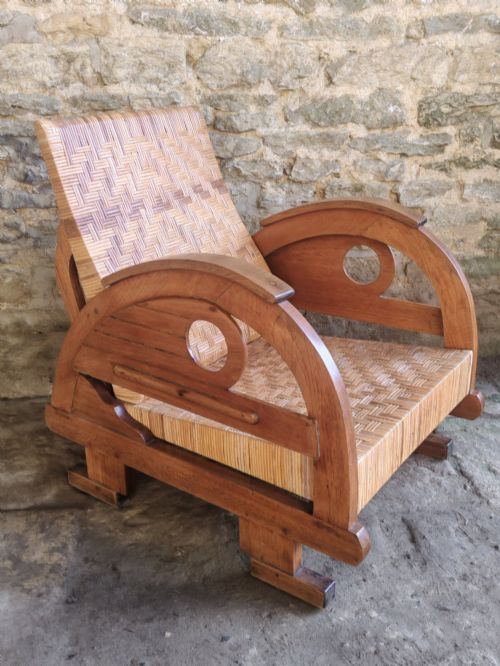
Victorian and nineteenth-century examples often feature carved detailing such as lion heads and Gothic motifs alongside leather upholstery. Twentieth-century variations bring in cane, rattan, and streamlined reclining mechanisms.
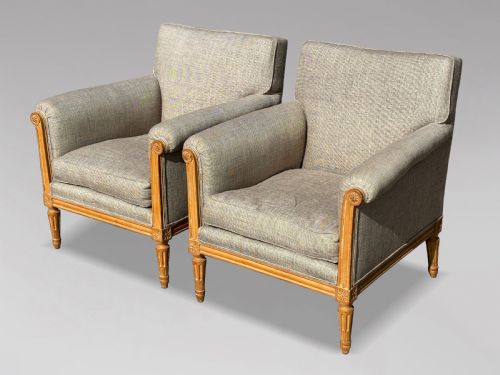
Buyers encounter single chairs and matching pairs, ranging from low lounge seating to oversized proportions designed for deep relaxation.
Materials and construction
These armchairs rely on solid oak frames, sometimes augmented by chestnut or other woods, providing a heavy structural skeleton. Joinery methods range from traditional hand-carved elements to early twentieth-century mechanical reclining frames.
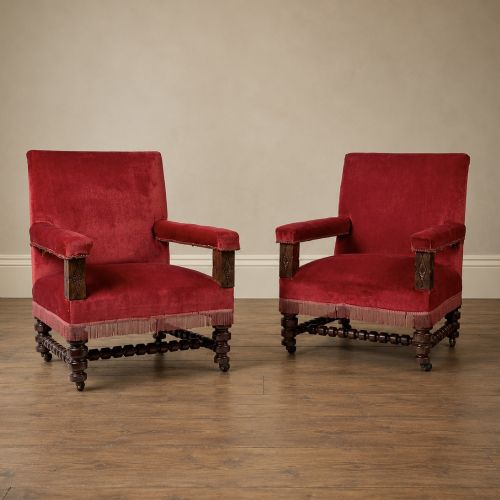
Upholstery materials play a defining role, with brown and tan leather appearing frequently alongside red velvet, embossed leather, fabric, cane, and rattan. Brass studs and fittings often accent the timber and hide surfaces.
Several armchairs incorporate mechanical reclining actions or hidden makers numbers deep within their nineteenth-century wooden frames.
Evaluating quality and proportion
Quality rests in the relationship between the weight of the oak frame and the proportion of the upholstered sections. Substantial timber carvings, such as detailed lion heads or Gothic tracery, elevate certain nineteenth-century examples above plain utility models.
The choice and execution of covering materials distinguish standard workshop output from finer library pieces. Original or sympathetic leather and velvet hide variations mark out the more distinguished specimens.
Foot and Sons·Heals of London
The Oak Club Armchairs Glossary
- Club armchair
- A deep, heavy-seated lounge chair designed for relaxation, typically featuring a sturdy wooden frame and upholstered arms.
- Library armchair
- A formal reading chair from the nineteenth century, often constructed from solid oak with leather upholstery and generous proportions.
- Gothic Revival
- A nineteenth-century design style drawing on medieval architectural motifs, marked in these chairs by pointed arches, tracery, and dark oak.
- Arts and Crafts
- A movement prioritising traditional craftsmanship and honest materials, producing simplified oak frames with visible construction details.
- Smokers bow
- A low-backed Windsor chair with a rounded rail supported by turned spindles, often made from oak and wood.
Oak Club Armchairs: Frequently Asked Questions
What defines an oak club armchair?
These pieces combine a heavy timber frame made from oak with upholstered seating designed for deep comfort. They typically appear in library, fireside, and lounge settings.
Origins stretch from Victorian interpretations with carved details to later Art Deco and Arts and Crafts designs.
How do I date an oak club armchair?
Dating relies on stylistic clues and construction methods visible in the frame and upholstery. Nineteenth-century examples often display Gothic Revival or heavy Victorian carving.
Pieces from the nineteen-twenties and thirties tend towards cleaner Art Deco lines, rattan inserts, and mechanical reclining functions.
Are these chairs suitable for daily use?
Solid oak construction gives these armchairs exceptional structural durability for everyday seating. Many surviving examples have been reupholstered to ensure modern comfort.
Generous proportions and supportive sprung or padded cushions make them practical for contemporary living spaces.
What is the difference between library and club chairs?
Library chairs from the Victorian period frequently feature formal carved oak framing, buttoned leather, and upright backs suited for reading at a desk. Club armchairs lean towards lower, deeper lounging proportions.
Both categories cross over considerably in nineteenth-century and early twentieth-century English furniture.