


Pitcher and Bowl Set
A pitcher and bowl set brings tactile ceramic craftsmanship and period utility into modern rooms through generous ewers and deep basins.
Pitcher and Bowl Set
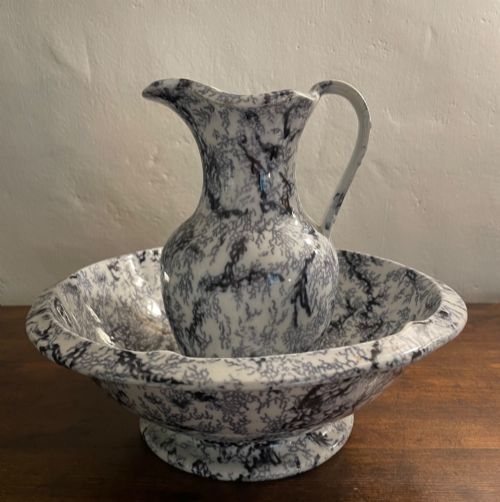
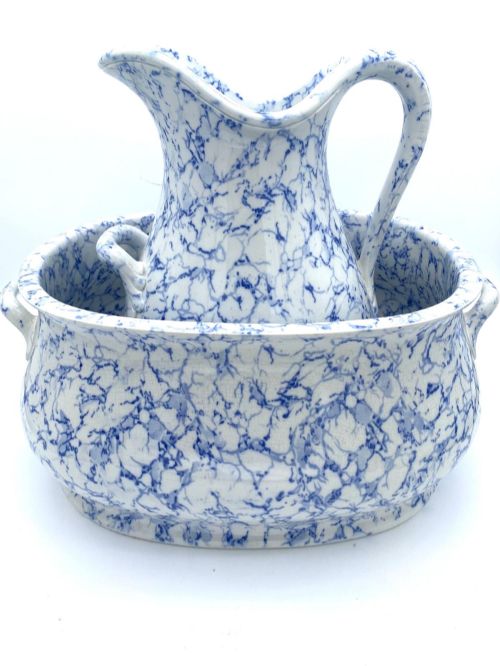
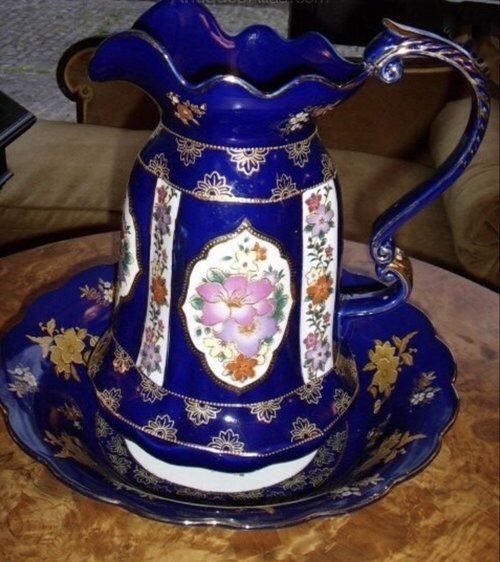
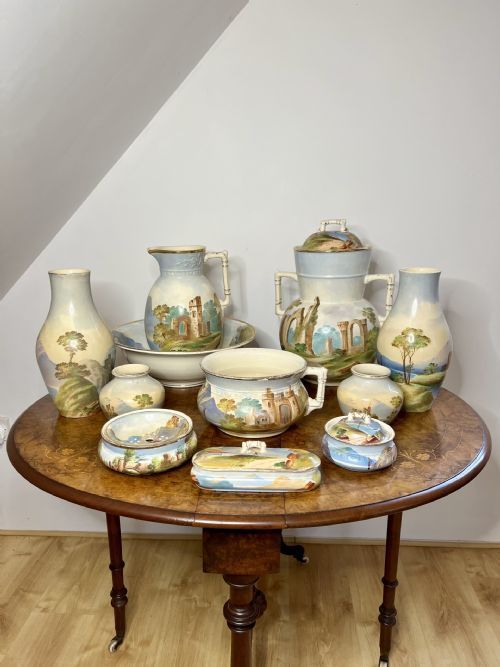
A pitcher and bowl set comprises a large water jug paired with a matching basin, originally designed for personal washing in bedrooms before modern plumbing. The examples seen here span from the early nineteenth century through the Edwardian period, with Victorian pieces representing a significant portion of the selection.
The forms appear under various historical designations, including wash sets, washstand sets, and jug and basin sets. Makers produced these items in earthenware, porcelain, and stoneware, often accompanied by smaller matching accessories like soap dishes and toothbrush holders.
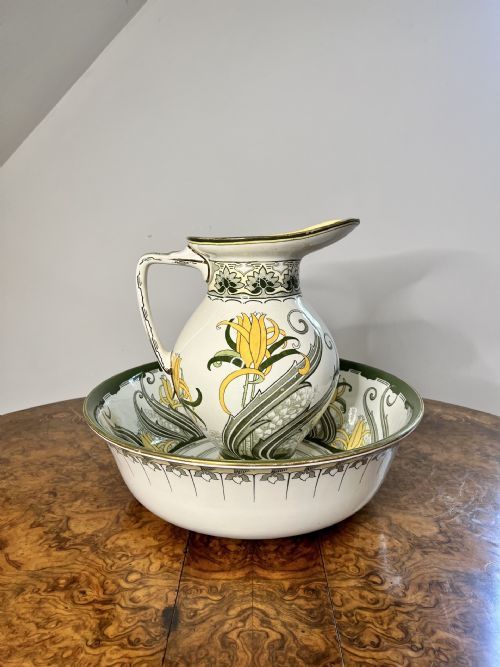
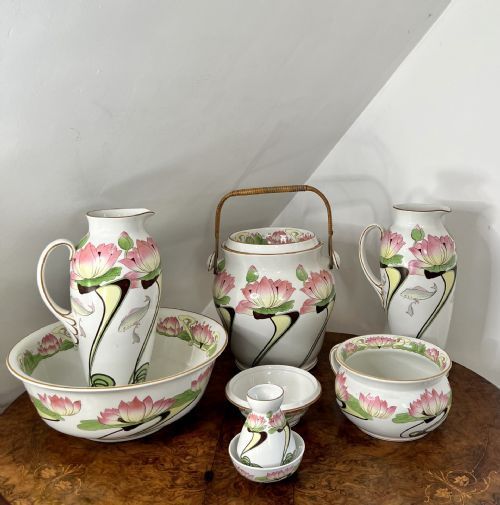
Stylistic influences range from classic blue and white transferware and floral patterns to geometric Art Nouveau designs and intricate Victorian Chinoiserie. Pieces designed for the washstand demonstrate the practical domestic requirements of nineteenth and early twentieth-century households.
Materials and Technique
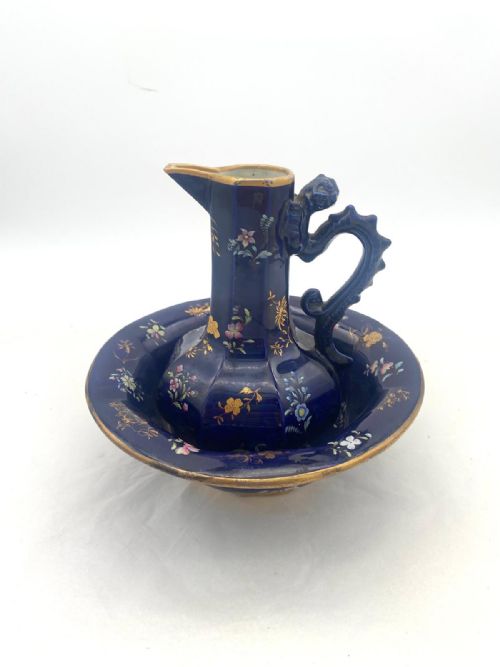
Potters shaped these vessels using earthenware, ironstone, and porcelain bodies, applying liquid glazes to seal the porous clay before high-temperature firing. Many examples incorporate hand-painted details, transfer-printed motifs, or applied gold leaf and enamel highlights.
Stoneware variants utilise denser clays fired at higher temperatures to produce robust, impermeable bodies suited for daily domestic use. Specialised manufactories employed cobalt blue pigments and rich glazes to achieve deep coloration across the surface of the jug and basin.
Footbaths sometimes joined the washstand lineup, offering tired Victorians a surprisingly deep ceramic soak right at the foot of the bed.
Assessing Craftsmanship
Quality in a pitcher and bowl set is evident in the crispness of the transfer printing, the evenness of the glaze, and the precision of any hand-painted enamel work. Superior examples display balanced proportions between the ewer and basin alongside carefully integrated handle and spout formations.
The sophistication of the decorative scheme, whether an intricate Italian marble pattern or delicate floral composition, distinguishes standard domestic output from more ambitious ceramic artistry. Preservation of gilding and enamel details across both matching pieces indicates the level of care retained over time.
Minton·Masons Ironstone·Doulton Burslem·Doulton Lambeth·Royal Worcester·Christofle·George Fox·Shelley·Mark Jones And Sons
The Pitcher and Bowl Set Glossary
- Earthenware
- A porous pottery body fired at lower temperatures, requiring an impermeable glaze to hold water. It forms the basis of many nineteenth-century domestic wash sets.
- Ironstone
- A heavy, durable ceramic patented in the early nineteenth century, bridging the gap between earthenware and true porcelain. It resists chipping and provides a stable surface for transfer-printed designs.
- Flow blue
- A ceramic glazing technique where cobalt oxide blurred during firing, creating a misty, bleeding effect across the pattern. This style gained popularity during the Victorian era.
- Transferware
- A method of decorating ceramics by applying an engraved copperplate design printed on tissue paper to the biscuit surface. It allowed complex pictorial scenes to be replicated efficiently.
- Stoneware
- A sturdy, vitrified pottery produced from clay fired at high temperatures, rendering it completely waterproof without requiring a decorative glaze. Doulton utilised this material for robust utilitarian wares.
Pitcher and Bowl Set: Frequently Asked Questions
How were pitcher and bowl sets used?
These sets served as the primary washing station in bedrooms before plumbed bathrooms became standard in homes. Users poured water from the pitcher into the basin for morning and evening ablutions.
Beyond personal hygiene, larger basins occasionally functioned as footbaths or held supplementary washroom accessories. The matched pairs remained prominent fixtures on wooden washstands until the mid-twentieth century.
How do I display a set today?
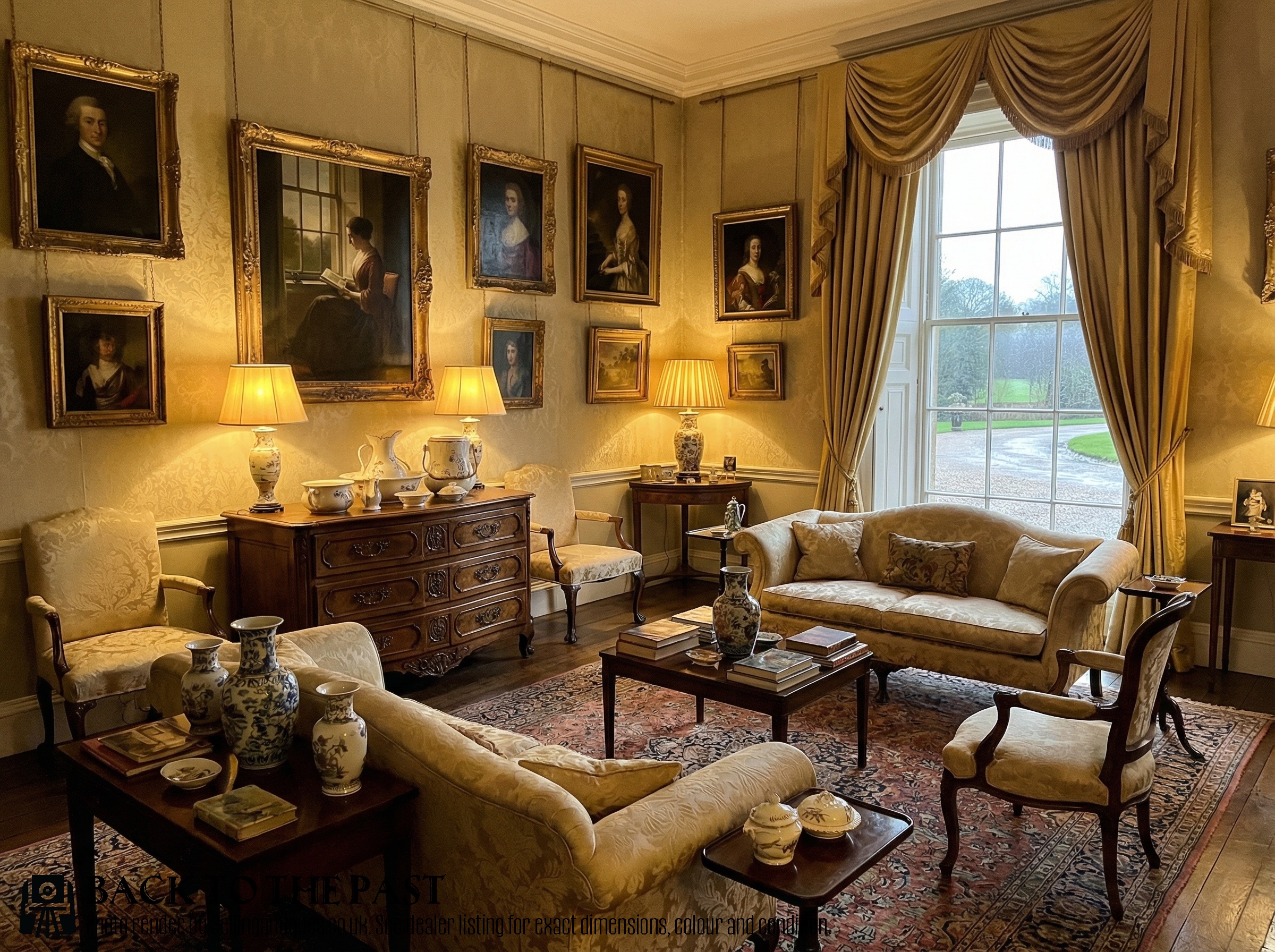
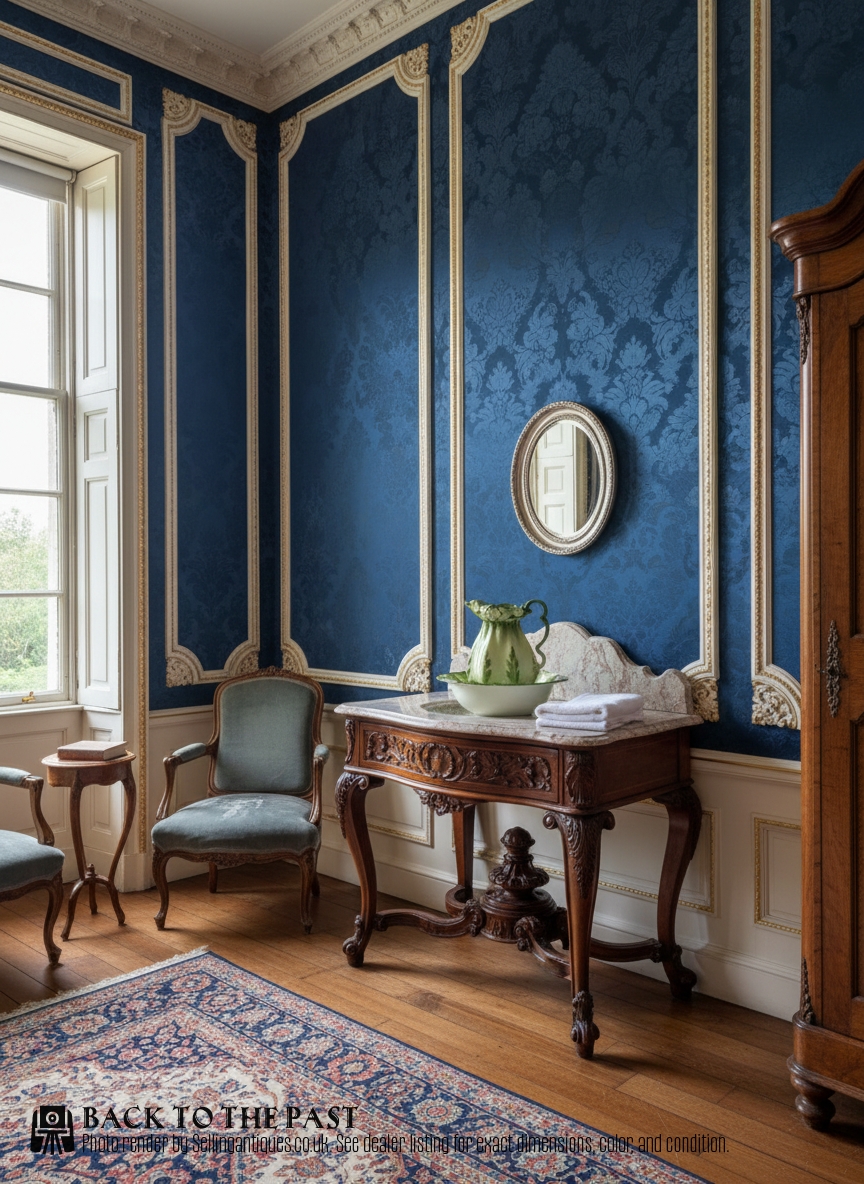
A pitcher and bowl set works well placed on low sideboards, large entrance hall tables, or wide floor spaces where the full scale of the matching pieces is visible. Many collectors use the basin to hold dried botanicals, gathered fruit, or rolled textiles.
Placing the ewer directly inside the basin keeps the pairing visually connected while preventing accidental tipping on standard furniture. The distinct glaze colours and patterns provide a focal point in both traditional and contemporary interiors.
How do I tell Victorian sets from Edwardian ones?
Victorian sets often feature heavier proportions, robust ironstone bodies, and dense transfer-printed floral or Chinoiserie patterns. The decorative schemes tend towards rich blues, elaborate gilding, and romantic motifs.
Edwardian examples frequently lean towards lighter, brighter aesthetics influenced by Art Nouveau forms or simplified floral treatments. The ceramic bodies on later pieces can be thinner, reflecting changing manufacturing techniques at the turn of the century.
What is ironstone and is it durable?
Ironstone is a dense, heavy type of earthenware patented to mimic porcelain while offering greater resilience for everyday kitchen and washroom use. It resists standard wear better than softer clay bodies.
While robust, ironstone can still chip if struck hard against stone surfaces. Gentle cleaning with warm water preserves the glazed finish and any delicate enamel or gilt detailing.