




Edwardian Pitcher and Basin
An edwardian pitcher and basin set brings a touch of traditional washroom elegance to a room, offering both decorative presence and historic ceramic form.
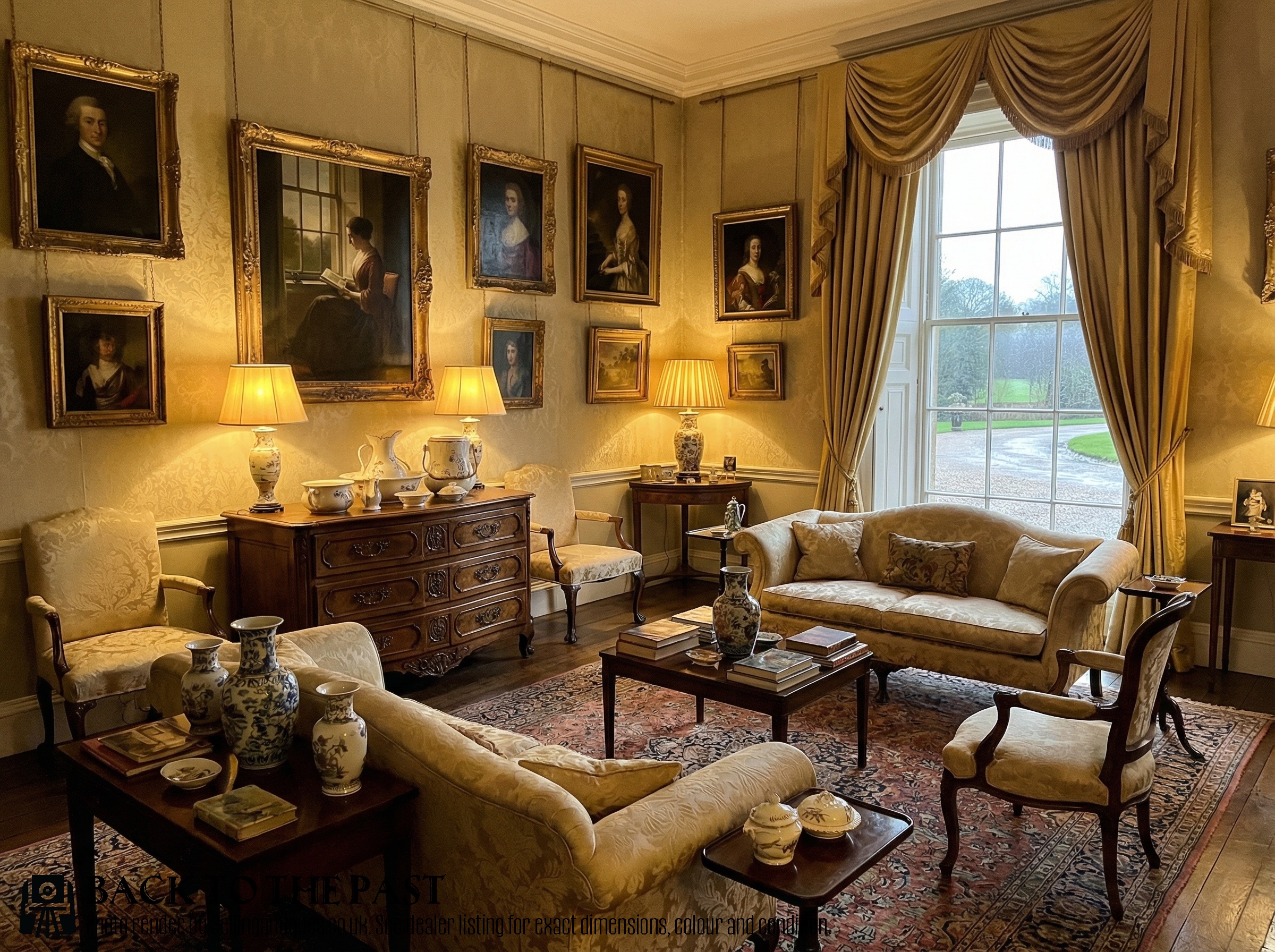
Edwardian Pitcher and Basin
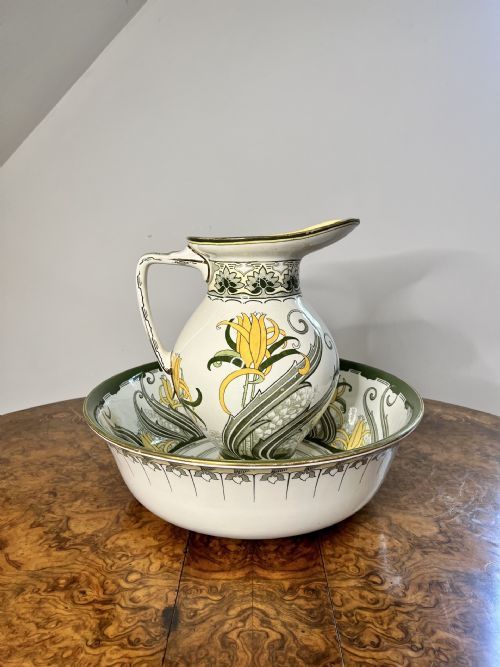
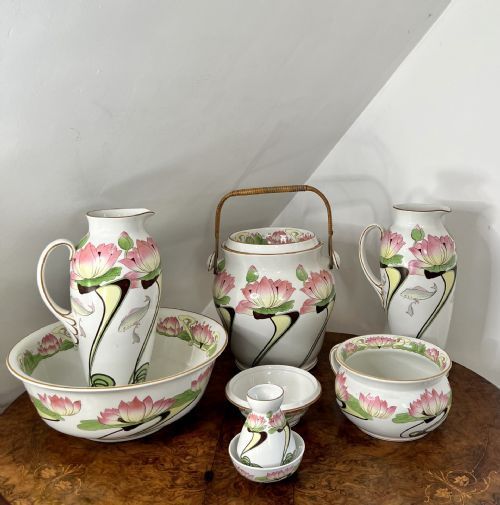
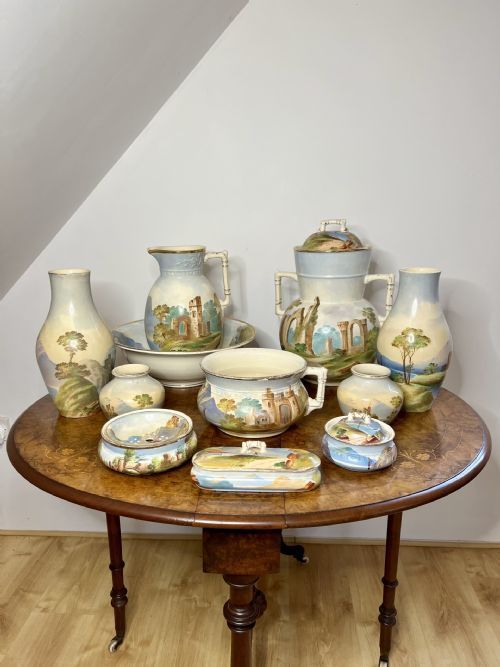
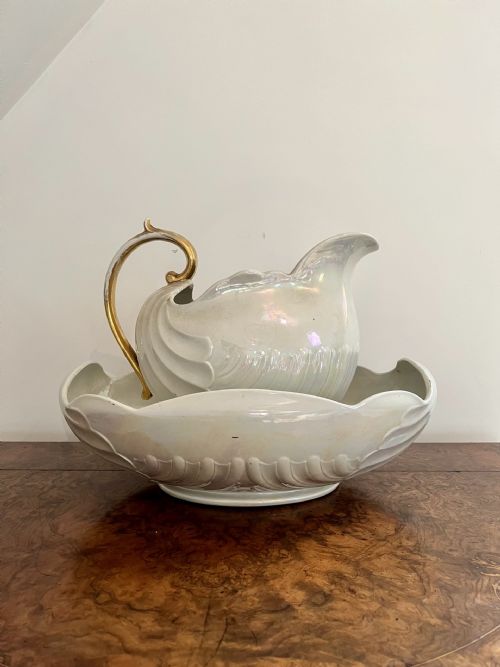
An edwardian pitcher and basin combination forms a matched set designed for personal washing before plumbed bathrooms became universal. These items appear as jug and bowl sets, wash sets, and washstand sets spanning the period from eighteen ninety to nineteen twenty.
The pieces typically sit upon a washstand or serve as decorative bedroom ware. Examples range from simple blue and white glazed ceramic to elaborate porcelain and stoneware decorated with Art Nouveau or Chinoiserie styles.
How they were made
Potteries shaped these items using earthenware, porcelain, and stoneware, applying liquid glazes to seal the porous clay bodies before firing in kilns. Workshops also utilised enamel and occasional gold leaf accents to enhance surface decoration.
Moulding and throwing techniques allowed makers to produce robust jugs with sturdy handles alongside deep, capacious basins capable of holding water without leaking.
Certain wash stands even accommodated shaving mugs alongside the main pitcher and basin.
What varies in quality
Quality rests upon the fineness of the ceramic body and the precision of the glaze work, moving from thick utility earthenware to thin, translucent porcelain. Hand-painted motifs and gilt detailing display greater artistic control than standard transfer printing.
Design complexity also separates standard sets from artistic examples, particularly where makers embraced Art Nouveau curves or incorporated specialised stoneware bodies.
Doulon Burslem·Medway·Doulton Lambeth·mark Jones & Sons·Shelley
The Edwardian Pitcher and Basin Glossary
- Earthenware
- A porous pottery body fired at lower temperatures, requiring a vitreous glaze to hold water. This material forms the base of many domestic wash sets.
- Porcelain
- A fine, hard, white ceramic created from kaolin and petuntse fired at high temperatures. It offers superior durability and a smoother surface than standard earthenware.
- Stoneware
- A dense, impermeable pottery fired at high heat until the clay vitrifies naturally. It produces heavy, durable jugs and basins.
- Glaze
- A glassy coating fused to the ceramic surface during firing to seal the clay and provide colour or pattern. This finish protects the porous body beneath.
Edwardian Pitcher and Basin: Frequently Asked Questions
How were these sets used?
These pieces served as the primary washing station in bedrooms before modern indoor plumbing became standard in homes. Water was poured from the pitcher into the basin for morning and evening hygiene routines.
Servants would fill the jugs with warm water from the kitchen or scullery, carrying them upstairs to the bedroom washstands where the matching bowl caught the used water.
What materials are common?
Ceramic and earthenware form the majority of these sets, often coated in protective glazes to ensure the vessels remained waterproof. Porcelain and stoneware also appear across the period.
Decoration ranges from simple blue and white glazes to enamel paints and occasional applications of gold leaf, depending on the tier of manufacture.
How do I date an edwardian set?
Dating relies on stylistic clues such as Art Nouveau motifs, maker stamps on the base, and the specific composition of the ceramic body. Most examples date between eighteen ninety and nineteen twenty.
Consulting manufacturer marks helps narrow down the production decade, while overall shape often points towards Victorian transitional or Edwardian aesthetic preferences.
Can I use them today?
While these sets can hold water, many collectors prefer to display them as decorative objects on furniture or washstands rather than for daily washing. Their historic glaze and ceramic bodies require gentle handling.
Placing them in a bedroom or bathroom as sculptural pieces highlights their traditional forms and decorative patterns without risking modern wear and tear.